Great Britain: The Suicide of a Successful Civilization
Britain gave the world capitalism, the Industrial Revolution, and the global financial system—and then abandoned that legacy. What happens to a country that traded economic freedom for socialism and state intervention?
Great Britain has rightfully and quite naturally become one of the centers of Western civilization—it was here that true capitalism took root and developed; it was here that cutting-edge scientific and philosophical thought was concentrated; and it was here that the world’s leading universities were located. This was the heart of the empire on which the sun never set.
Great Britain gave the world the first truly global currency — the pound, which served as a model for others to follow and a benchmark for the development of financial markets, banking, insurance, and industrial production. Rolls-Royce, Barclays, Harrods, Twinings, British Petroleum, Lloyds, Shell, Unilever, Glaxo Wellcome and SmithKline Beecham, British Aerospace, Rio Tinto, British American Tobacco, Burberry, Marks & Spencer. The British Empire has it all: centuries-old traditions of governance, private property, industrial production, international trade, and security; the English language, which has become an international language; and Shakespeare, theater, music, soccer, Wimbledon — and much more.
Anglo-Saxon culture has long been a global brand.
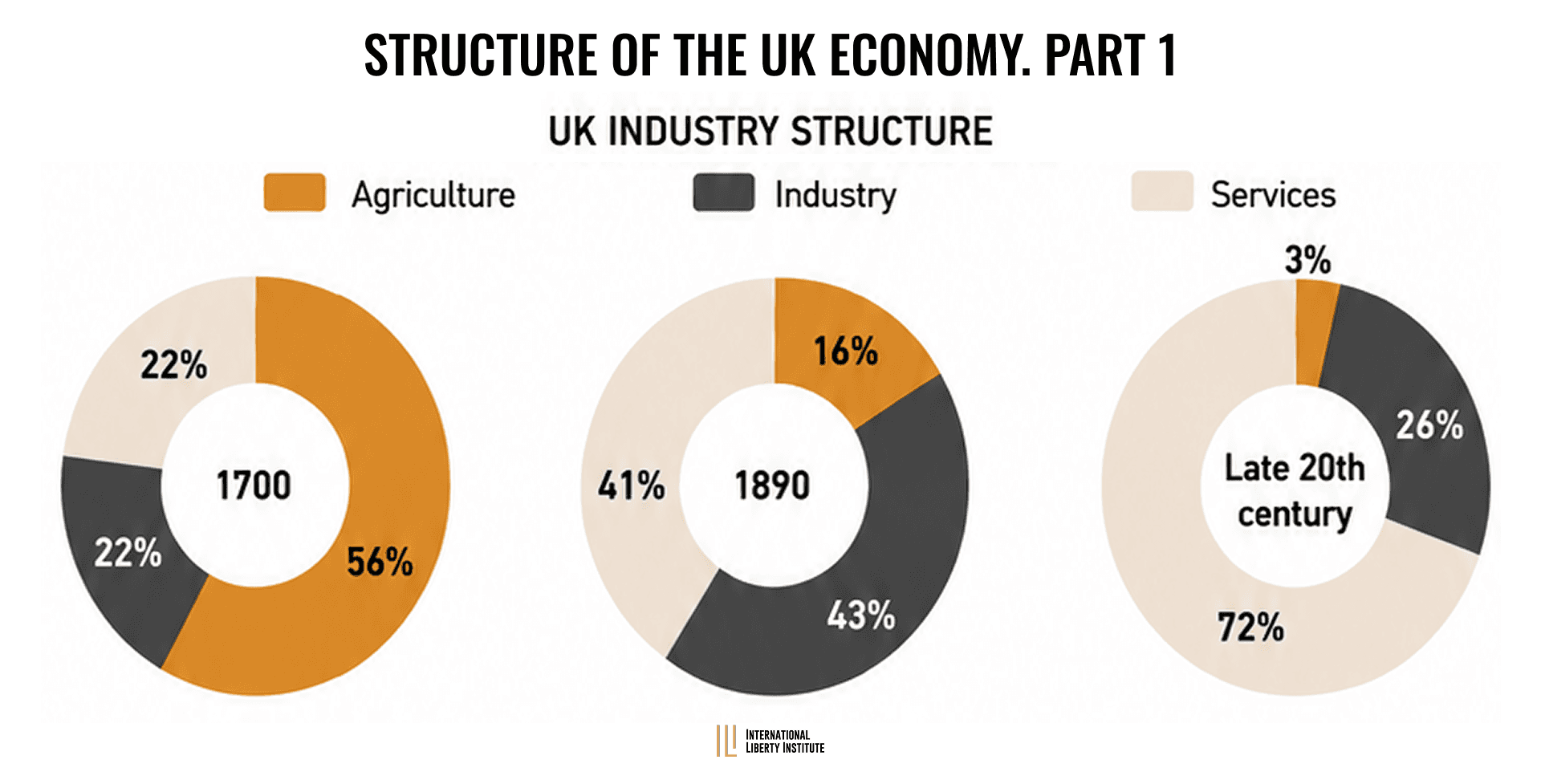
Back in 1700, only 56% of the population was employed in agriculture in Great Britain, 22% worked in industry, and 22% worked in the service sector. In 1890, only 16% of the workforce was employed in agriculture, 43% in industry, and 41% in the service sector. By the end of the 20th century, the economic structure was as follows: 3% in agriculture, 26% in industry, and 72% in the service sector.
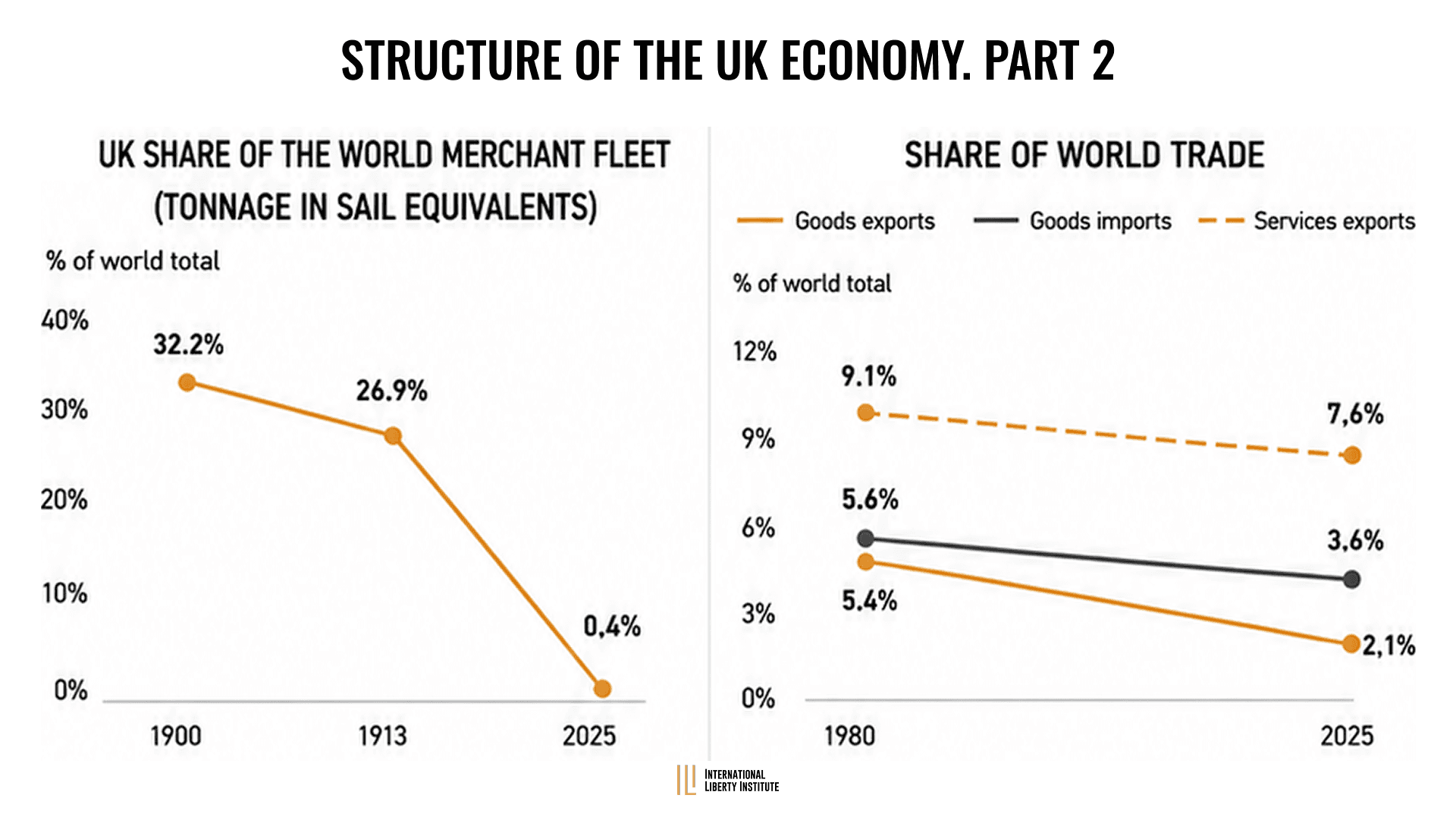
In 1900, Great Britain’s total cargo-carrying capacity, measured in sailing-ton equivalents, accounted for 32.2% of the global total; in 1913, it stood at 26.9%; and by the end of the 20th century, its share in this industry had become negligible.
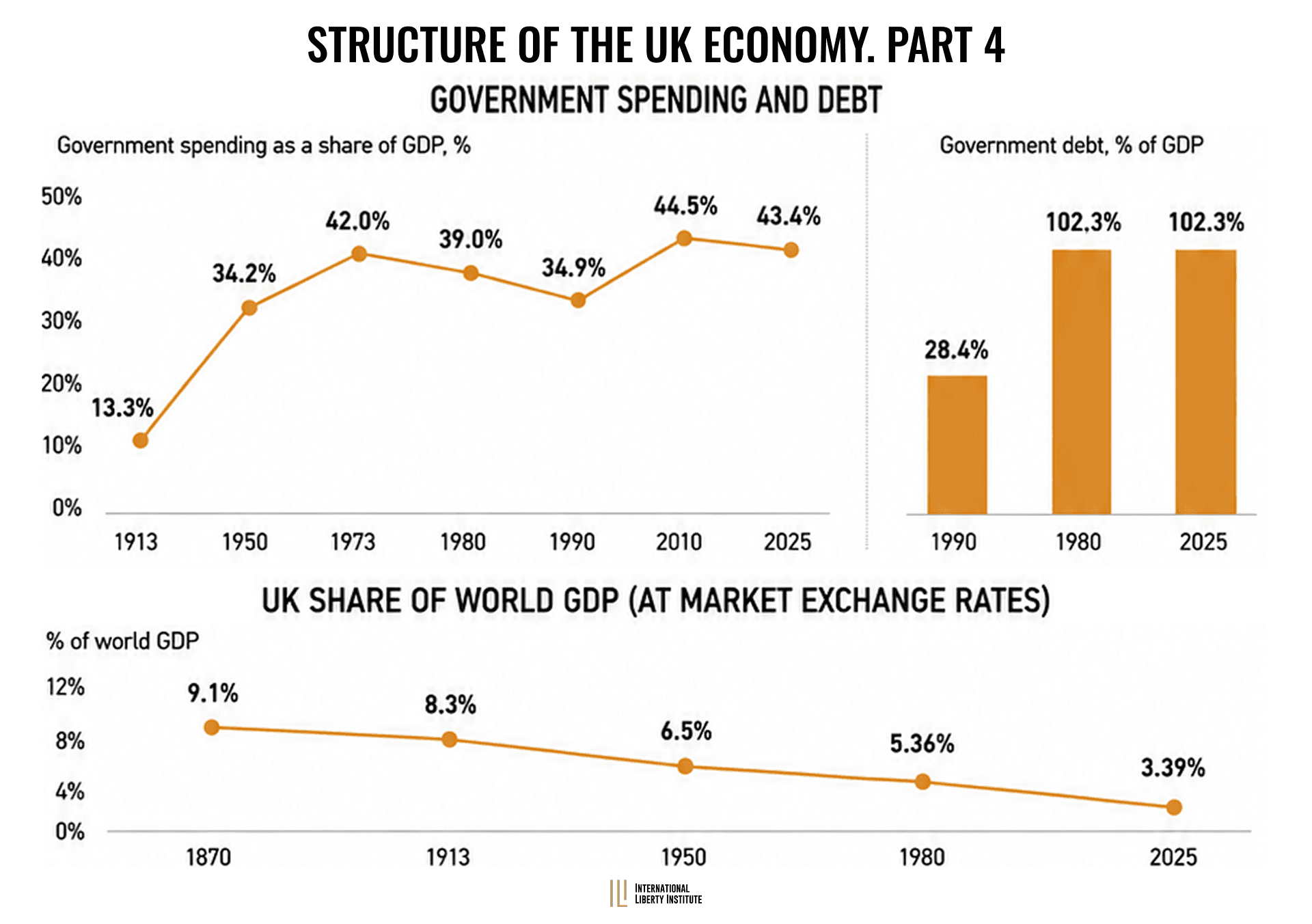
Share of global GDP. In 1870, Britain's share of global GDP was 9.1%; in 1913, it was 8.3%; and in 1950, it was 6.5%.
According to IMF data, in 1980, the United Kingdom’s share of global GDP (at market exchange rates) stood at 5.36% and declined steadily over the next 45 years, reaching just 3.39% of global GDP in 2025. If, however, we look at global GDP based on purchasing power parity, the picture for the United Kingdom is even more alarming.
The United Kingdom accounted for 4% of global GDP at PPP in 1980; the UK's share fell to 2.16% in 2025.
The United Kingdom shares 9th–10th place with France (also $4.29 trillion), followed closely by Turkey ($3.79 trillion). For comparison: China accounts for 19.1% of global GDP at PPP, the United States for 14.6%, and India for 8.1%.
Exports and Imports. The share of Britain's merchandise exports and imports in the global total is also falling rapidly.
In 1980, the United Kingdom accounted for 5.4% of global merchandise exports and 5.6% of imports. In 2025, these shares stood at only 2.1% and 3.6%, respectively. Even the share of service exports — an area where the United Kingdom has traditionally been strong—declined from 9.1% in 1980 to 7.6% in 2025.
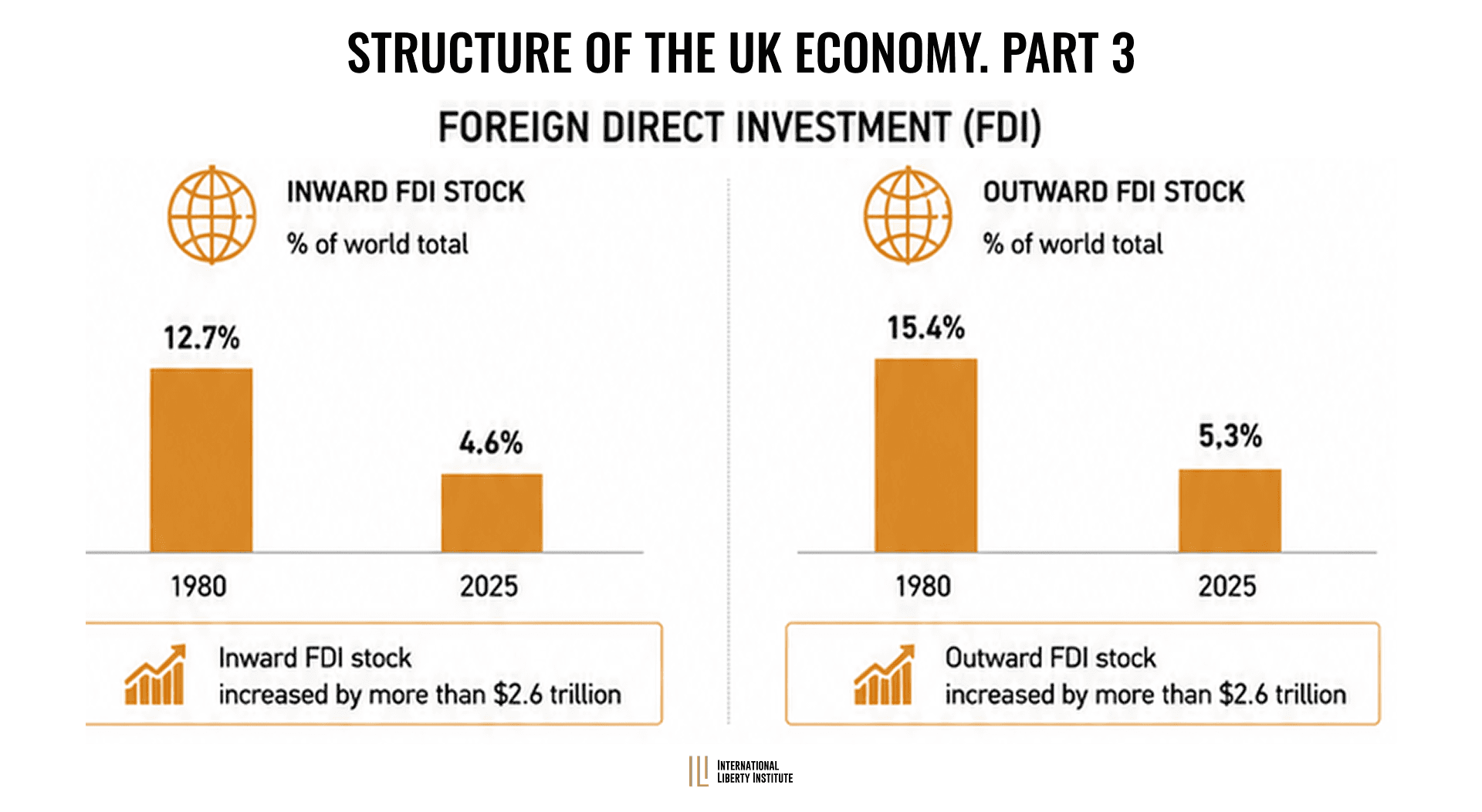
Investments. In addition, the United Kingdom is losing its status as a major destination for foreign direct investment (FDI).
In 1980, the share of FDI accumulated by the United Kingdom accounted for 12.7% of the global total, while in 2025 it will account for only 4.6%. Although the United Kingdom has increased its FDI by more than $2.6 trillion during this period, the country's relative share has declined significantly. The country has also sharply reduced its global presence as an investor in other jurisdictions. The United Kingdom’s share of accumulated outward FDI stood at 15.4% of the global total in 1980, and at 5.3% in 2025.
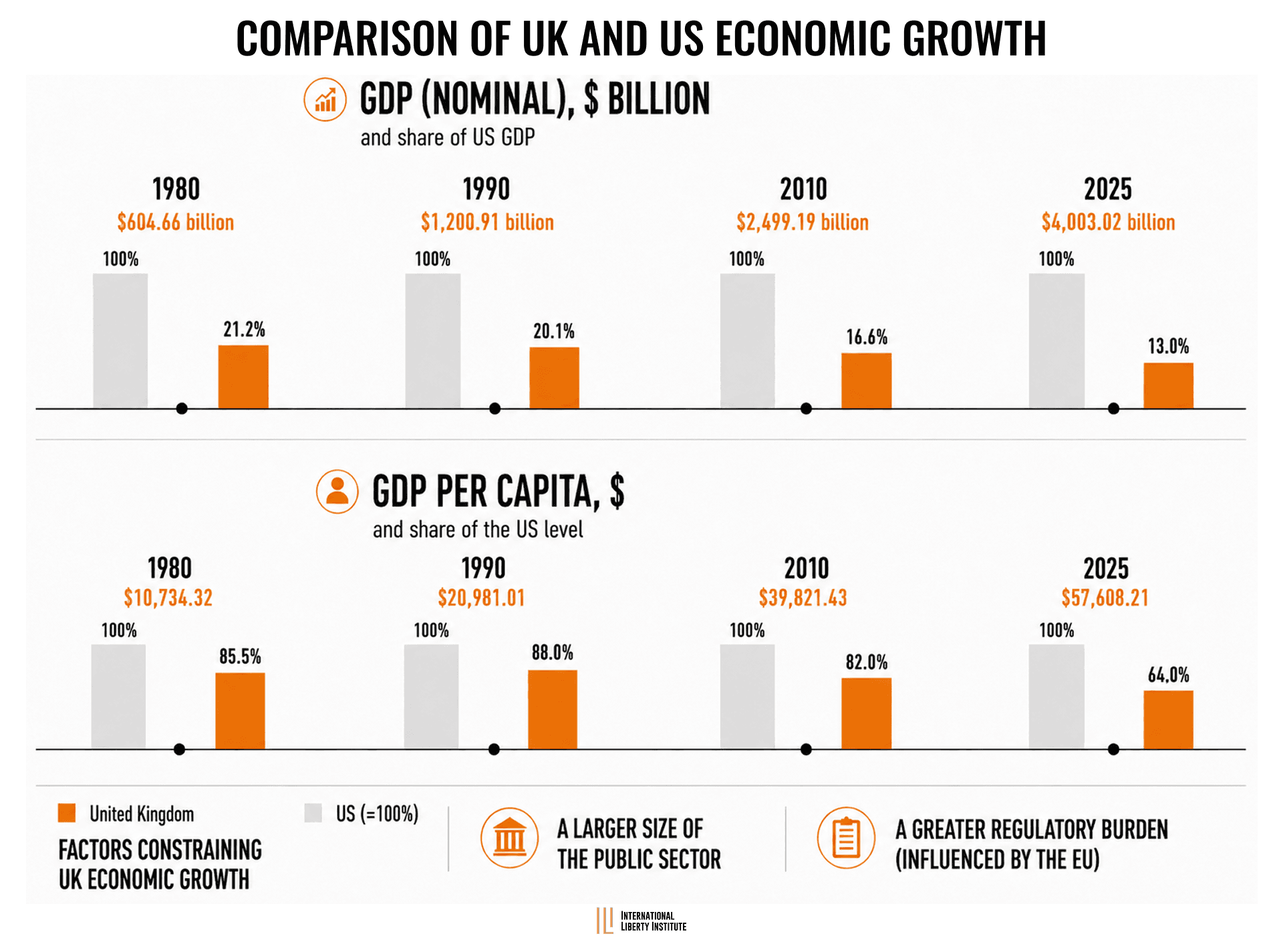
Household Income. At the same time, the United Kingdom remains a high-income country. In 2025, its GDP exceeded the equivalent of $4 trillion for the first time in history, amounting to $57,600 per capita. This margin of safety will suffice for the medium term, but the government is actively “working” to reduce this figure.
Government Budget. In 1913, government expenditure in the United Kingdom amounted to 13.3% of GDP. By comparison, the figure was 8.0% in the United States, 8.9% in France, 8.2% in the Netherlands, and 17.7% of GDP in Germany in the same year.
In 1950, Britain’s total government expenditure had already reached 34.2% of GDP; in 1973, it stood at 42.0% of GDP; in 1980, at 39.0% of GDP; and in 1990, following the “Thatcher Revolution,” it had fallen to 34.9% of GDP and remained at approximately this level until the beginning of the 21st century. In 2010, it had already risen to 44.5% of GDP, while in 2025 it stood at 43.4% of GDP. At the same time, the government entered a period of chronic budget deficits in general government finances. As a result, public debt increased from 28.4% of GDP in 1990 to 102.3% of GDP in 2025.
As a result of the economic policies of the past 30-plus years, the United Kingdom is following Japan’s development trajectory, losing its status as a leader and becoming a second-tier country.
Share
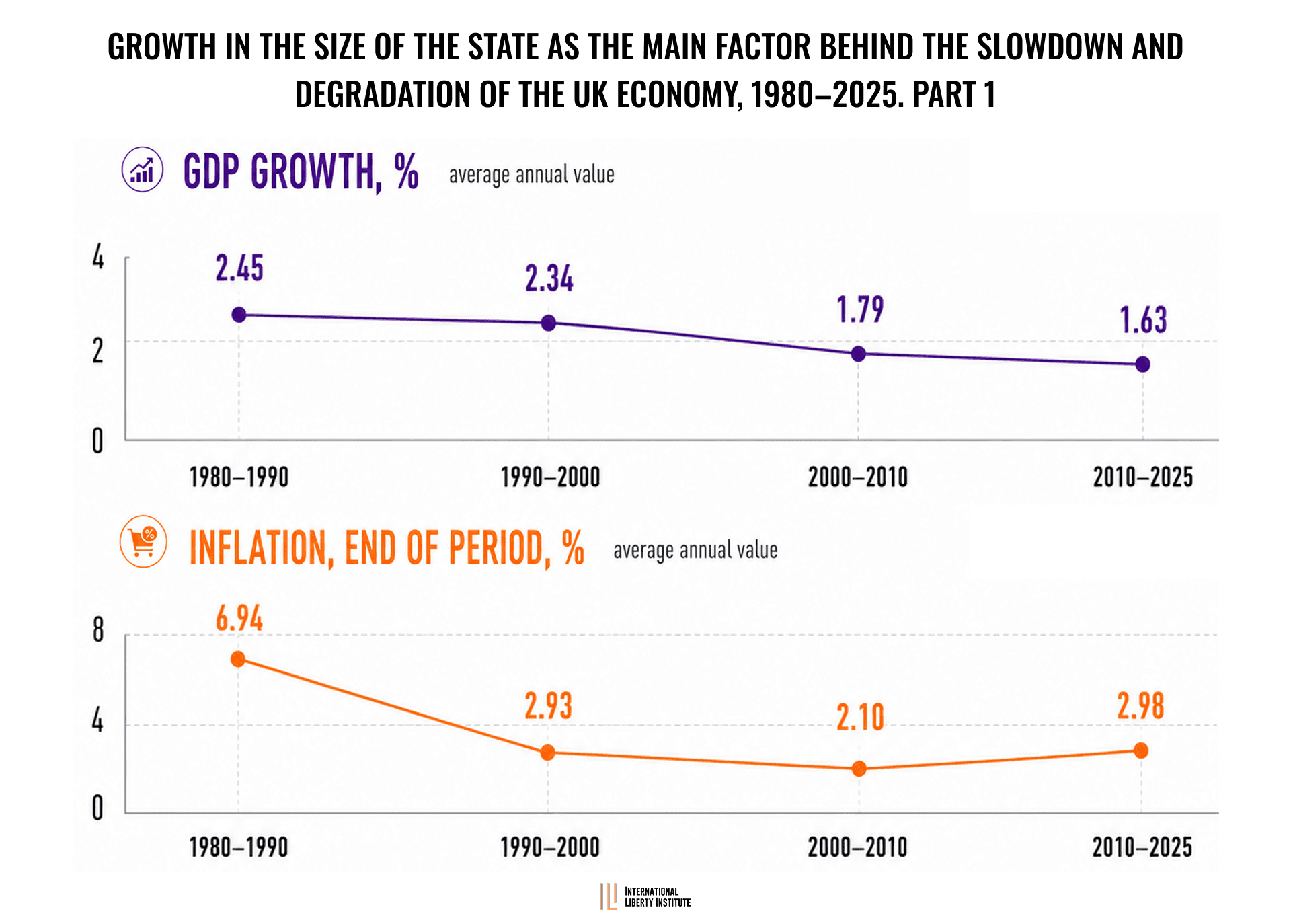
The large volume of accumulated capital and wealth generated by highly competitive production of goods and services will allow the country to remain among the world’s developed nations for quite some time yet, but the erosion of development institutions and human capital values, combined with the British Leviathan, is taking its toll. Between 1990 and 2025, the UK’s average annual economic growth rate was 1.8% of GDP. Moreover, there has been a clear downward trend in GDP growth rates over the decades, beginning in 1980.
The expansion of the public sector and the regulatory burden in the United Kingdom have reversed the long-term growth trend of its economy.
Let's take a look at the following data in comparison with the U.S. economy.
The main factors that held back the British economy compared to the U.S. economy:
a larger public sector (government spending and public property);
a greater regulatory burden related to the European Union.
In particular, during the period when the British economy was more similar to the American economy in structural and regulatory parameters, it grew significantly faster. Between 1955 and 2008, the average annual growth rate of GDP per capita in the United Kingdom was 2.3%, and in the United States, 2.1%%.
Between 1990 and 2025, the average annual inflation rate in the United Kingdom was 2.74%. This reflects the high quality of the Bank of England’s work in maintaining price and macroeconomic stability and preserving the monetary traditions of the pound, which was once a global currency.
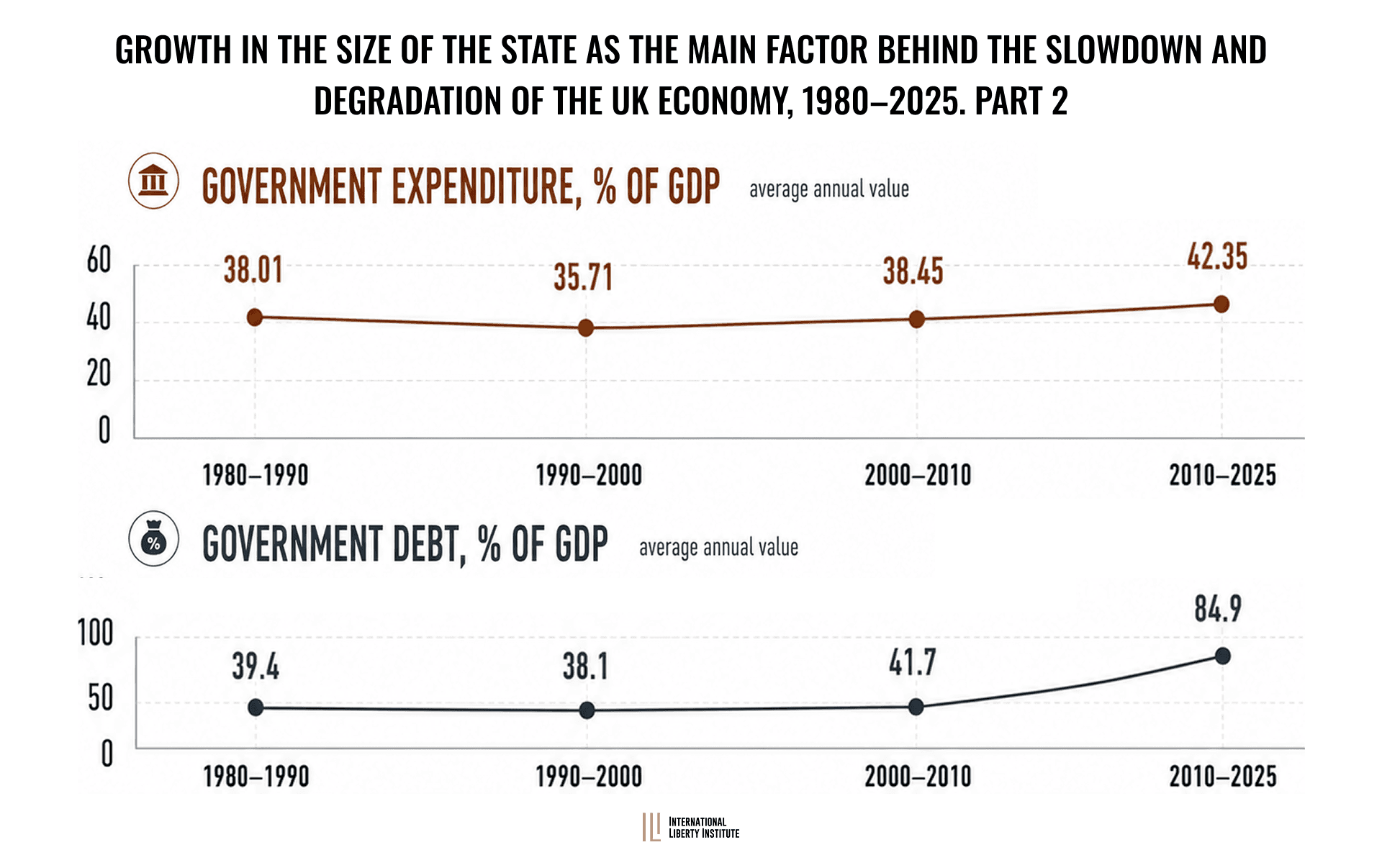
The slowdown in long-term economic growth was accompanied by a clear trend toward the expansion of the non-market sector—that is, an increase in government spending on an average annual basis:
35.7% of GDP from 1990 to 2000.
38.5% of GDP from 2000 to 2010.
42.4% of GDP from 2010 to 2025.
The 6.64% increase in total government spending as a percentage of average annual GDP was accompanied by a 0.71% annual decline in the average annual growth rate of the British economy.
While during the era of Margaret Thatcher’s economic policies and those of the British Conservative Party from 1980 to 2000, the government still maintained fiscal discipline, preventing public debt from rising above 40% of GDP, the 21st century — especially after 2010 — saw a sharp increase in the average annual public debt ratio:
41.7% of GDP during the period 2000–2010.
84.9% of GDP from 2010 to 2025.
102.3% of GDP in 2025.
According to data from the Library of the House of Commons, as of the end of May 2026, the United Kingdom’s national debt stood at 2,984 billion pounds sterling, equivalent to 95.1% of the country’s GDP, while debt service costs reached their highest level in the past 50 years. At the end of May 2026, the national debt was 65% of GDP higher than at the beginning of the 21st century. In the early 1960s, it consistently exceeded 90% of GDP, having declined from a peak of about 250% of GDP immediately after World War II.
INDICATORS
1980
1990
2000
2010
**2025 **
Population, million
56.33
57.24
58.89
62.76
69.49
GDP, $ billion
604.66
1,200.91
1,674.77
2,499.19
4,003.02
Share of nominal GDP in world total, %
5.36
5.25
4.88
3.72
3.39
GDP (PPP), $ billion, 2021
529.3
1,058.76
1,662.31
2,376.17
4,553.11
Share of GDP (PPP) in world total, %
4
3.86
3.31
2.69
2.16
GDP per capita, $
10,734.32
20,981.01
28,440.79
39,821.43
57,608.21
UK GDP per capita relative to world average GDP per capita, %
414.9
483.5
515.9
416.8
399.9
GDP per capita (PPP), $, 2021
27,947.84
36,525.2
45,456.69
49,465.02
55,974.1
General government revenue, % of GDP
36.21
33.37
35.15
35.23
38.27
General government total expenditure, % of GDP
39.04
34.9
33.76
44.48
43.64
General government gross debt, % of GDP
42.52
28.39
37.55
75.52
102.32
Unemployment rate, %
7.13
7.1
5.45
7.9
4.85
Exports of goods, $ billion
110.13
185.17
283.17
420.18
555.83
Exports of goods, % of world exports
5.4
5.3
4.39
2.75
2.1
Imports of goods, $ billion
115.55
222.98
339.64
592.27
948.64
Imports of goods, % of world imports
5.56
6.19
5.1
3.83
3.57
Exports of services, $ billion
34.3
53.17
115.03
302.74
721.69
UK share of world exports of services, %
9.12
6.79
7.79
7.72
7.55
Imports of services, $ billion
25.22
44.61
95.86
186.03
450.97
UK share of world imports of services, %
5.73
5.49
6.56
4.87
5.19
Inward FDI stock, $ billion
63.01
203.91
439.46
1,068.19
2,667.9
UK share of world inward FDI stock, %
12.72
11.58
5.96
5.1
4.6
Outward FDI stock, $ billion
80.43
229.31
940.2
1,686.26
2,427.08
UK share of world outward FDI stock, %
15.37
13.36
12.69
7.8
5.27
What is holding back the growth of the British economy?
So what have been the main obstacles to the growth of the British economy? For example, Jasper Ostle and Mitchell Palmer of the Adam Smith Institute write:
L"We have ranked 14 different policy barriers to private sector growth by their possible contribution to GDP… Reforms to planning laws and the energy sector stand out as key enablers of private sector growth, with changes to taxes and financial regulation also able to make substantial contributions. We estimate that, if this suite of policy reforms were implemented in full, the government could add 10-20% to the UK’s GDP (both in aggregate and per capita) over the long-term. This would represent an additional £428bn in output by 2036, or £5,800 per person. This would increase real household disposable income by £6,800 a year. If one-third of this was taxed, this would allow a tripling of the defense budget or cover 251 extra days of NHS spending."L
According to the Adam Smith Institute, the quality of the planning system is the biggest obstacle to economic growth. It consistently complicates the construction of residential and commercial real estate, which affects their prices. Energy policy and its regulation account for a loss of up to 4.25% of GDP (compared to prices in France). The United Kingdom’s climate and energy policies have become major obstacles to economic growth. Constraints on the power grid’s electricity transmission capacity, subsidies to electricity producers, and a focus on “green” policy goals have only worsened the situation for both the real economy and households.
Experts at the Adam Smith Institute declare:
L"Existing government policy has prematurely throttled the sector. If instead we had kept pace with Norway’s production since 2010, total UK production would be 210% of current levels, creating 0.5% of extra GDP."L
According to the 2025 Tax Competitiveness Index, the United Kingdom ranked 32nd among 38 OECD countries with a score of 59.1 out of a possible 100 (where 100 is the best score).
In terms of corporate tax rates, the United Kingdom ranked 28th; for individual income tax, 25th; for consumption taxes, 33rd; and for property taxes, 37th. Only Italy fared worse on this measure. The UK’s tax system places a particularly heavy burden on those in the construction industry.
Following the financial crisis of the late 2000s, lending costs rose significantly. This is a result of tighter regulation, particularly regarding money laundering:
L"Since the Global Financial Crisis, business lending has become more difficult. This is driven by overly risk-averse bank regulations, which ought to be reviewed to allow banks to take responsible risks. Moreover, anti-money laundering rules have imposed substantial costs on banks, firms, and individuals. Indeed, the financial sector spends four times more on AML enforcement than the Home Office spends on all policing. Reforms to banking regulations could unlock 1.3% of extra GDP%."L
The Betrayal of Intellectuals and the Education System
The gradual government intervention in the British economy and other areas of life — including even the sacred sanctum of free speech — is a direct consequence of the influence exerted on the worldview, values, and cultural code of the secondary and higher education systems. Politicians from the major political parties are responding to the demands and expectations of a society that has long forgotten the valuable experience and lessons of Margaret Thatcher, as well as how she saved Great Britain from complete decline and transformation into a socialist country.
The dominance in schools and universities for over 30 years of DEI/ESG philosophies and theories (diversity, equity, and inclusion; environmental, social, and governance), wokism, and multiculturalism has led to a significant distortion of public opinion in favor of communism, socialism, and a state of universal interventionism.
Demands for free services funded by the state — that is, by taxpayers — have steadily increased, accompanied by the expansion of the public sector.
Britain’s accession to the EU in 1973 set in motion a long-term trend toward an expanded role and scope of government in the economy, particularly in industry, energy, finance, and the social sector (education, health care, the labor market, and pensions).
The country’s leading universities are the main forces behind the spread of socialism, a sort of caste of high priests. At Oxford, Cambridge, the London School of Economics, the University of Warwick, University College London (UCL), and Durham University, professors and lecturers who espouse various versions of the interventionist welfare state theory still dominate. There is virtually no genuine academic pluralism at economics universities or in departments that study human activity.
Let us present the results of several sociological surveys.
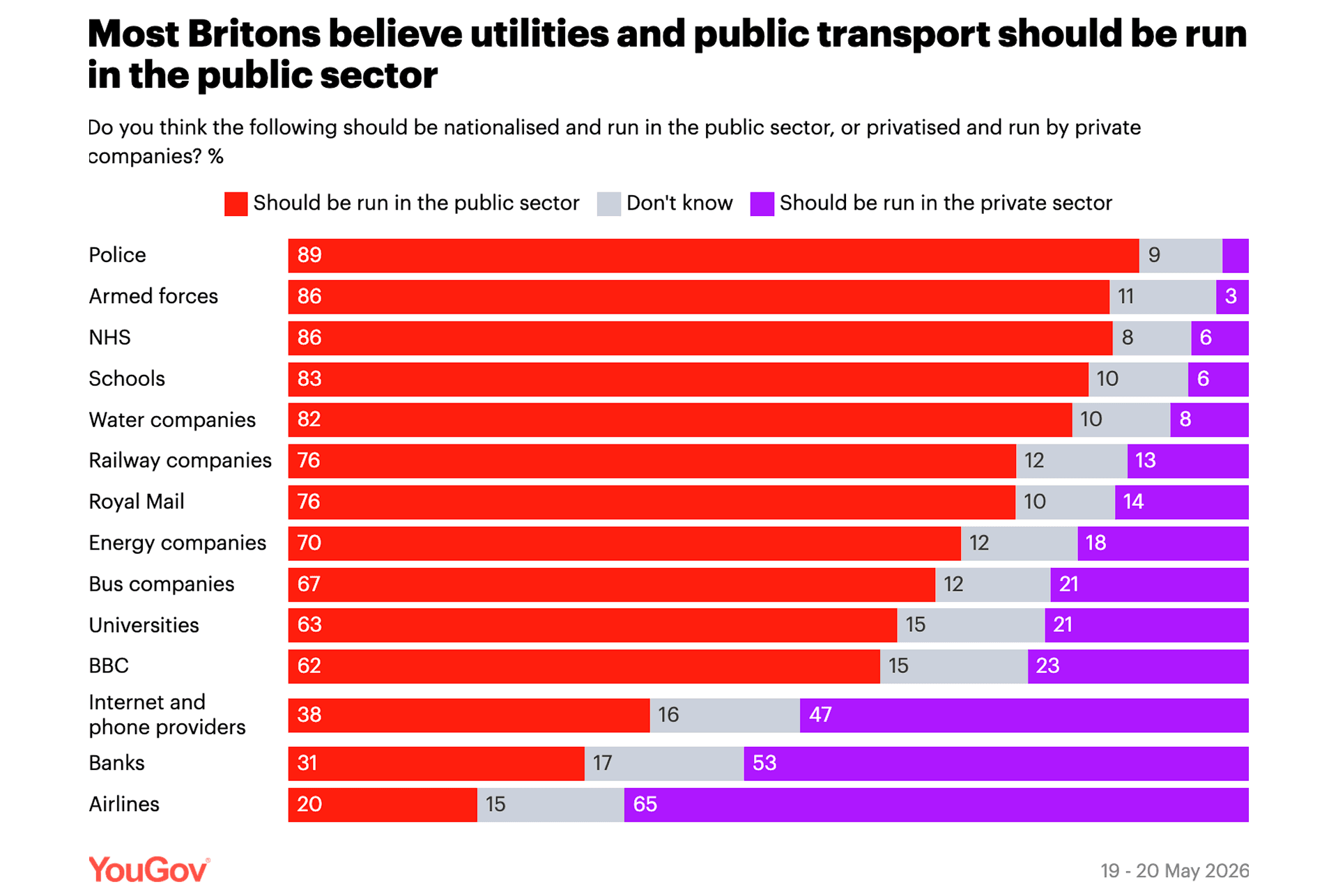
A national survey was conducted by YouGov in May 2026.
British people were asked who should manage various sectors of the economy.
86% of British people believe that the National Health Service (NHS) should remain publicly owned. In other words, they oppose the development of a fully-fledged healthcare market with open and equal competition, where individuals are free to choose where, from whom, and how to purchase healthcare services. This kind of socialist conservatism is a direct consequence of the fact that universities, leading media outlets, and political parties support a state monopoly in the healthcare sector.
83% of British people said that schools should be public. Once again, we see a rejection of the idea of creating a fully-fledged market for educational services. At the same time, high-income individuals can afford private schools, but their prices are beyond the reach of even the middle class. This is how society, with its deeply rooted socialist views, is holding back change.
82% of British people support state control (i.e., nationalization) of water utilities; 76% support the nationalization of railways; 76% support the nationalization of the postal service; 70% support the nationalization of energy companies; 67% support the nationalization of bus companies; and 63% support the nationalization of universities %.
38% of British people support the nationalization and state management of internet and telephone service providers.
In today's context, this is essentially Lenin's call to “nationalize the telegraph and telephone”.
31% of British people support the nationalization of banks, and 20% support the nationalization of airlines.
Government control over postal services was supported by 65% in 2017, rising to 76% in summer 2026; support for the nationalization of the railways increased from 60% to 76% in June 2026; and support for the nationalization of energy companies rose from 53% to 70%. Over this period, the share of those supporting the nationalization of internet and telephone service providers remained relatively stable (30% in 2017 and 38% in 2026), as did support for the nationalization of banks (from 28% to 31%) and airlines (from 14% to 20%).
The strong demand for socialism and a “Big State” on the part of society is in clear contradiction with the current state of the economy, which over the past 40 years has lost a significant share of its free, fully functioning market relationships.
Share
Following public opinion, the new Prime Minister of Great Britain, Andy Burnham, stated in the first days of his premiership that energy and water companies should be nationalized.
He included many measures aimed at increasing state control over the economy in his government’s programme:
L"Privatisation was not a neutral economic policy; it was a political choice that in several sectors produced predictable outcomes: dividend extraction, debt loading, underinvestment, and costs passed to consumers while profits left the country. The analysis reverses those outcomes where the evidence demands it; not through ideological mass nationalisation that conflicts with the bond financing architecture and the investment architecture, but through targeted public ownership where the private record is indefensible and the cost is manageable, and public control models where full ownership costs more than the benefit."L
Here is the new Labor government's plan for water supply:
L"Water: full public ownership. The case is unanswerable: companies sold debt-free with government dowries, subsequent decades of sewage dumping, dividend extraction, and deliberate underinvestment in exchange for no meaningful service improvement. Estimated cost of nationalisation at regulated asset value is approximately £90bn; significant but financeable through infrastructure bonds against guaranteed future revenue. The TUC estimates the net cost closer to £2-3bn once existing debt structures are unwound. A dedicated water bond facility finances the acquisition over ten years without hitting the general fiscal position."L
Data and Conclusions from the Report “The Broken Social Contract, Democratic Distrust and the Mainstreaming of Extremism":
L"Britain’s social contract is broken for a majority of citizens; distrust and disillusionment with our institutions is the norm, and anxiety about national identity and diversity are now mainstream concerns.* A collapsed cordon sanitaire, which traditionally kept extremist narratives and conspiracy theories confined to the margins, is now held by large minorities, and in some cases majorities, of the population. Ethnonationalist views are now held by a substantial minority, as is active disengagement from democratic norms altogether. A small but consequential minority of the public has crossed into accepting political violence. Hostile states and domestic extremists are deliberately accelerating these fractures to further destabilise Britain."L
The central finding of this report is that these are not isolated phenomena but interlocking symptoms of a single underlying condition: a democracy whose foundational bargain with its citizens is failing and whose institutions are unable to treat that failure as a first-order national security threat that the evidence shows it to be.
L"At the core of this crisis lies a breakdown in the relationship between citizens and the state. Our research demonstrates that the perceived erosion of the social contract is a strong predictor of democratic dissatisfaction. Importantly, this loss of confidence transcends economic circumstances, reflecting a broader belief that institutions are failing to deliver and that political leaders cannot be trusted. This erosion of trust has created a self-reinforcing cycle in which declining confidence fuels support for anti-establishment alternatives and increasing political fragmentation, making effective governance more difficult. As institutions struggle to demonstrate responsiveness and accountability, skepticism deepens further. A significant minority of citizens now question whether institutional rules should be respected if they are perceived to impede change."L
One in seven British people considers political violence acceptable, at least under certain circumstances, and in the case of verbal abuse, that figure rises to one in six.
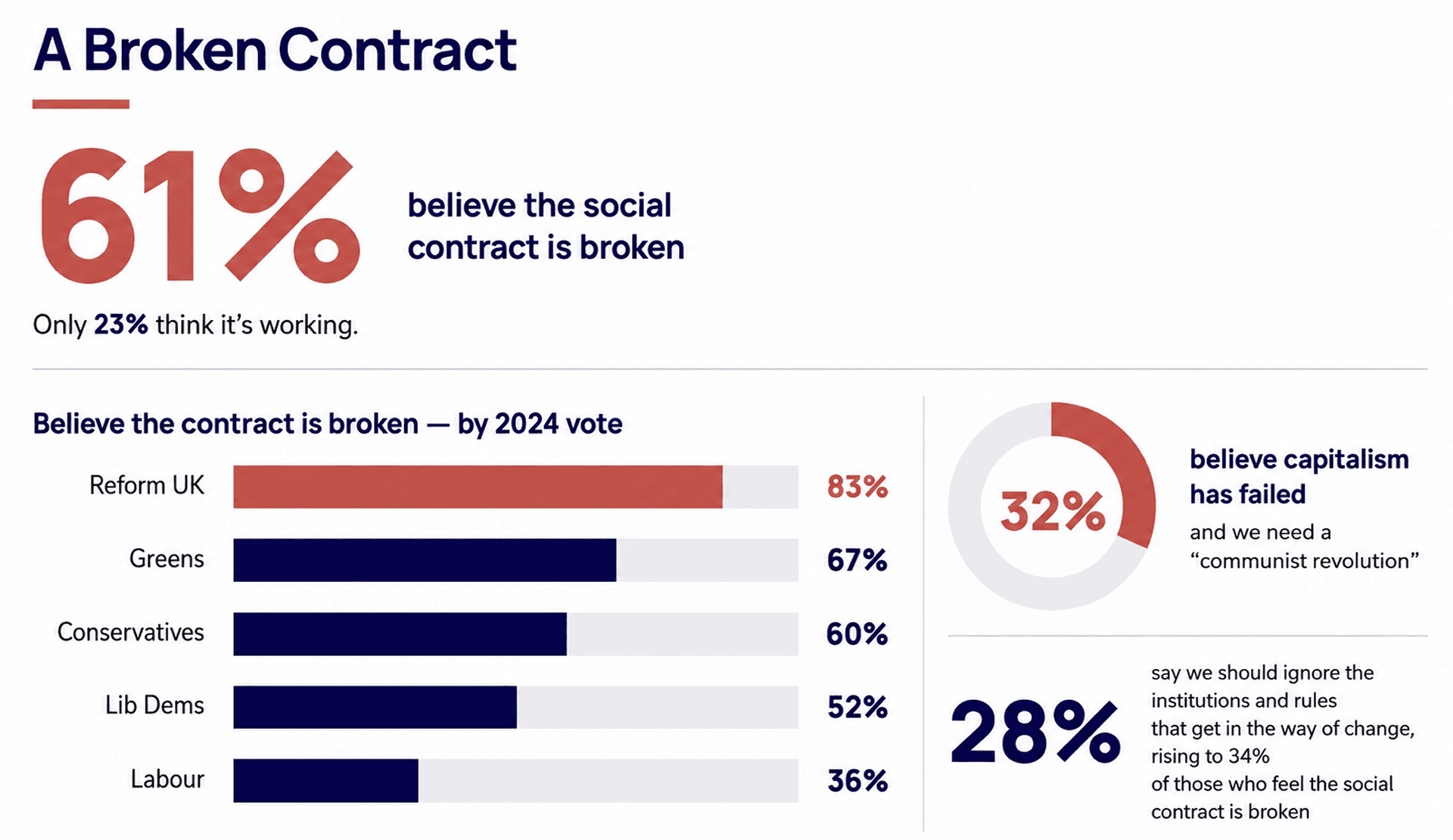
61% of British people believe that the social contract in Britain has been broken. Only 23% believe it is still in effect. Among supporters of Reform UK, 83% hold this view; among the Greens, 67%; among Conservatives, 60%; among Liberal Democrats, 52%; and among Labour supporters, 36%.
The reasons why the British people consider the social contract to have been violated are as follows:
“The government isn’t keeping its promises” (36%),
“Politicians can’t be trusted” (33%),
“The government cannot protect our borders” (31%),
“Taxes are too high compared to what we get in return” (29%),
“The government doesn't respect ordinary people” (26%),
“Politicians are corrupt and only look out for themselves” (25%).
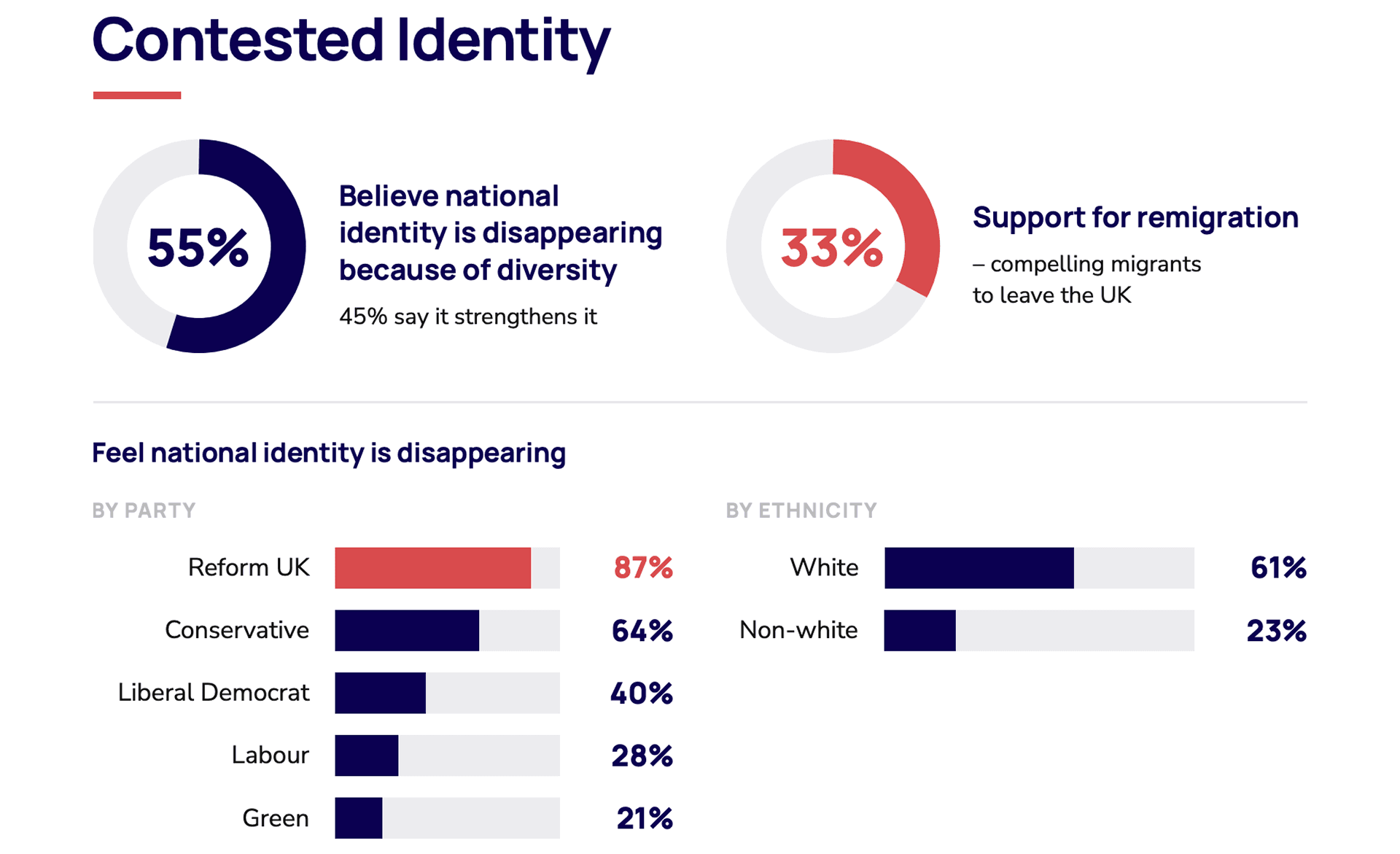
40% of British people believe that democracy does not work but could work with the right leaders. As of July 2026, 55% believe that national identity is fading as a result of diversification, while 45% believe that diversification strengthens it. 33% of respondents support forcing migrants to leave Great Britain. The proportion of those who say that British identity is disappearing is particularly high among supporters of Reform UK (87%). Among Conservative Party supporters, the figure is 64%.
32% of British people agreed with the statement that capitalism has “failed” and that “we need a communist revolution.” 28% of respondents said that “we should ignore the institutions and rules that stand in the way of change.” This figure rises to 34% among those who believe that the social contract has been broken. Responses to the question of whether voting in elections is patriotic reveal a significant generational divide. Among young people aged 18–24, 57% answered “yes,” compared with 89% among those aged 75 and over.
40% of British people believe that some secret group of people controls major decision-making in the world. Conspiracy theories and mysticism are typical manifestations of groupthink and a rejection of facts and logic.
29% of British people believe in the “Great Reset” conspiracy theory, according to which the lockdown restrictions imposed during the COVID-19 pandemic were implemented with the aim of deliberately provoking an economic collapse and establishing a socialist world government in the interests of influential big business. This theory posits that white elites will be replaced by non-white groups, particularly Muslims, through mass migration and a decline in the birth rate among the white population.
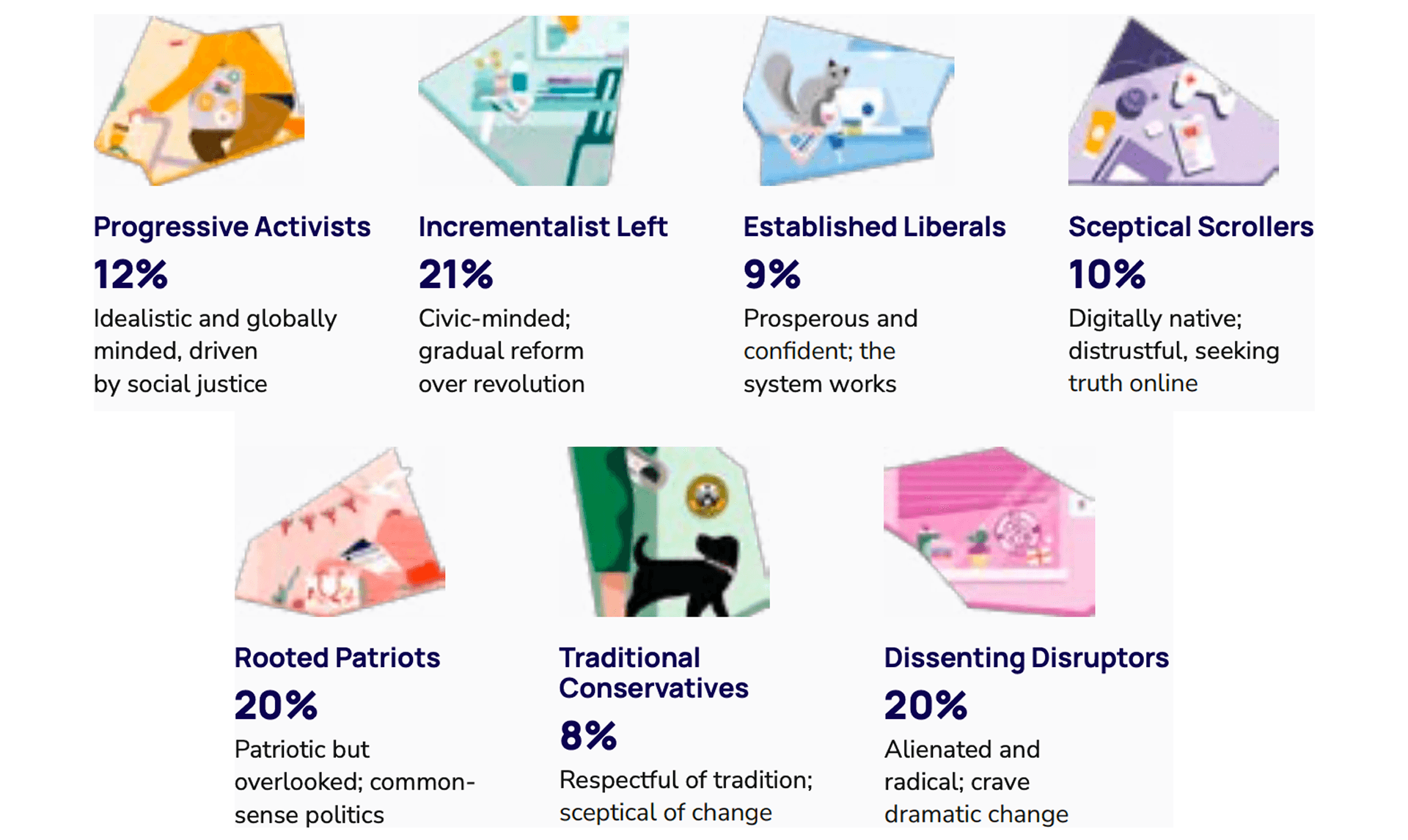
According to sociologists, British society is divided into seven groups based on political views and worldviews:
progressive activists – 12% (idealistic, think globally, are guided by social justice);
the incrementalist Left — 21% (civil society values, gradual reforms instead of revolution);
established liberals — 9% (well-off and self-confident; believe the system works);
skeptical scrollers — 10% (members of the digital generation who are distrustful and seek the truth online);
rooted patriots — 20% (they are patriotic, but go unnoticed; they advocate for policies based on common sense);
traditional conservatives — 8% (respect traditions; are skeptical of change);
traditional conservatives — 8% (respect traditions; are skeptical of change);
A Frazer Institute survey conducted in the United States, Canada, the United Kingdom, and Australia in 2022 found that the United Kingdom had the highest level of support for socialism as an ideal economic system (43%).
Among young people (ages 18–34), support for socialism stood at 53%. Moreover, this age group shows the highest levels of support for communism (29%) and fascism (19%).
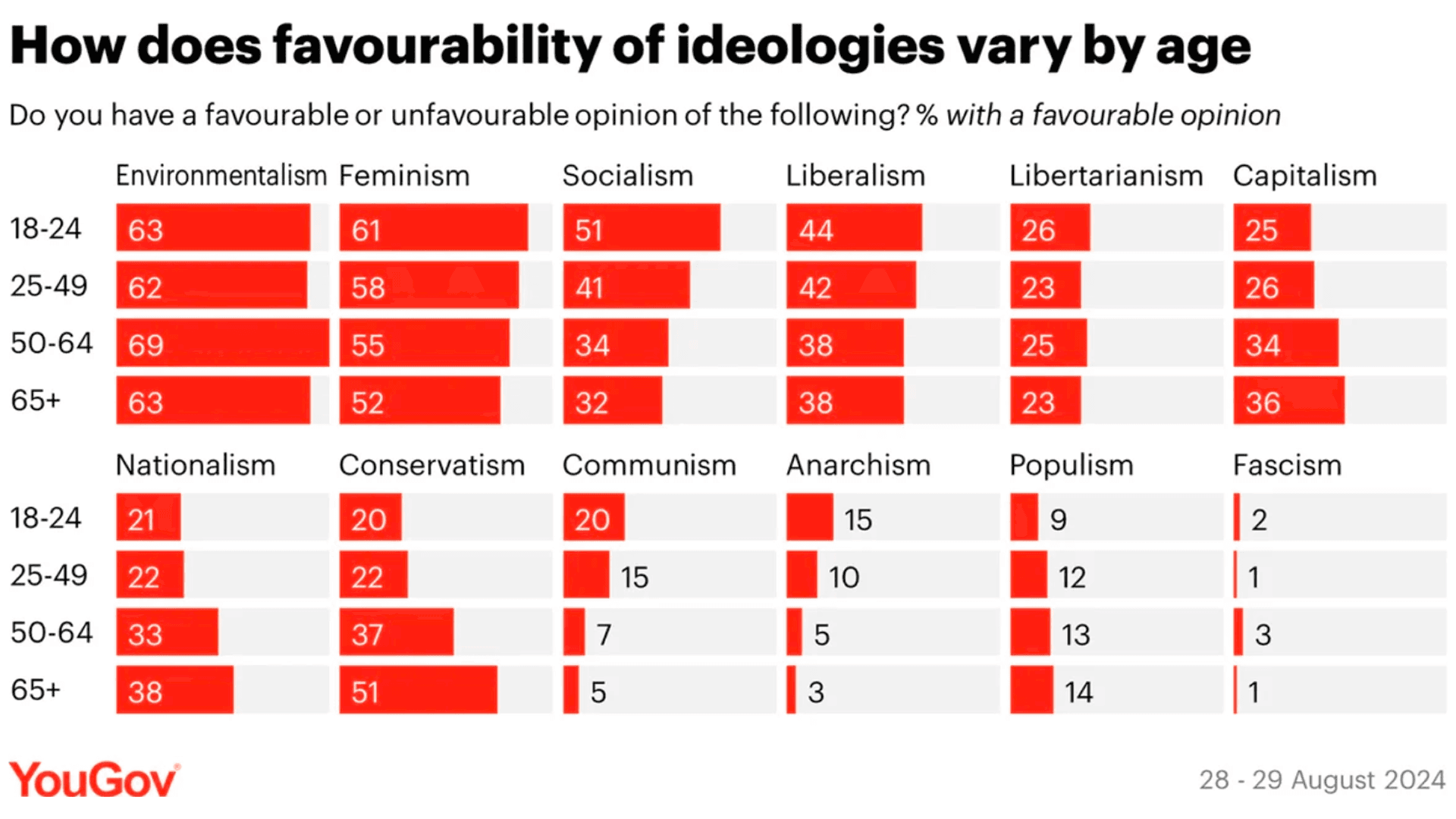
Here's how the British defined their ideological preferences in 2024.
A favorable attitude toward such ideologies:
Ideas for protecting the environment (Environmentalism) — 64%;
A 2025 Merlin Strategy survey shows a high level of support among British youth for undemocratic forms of government and political ideologies.
Among those aged 18–24, 38% view favorably a system led by a strong military leader without a government or elections. The same proportion (38%) applies to those aged 25–34. By comparison, the figure is 16% among those aged 55–64 and 13% among those aged 65 and over.
In the 18–24 age group, 25% expressed a positive attitude toward fascism and 32% toward communism; in the 25–34 age group, 28% expressed a positive attitude toward fascism and 40% toward communism. By comparison: in the 55–64 age group, the figures are 3% and 3%, respectively, and for those over 65, they are 7% and 7%, respectively.
Opinion Leaders: Where Should Britain Go from Here?
Given this value system and worldview within British society, it is very difficult to expect to reach a consensus — or even a majority — on solutions to the acute problems that have accumulated in the British economy.
Here is how a number of influential figures describe the state of British society and the economy.
Alastair John Campbell, a strategist, journalist, and influencer, stated in an interview in July 2026 that:
L"I don't think we're remotely honest at the moment with the public about the nature of our security situation. Both on defense in relation to the Russian threat. I think we're going to face some really difficult choices pretty soon, and the economics of our country. And the other one and the other one that we haven't really talked about. I think we're walking away from the climate debate I think is as dangerous as anything we face."L
Here is David Butterfield's opinion, a historian, an expert on Roman and Greek democracy, and vice president of Ralston College:
L"As to where we are now, so many things are eroding the very bedrock of the kind of democracy we celebrate. Even democracy is something we don’t interrogate. We assume that democracy is not just a good thing, but the good thing. Democracy only means something if it’s tied into the broader aims and goals of the people using it. It’s a process, not an unalloyed good in itself. And it depends where we’re talking about in the world, but if we talk about our shared country of Britain, the democratic deficit is the widest I’ve ever known it. That’s to say, in my lifetime"L
Here is the opinion of financial expert and professor Patrick Boyle, who manages a hedge fund, on the current economic agenda not only in Britain but in virtually every country:
L"British person has lower taxes on average than in a lot of the developed world, but then the the middle and wealthier cohort pay very high taxes. Um, you know, so then all of these ideas of wealth tax and whatever, it's a funny thing because really what needs to be done is you need to spur productivity and growth in the UK. you know, you you can't tax an economy into growth. Um, and you know, a lot of the solutions that are put forth on really either side are more about voicing anger than about providing real solutions. And they're often I don't like to beat up on people because they're often very wellmeaning if sort of economically illiterate. Like they don't understand why that policy just wouldn't work."L
An assessment by the think tank Foreign Policy in Focus (FPIF) in the article “The Crisis of Global Britain,” published in June 2026:
L"Britain’s productivity growth has been weak, averaging little more than 0.5 per cent annually since the 2007-09 financial crisis. Alongside entrenched regional inequality, deteriorating public services, and fiscal constraints, lack of growth has amplified these fractures without entirely causing them. Real wages across much of the country have still not meaningfully recovered from the post-2008 lost decade outside parts of London and the South East, while house prices remain far beyond the reach of the younger generation. Local government finances continue to operate under severe strain after more than a decade of austerity and post-pandemic borrowing. Under such conditions, distributive politics increasingly assumes a zero-sum character in which cultural and territorial cleavages become more politically salient"L
Experts at Foreign Policy in Focus conclude:
L"Britain’s global influence has long rested not simply on military capacity or financial power but on institutional prestige, cultural openness, and political legitimacy. Universities, the BBC, the British Council, and the perception of Britain as a stable constitutional democracy formed part of this architecture. Yet Brexit, austerity, anti-immigration politics, repeated leadership crises, and social fragmentation have weakened that image considerably."L
A very insightful article in the June 2026 issue of “The Atlantic”: “How Britain Became as Poor as Mississippi: A case study in self-sabotage:
L"The country’s output per person is now only just above that of Mississippi, America’s poorest state — and that slight lead is only achieved thanks to London. Outside the capital, in places where tourists do not visit, living standards fall well below Mississippi’s. Brits visiting the United States find that their currency has depreciated to the point where the pound today buys only about $1.35. British wages have lagged well behind those in the U.S., and also those in Germany, France, the Netherlands, Denmark; once you account for inflation, they’ve barely grown at all. Within the next decade, the typical Pole will have a standard of living equal to the typical Brit, if current trends continue."L
The following factors are indicative of the quality of the regulatory environment:
Building infrastructure, or much of anything else, has become all but impossible in the United Kingdom. In addition to having the world’s most expensive (not yet built) train line, Britain also hosts the world’s most expensive (not yet built) nuclear-power plant, Hinkley Point C. Its environmental-impact assessment ran 31,401 pages; the plant will feature a £700 million “fish disco,” which will pulse sounds underwater to deter animals from its intake pipes. The government spent 32 years and £179 million planning a tunnel beneath Stonehenge to relieve traffic, only to officially scrap the plan this year.
Conclusions: Lessons from the United Kingdom for Ukraine and Other Transit Countries
The United Kingdom has found itself in a period of severe institutional turmoil. The very foundations of the Anglo-Saxon culture and legal standards that have made this country great are now under threat.
According to experts at the Prosperity Institute, the agenda includes not only the need for a thorough overhaul of fiscal and tax policy, the removal of regulatory barriers, and the expansion of the private market sector of the economy, but also the restoration of freedom of speech. They believe that With laws that inappropriately criminalise speech, Parliament has engendered a cultural norm that those who express the “wrong” views may be imprisoned or visited with punishments in the workplace and beyond. Underpinned by bad criminal laws, the nation’s civil laws have proven inadequate to protect citizens from what has become known as “cancel culture”.
When it comes to speech, the criminal law has expanded too much, and the civil law has expanded too little. Although the common law has a good tradition of protecting free speech, it has so far failed to protect most victims from cancel culture in the workplace and beyond.
Based on an analysis of long-term macroeconomic trends, data and parameters of monetary, fiscal, social, and regulatory policies, shifts in public opinion in British society, and analytical reports from such authoritative British organizations as the Institute of Economic Affairs, the Adam Smith Institute, the Prosperity Institute, and the Centre for Policy Studies, the following conclusions can be drawn:
Through its actions and the decisions of its intellectual, cultural, and political elites, the United Kingdom has undermined the integrity and stability of the fundamental legal and economic institutions that underpin development and growth. The expansion of state control over the economy and the education system’s embrace of socialist and Marxist ideas, together with their dominance in this sphere for decades, have led to the erosion of British democracy and a fully functioning free-market economy.
The United Kingdom has fallen victim to a gross theoretical error. For decades, its elites have actively fought against the pseudoscientific theory of market failures while ignoring the scientific theory of state failures. The example of the United Kingdom proves that there are no irreversible processes in economic policy and institutional development. If we do not invest in the ideals of freedom, if we do not purposefully strengthen the legal and economic institutions based on them, and if we do not counter the destructive theories and ideas of communism, socialism, and fascism, then the state will inevitably drift and turn into a Leviathan.
The United Kingdom continues to maintain high-quality legal and economic institutions. According to the Atlantic Council, the United Kingdom ranked 19th in the world in the 2026 Freedom Index and 29th in the Prosperity Index. In the Cato Institute’s “2025 Index of Human Freedom”,the United Kingdom ranked 19th overall; specifically, it ranked 24th among 165 countries in terms of personal freedom and 13th in terms of economic freedom. In the 2025 Rule of Law Index, the United Kingdom ranked 14th out of 143 countries worldwide. This means that the United Kingdom undoubtedly still has considerable resilience. However, the acceleration of negative trends over the past 20 years threatens to transform the country from a developed economy into a transitional economy with uncertain prospects.
Great Britain, with all the strength of its legal and democratic institutions, its extensive historical experience with a free-market economy, an established market-based capital structure across most sectors of the economy, strong human capital, its aristocracy, and cultural elite, has failed to provide reliable protection against the expansion of state control over the economy, the defeat of legal institutions by the Leviathan, and the formation of a destructive political alliance.
In the second half of the 2020s, the United Kingdom is a country in transition, still enjoying a high level of income, but its model of pervasive state intervention is hindering its development and undermining its sources of growth. Its political elites failed to learn valuable lessons from the financial crisis of the late 2000s and the COVID-19 pandemic, and did not take advantage of the window of opportunity that opened up after Brexit.
Ukraine is strongly advised against copying and incorporating the current laws and institutions of Great Britain into its own legislation, as they contain inherent mechanisms that undermine and erode Freedom. For Ukraine to become great, we need to create and implement the institutions, practices, and standards of economic development that made Britain great and sustained that status for more than 100 years.
A well-known Ukrainian and Belarusian economist, popularizer of the Austrian economic school in the post-Soviet space. He specializes in reforms in transitional economies in the post-socialist space.
A case study for Ukraine. British entrepreneurs created a powerful military aviation industry under the bombardment of the Third Reich in just six months.
The global crisis of democracy is the logical and inevitable outcome of a system in which individual freedom always loses to the “will of the people.” How can we protect the individual from democracy and restore his genuine freedom? What scenarios for the transformation of democracy are possible under modern conditions?
The path to an "all against all" regime in the global economy is open. Consequences of the New US Foreign Trade Policy for the Countries of the World and Ukraine