


The Library of the International Liberty Institute (ILI)
Ludwig von Mises "Liberalism"
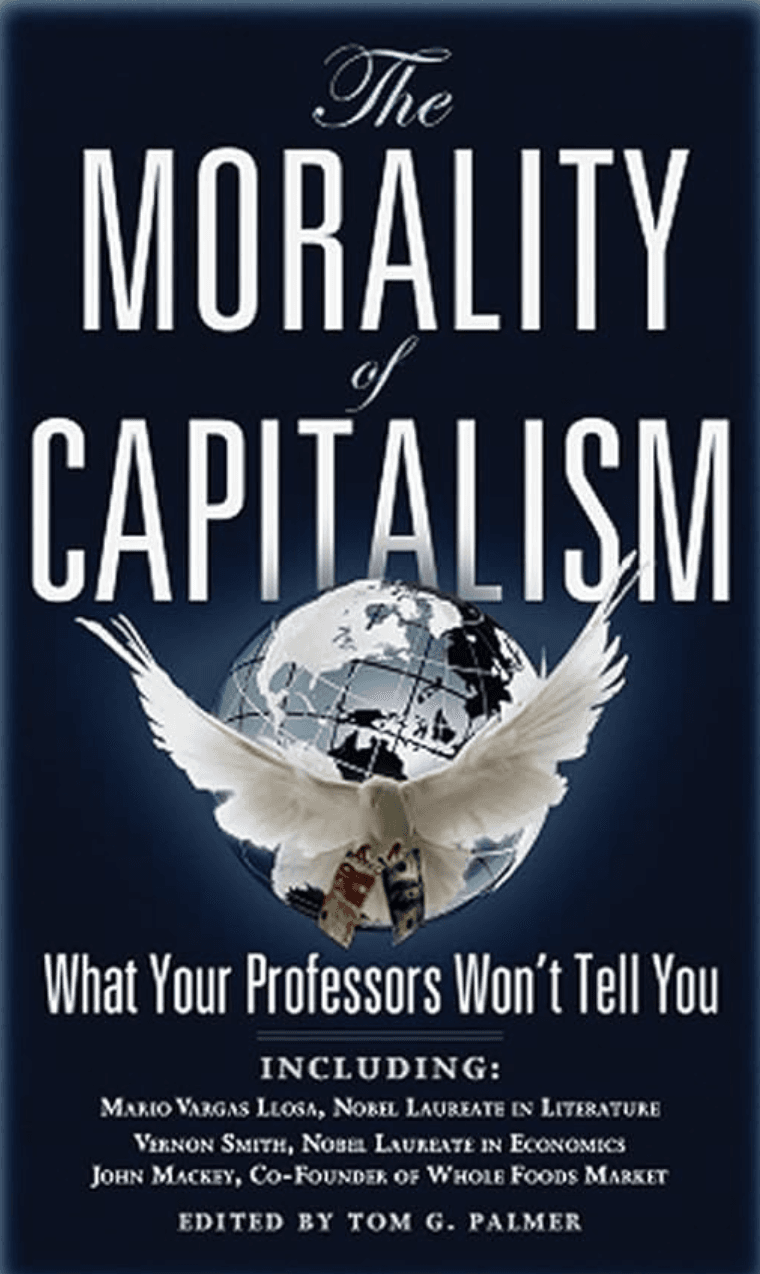
The Morality of Capitalism. What Your Professors Won’t Tell You

In contemporary academic and public discourse, capitalism is often discussed almost exclusively in pragmatic terms—evaluated by its ability to deliver material abundance, generate economic growth, or foster technical innovation. Conversely, its critics frequently claim the moral high ground, characterizing free-market systems as inherently driven by greed, exploitation, and moral indifference. This book directly challenges this prevailing narrative by presenting a robust defense of free markets grounded not merely in efficiency, but in ethics. Rather than relying on state coercion, special privileges, or cronyism—which the contributors carefully distinguish from genuine free enterprise—a capitalist framework respects individual agency and autonomy. The collection demonstrates that capitalism’s true ethical core lies in its rejection of force in favor of voluntary exchange, where individuals are free to pursue their own goals and cooperate for mutual benefit.
Capitalism and Freedom
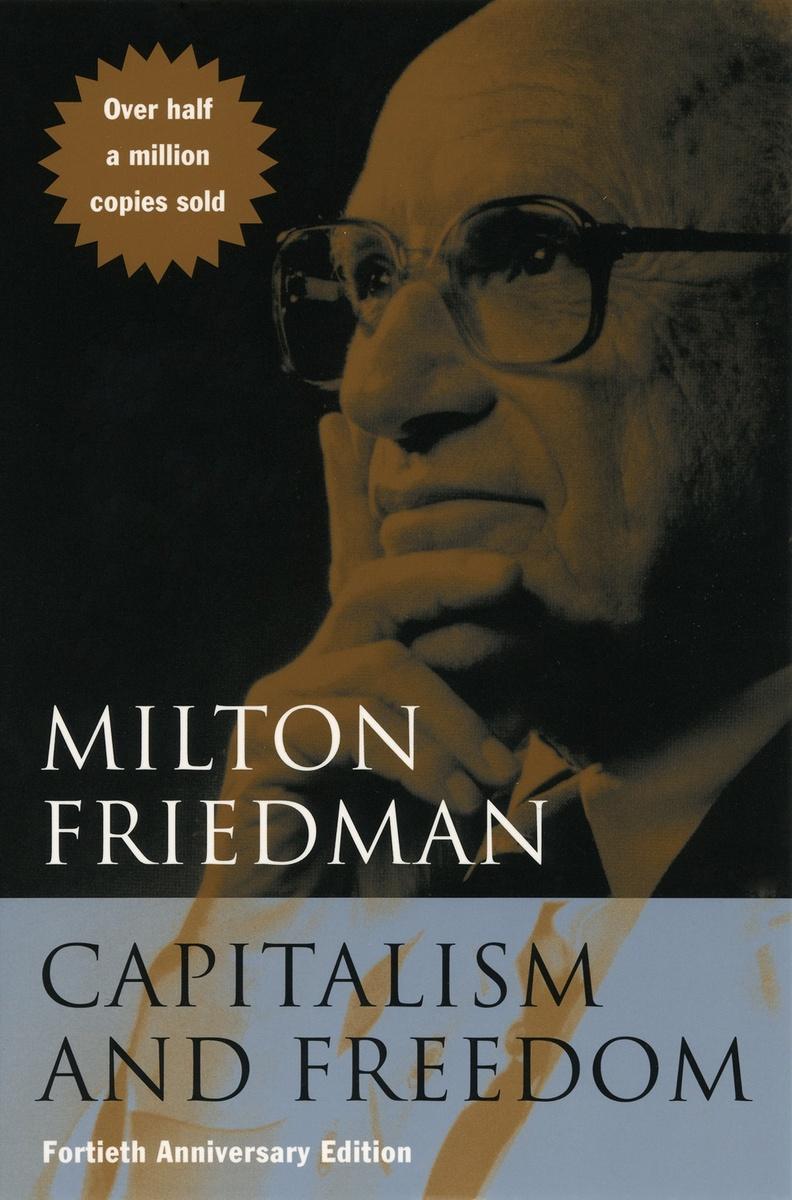
This stands as one of the most influential and enduring works of 20th-century economic and political thought. First published in 1962 by the University of Chicago Press, this concise yet powerful book articulates a compelling case for competitive capitalism as both an essential component of individual liberty and a prerequisite for sustaining political freedom. Written amid the Cold War's ideological clash between Western capitalism and Soviet socialism, and during a period of expanding government intervention in the U.S. At its core, the book argues that economic freedom and political freedom are inextricably linked. Friedman asserts that voluntary exchange in free markets disperses power, protects minorities from majority tyranny, and enables individuals to pursue their values without coercion—whereas centralized economic control inevitably erodes personal liberties.
In an era of debates about regulation, central banking, and state power, this book remains relevant because it defends the idea that true freedom flourishes when individuals, not governments, control their economic destiny.
Economics for Real People: An Introduction to the Austrian School

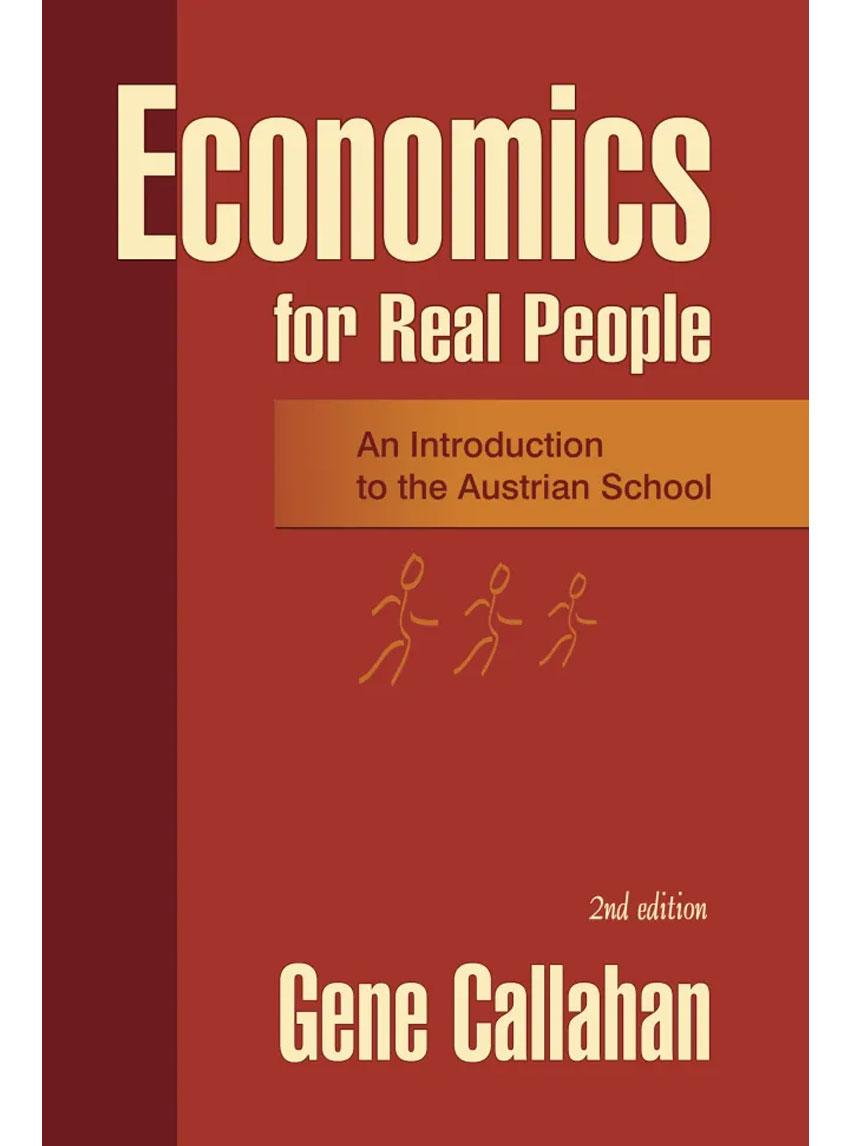
Economics often seems like a complicated science, a language of graphs, formulas, and specialized terms that are understood only by a narrow circle of specialists. However, Gene Callahan’s book destroys this stereotype. It shows that economics actually begins not with formulas, but with a person — with his choices, goals, decisions, and interactions with other people. The author writes simply, but does not simplify the science itself. He introduces the reader step by step to the main ideas of the Austrian School of Economics: the role of individual choice, the meaning of subjective value, the nature of entrepreneurship, the function of the market, and the importance of prices as carriers of information. He shows how simple everyday decisions — to buy or sell, to work or invest, to save or spend — give rise to a complex system of market coordination.
Nowadays Callahan's clear, principled perspective empowers readers to think critically and independently. This is not dry theory—it's economics brought back to real people, their choices, and the freedom that lets those choices flourish.
America's Great Depression
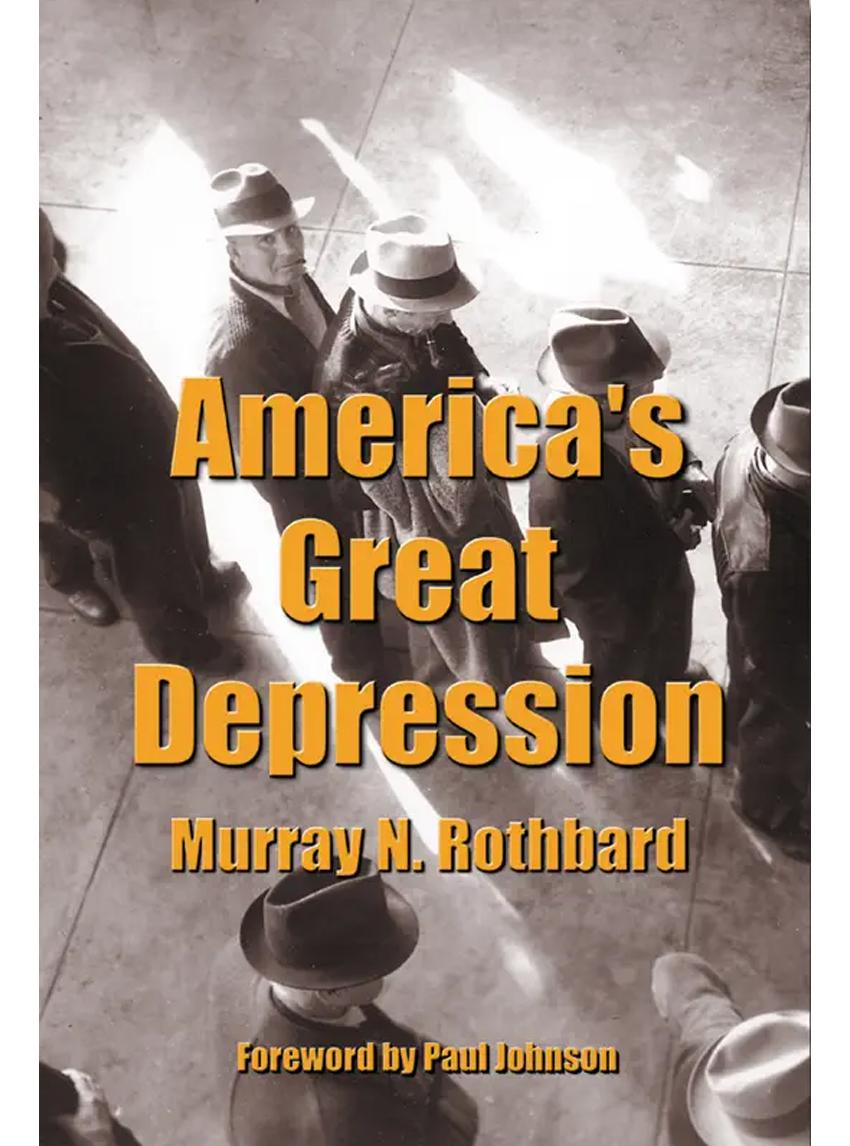
First published in 1963 and frequently reissued by the Mises Institute, this book applies Austrian business cycle theory to argue that the Great Depression was not a failure of free-market capitalism but the direct result of government and central bank intervention. Rothbard - a leading figure in the Austrian School and libertarian thought, challenges the dominant Keynesian narrative that blamed unchecked speculation or insufficient government action, instead tracing the crisis to Federal Reserve credit expansion in the 1920s and Herbert Hoover's aggressive interventions that prevented necessary market corrections. In an era of recurring boom-bust cycles, central bank activism, and debates over fiscal stimulus, warnings about the dangers of monetary manipulation and interventionist responses resonate powerfully. Rothbard's work is not just a historical account; it is a timeless cautionary tale about the perils of hubris in economic management.
This book remains one of the most provocative and influential reinterpretations of the 1930s economic catastrophe.
Economic sophisms
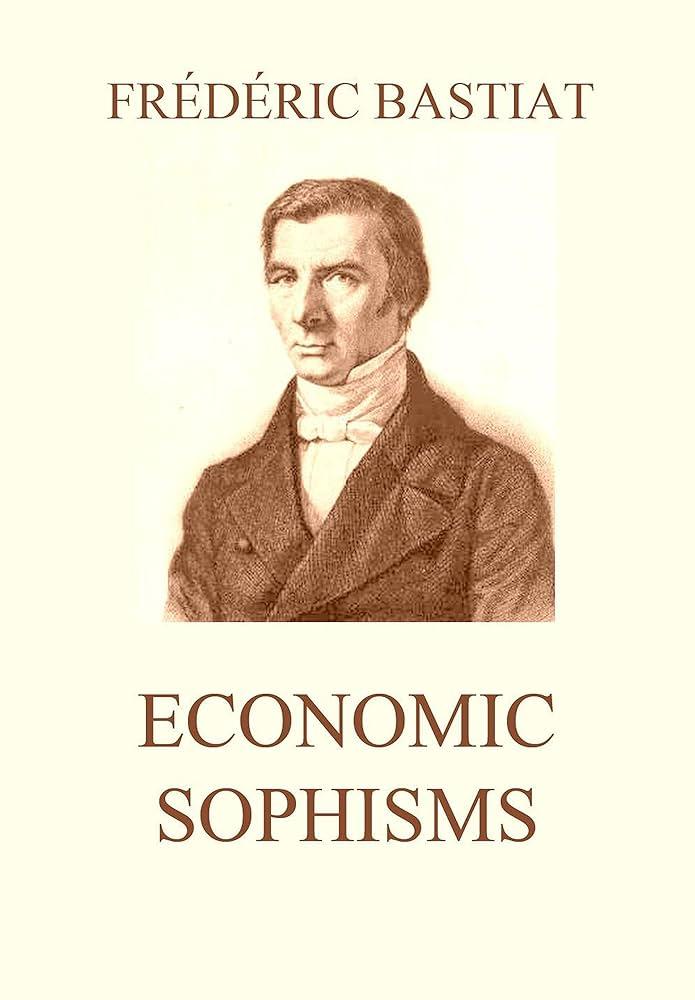
This book was published in the 1840s amid fierce debates over protectionism in France. This collection of short essays—often called pamphlets—systematically dismantles the fallacies (“sophisms”) that underpin tariffs, subsidies, and government restrictions on trade. Bastiat, a French economist, statesman, and tireless advocate for liberty, wrote these pieces not for academic economists but for the general public, using wit, satire, irony, dialogue, and vivid parables to expose flawed economic thinking. At the heart of the book lies Bastiat's core insight: true wealth consists in abundance, not scarcity. He repeatedly contrasts the interests of producers—who often lobby for barriers to limit competition and keep prices high—with those of consumers, who benefit from cheaper, more plentiful goods. Protectionism, he argues, favors the former at the expense of the latter, ultimately impoverishing society as a whole.
It book stands as one of the most brilliant and accessible defenses of free markets ever written.
The Wealth of Nations: An Inquiry into the Nature and Causes of the Wealth of Nations
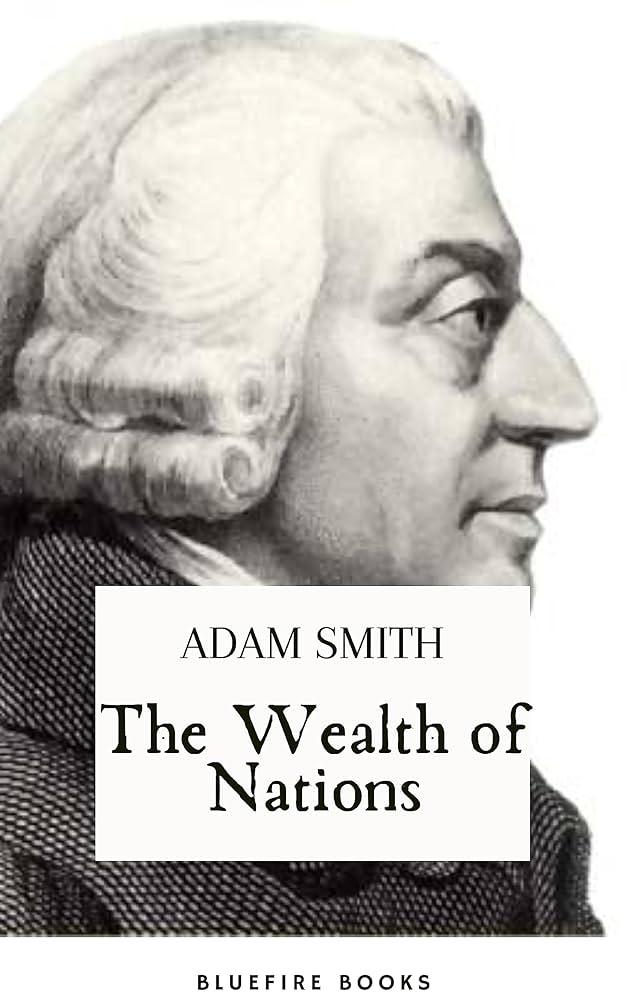
Reading this book is like watching economic thinking being born. Because this is not just another book on economics but an intellectual revolution, after which the world could no longer explain prosperity by the king's treasury, the mercy of the government, or the accident of history. Adam Smith writes about things that seem obvious today but were too bold and progressive in his time: that the wealth of a nation is created not by orders from above but by the labour of millions of people; that the division of labour multiplies productivity; that exchange based on mutual benefit is a source of growth; that freedom of economic action is not a whim but a condition for development. He shows the economy not as a game of numbers, but as a living order of human cooperation, where people's interests, even without being coordinated, can form a complex but effective system.
This book changed the world – and it can change your understanding of how it works. It explains why economic freedom is not just about money, but about the ability of society to develop without a constant external conductor.