A sociological survey conducted in the fall of 2025 on behalf of ILI shows that in Ukraine, 17% of respondents consider their views liberal and 5% identify as libertarians. Overall, nearly a quarter of those surveyed in the study — not a bad result for a transit country that has long professed Marxist-Leninist principles.
«Liberals», «liberalism» — most people have heard the term. Some have heard of libertarianism and even the Austrian School of Economics. But how many people can explain the essence and differences between these views?
But let's examine the essence of these categories. Perhaps you are a libertarian rather than a liberal, or maybe you lean toward socialist ideology, even though you consider yourself a supporter of freedom?
Liberalism did not begin with economics — its core was political philosophy and legal theory. If we delve into the historical context, two historical stages are usually distinguished in the formation and development of liberalism:
Classical liberalism (17th–19th centuries).
Modern liberalism (late 19th — early 21st century).
Classical liberalism proclaimed the cult of individual freedom, which is why liberalism emerged as an ideology of liberating individuals from the arbitrary power of the state, the church, and hereditary privileges. And the political ideas of liberalism were a significant factor in the revolutions that shook England and France in the 17th and 18th centuries. The political ideas that inspired these uprisings, to a certain extent, were formally expressed in the works of English philosophers, Thomas Hobbes and John Locke. Accordingly, the goal of early liberals was to limit the government's power over the individual, while making it accountable to citizens.
As for economic doctrines, during this period (17th-18th centuries), mercantilist theory prevailed, which viewed international trade as a zero-sum game in which a win for one country meant a loss for another. Therefore, national governments intervened to set prices, protect their industries from foreign competition, and avoid the exchange of economic information.
Subsequently, mercantilist theory faced harsh criticism from the physiocrats, a group of 18th-century French thinkers who argued that the best way to cultivate wealth was to allow unrestricted economic competition. Their advice to the government was as follows: «laissez-faire, laissez-passer» that is, they tried to justify the principles of non-interference by the government in economic activity.
Later, the idea was supported by Adam Smith in his work «The Wealth of Nations. «An Inquiry into the Nature and Causes of the Wealth of Nations»» (1776). This magnum opus is not only a critique of mercantilism and a basis for the development of the physiocratic idea of natural order, but also a continuation of the intellectual line initiated by another famous Irish economist, entrepreneur Richard Cantillon. He was one of the first to analyze the roles of entrepreneurs, price formation mechanisms systematically, income flows in the economy, and the relationship between cash flows and production.
Adam Smith, in turn, argued that free trade is beneficial to all parties, since competition leads to the production of goods in greater quantities and of better quality at lower prices. He argued that granting economic freedom to individuals would inevitably improve the welfare of society as a whole, but emphasized that positive results were only possible if a truly free market was in place. Whereas any other arrangement, whether state control or monopoly, will inevitably lead to regulation, exploitation, and economic stagnation.
Gradually, in the 19th century, classical liberalism entered a phase of so-called institutionalization.
While in the 17th and 18th centuries classical liberalism was directed primarily against absolutism and class privileges, in the 19th century its main task became the protection of individual freedom in the context of mass society and industrialization.
It was during this period that the canons of classical liberalism were formed, which include:
rule of law;
constitutionalism;
freedom of speech and assembly;
inviolability of private property;
free trade;
a minimal but lawful state.
One of the key figures of this stage is John Stuart Mill, who in his work On Liberty (1859) defended liberalism based on the principles of preventing aggression (pacifism), arguing that state interference in individual freedom is permissible only when a person's actions cause harm to others. This principle became the central normative criterion of classical liberalism in the second half of the 19th century.
At the same time, Alexis de Tocqueville, analyzing the American experience, draws attention to a new threat to liberal freedom — the tyranny of the majority and the soft despotism of a democratic state. His works gradually lay the groundwork for future liberal criticism of mass democracy.
Source: Democracy in America: Historical-Critical Edition of De la démocratie en Amérique, ed. Eduardo Nolla, translated from the French by James T. Schleifer. A Bilingual French-English edition (Indianapolis: Liberty Fund, 2010). Vol. 1.
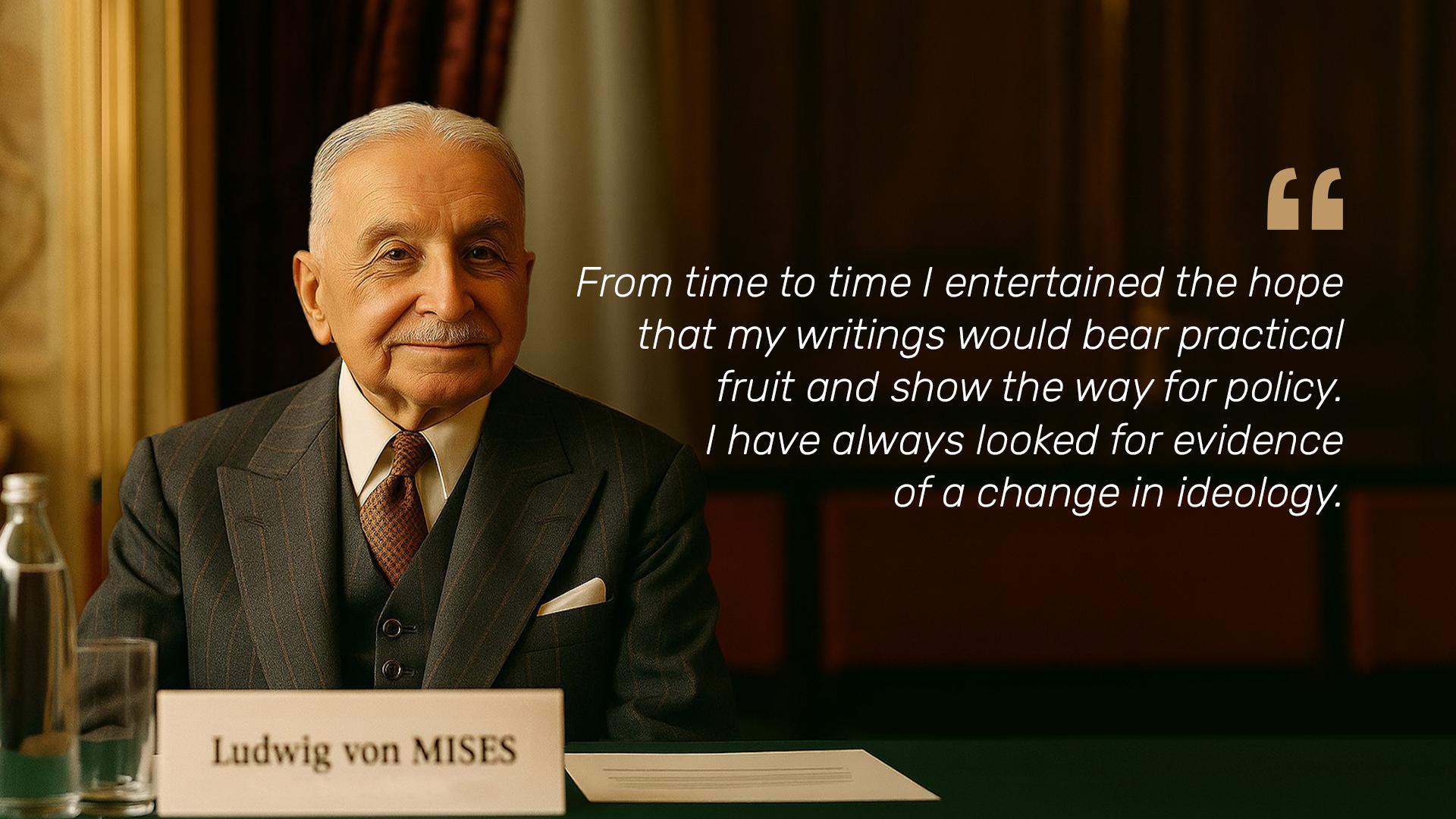
And much later, in 1927, Ludwig von Mises, in his book Liberalism: The Classical Tradition, rather harshly criticizes Mill, accusing him of «the thoughtless confounding of liberal and socialist ideas that led to the decline of English liberalism and to the undermining of the living standards of the English people. […] Without a thorough study of Mill, it is impossible to understand the events of the last two generations. For Mill is the great advocate of socialism.»
Classical liberalism in the 19th century increasingly focused not on fighting monarchy, but on limiting any form of concentrated power, including democratic power.
The late 19th and early 20th centuries were a period of profound crisis for classical liberalism. Industrialization, urbanization, growing social inequality, the emergence of mass labor movements, and two world wars called into question the ability of a minimal state to ensure social stability.
In response to these challenges, modern liberalism is emerging, which begins to interpret freedom not only as the absence of coercion, but also as the presence of opportunities. The state is increasingly seen not only as a "night watchman" but as an active instrument of social policy.
Source: John Rawls (2007) Lectures on the History of Political Philosophy [LHPP], S. Freeman (ed.), Cambridge, MA: Harvard University Press. https://plato.stanford.edu/entries/rawls/#toc
It is at this point that classical liberalism and modern liberalism finally diverge, although they continue to use common terminology.
Classical liberalism is a philosophical and political doctrine that places the individual at its center as the bearer of inalienable rights, while the state is viewed as an instrument rather than a source of these rights. It was liberalism that became the ideological foundation of modern democracies and market economies, and without it, modern capitalism would not have developed.
Share
Classical liberalism and the Austrian School of Economics: points of contact
The Austrian School of Economics (ASE) emerged at the end of the 19th century as a methodological and theoretical continuation of classical liberalism in economics, but not as its ideological variant.
It can be said that the Austrian School emerged from an internal crisis in economic science and has close intellectual affinities with classical liberalism, theoretically justifying the social institutions that classical liberalism defended normatively — issues of property, the market, and contracts.
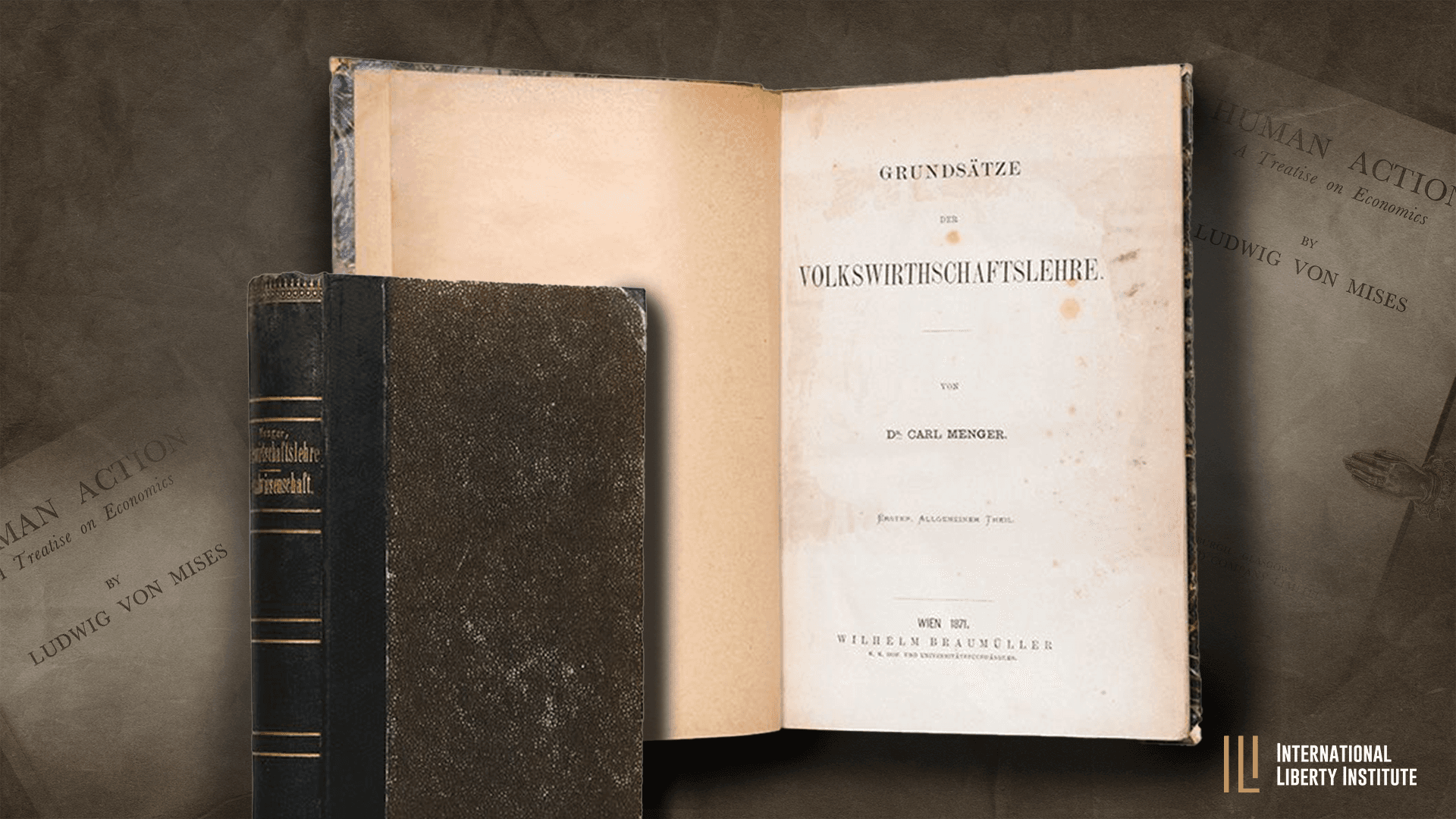
In the picture: First edition of Carl Menger's book "Principles of Political Economy," Vienna, Austria-Hungary, 1871.
It is customary to say that the Austrian School of Economics originated in 1871, when Carl Menger published his work «Principles of Political Economy» (Grundsätze der Volkswirtschaftslehre). And that is a fact. But the roots of this intellectual tradition go much deeper. In a certain sense, the Austrian School of Economics revived and modernized the intellectual line of late economic scholasticism, primarily the thinkers of the sixteenth–seventeenth-century School of Salamanca. Spanish scholastics such as Francisco de Vitoria, Martín de Azpilcueta, and Luis de Molina viewed economic phenomena through the prism of individual assessments, voluntary exchange, and the moral and legal legitimacy of private property. Therefore, it can be said that Carl Menger and his followers transferred this intuitive-subjective approach to the level of systematic scientific theory, formulating subjective value theory, methodological individualism, and market analysis as a process of coordinating the actions of individuals.
The Austrian School of Economics not only initiated a new phase in economic theory, but also became a modern continuation of an older tradition in which economic order is derived from human action, choice, and exchange, rather than from the prescriptions of authority or abstract collective entities.
It was Menger who became one of the founders of the «marginalist revolution», which replaced the classical labor theory of value with a subjective theory of value based on the concept of marginal utility. Unlike his contemporaries Jevons and Walras, K. Menger focused not only on equilibrium conditions, but also on the process of exchange itself and the role of knowledge, time, and expectations of market participants. Carl Menger rejected both mercantilism and Marxism, developing a subjective theory of value and methodological individualism, attempting to explain economic phenomena through the actions of individuals rather than through aggregated «classes» or «national interests.»
The school continued to develop in the following decades thanks to the efforts of a second generation of economists, the most prominent of whom were Eugen von Böhm-Bawerk and Friedrich von Wieser. Böhm-Bawerk expanded Menger's analysis of capital theory and the origin of interest, while Wieser proved that costs are also subjective, the price of lost opportunities when making choices.
the role of prices as carriers of dispersed knowledge;
spontaneous nature of market order.
Hayek and Mises essentially complete what Menger began as a theory of value: they transform the Austrian school into a general theory of social coordination.
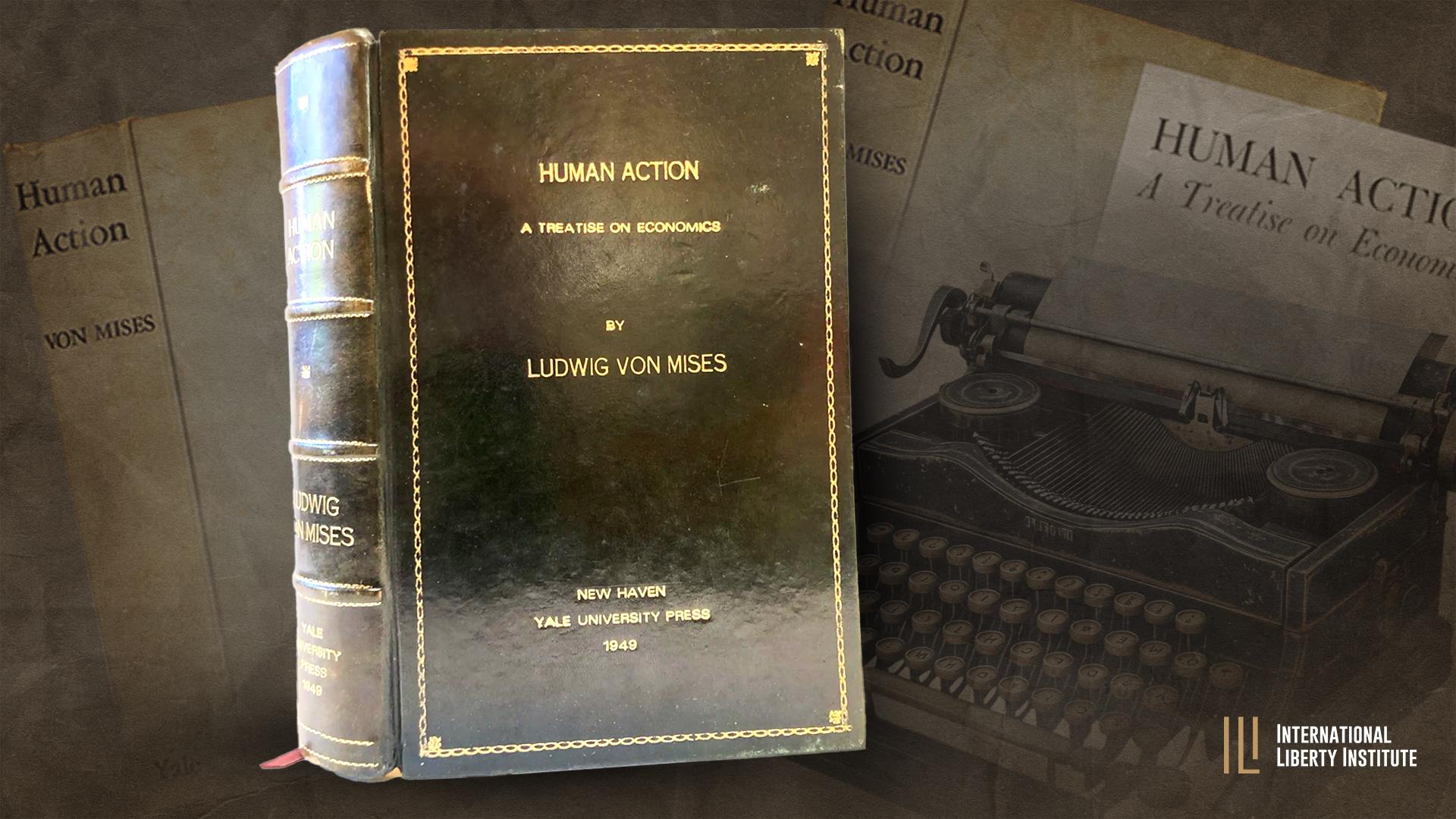
Ludwig von Mises takes a methodological step that definitively separates the Austrian School from the mainstream of 20th-century economic theory. In his fundamental work «Human Action: A Treatise on Economic Theory», he formulates economics as part of the broader science of purposeful human behavior — praxeology.
This approach directly echoes classical liberalism, since in both cases the individual is not an element of a collective structure, but rather the primary subject of social order.
In the picture: First edition of Ludwig von Mises' book «Human Action: A Treatise on Economic Theory», USA, Yale University, 1949.
In his article «Economic Calculation under Socialism» (1920), Mises argues that without private ownership of the means of production, market prices are impossible, and without them, rational economic calculation is impossible. This is not a moral argument against socialism, but an epistemological one, because the «planning center» does not have the information tools to coordinate a complex economy. It is here that a deep connection with classical liberalism can be traced, where the limitations of the state stem not only from the ethics of freedom, but also from the limits of human knowledge.
Friedrich von Hayek continued to develop this line of thought. In his 1945 article «The Use of Knowledge in Society», he shows that knowledge in society is: dispersed, contextual, and often informal. Prices act as a mechanism for transmitting information, allowing millions of people to coordinate their plans without centralized control. The market emerges as a spontaneous order that was not designed but evolved over time.
This aspect brings the Austrian school closer to classical liberalism at the level of institutional theory, where law, language, money, and the market are not products of the legislator's will, but the results of a long social evolution.
After World War II, the Austrian School of Economics remained somewhat isolated due to the monolithic dominance of Keynesian economics, but in the 1970s it began to experience a revival, spurred by F. A. Hayek receiving the Nobel Prize in Economics in 1974, and the works of American economist Murray Rothbard, which became bestsellers in the late 1960s and early 1970s — «What Has Government Done to Our Money», «America’s Great Depression», and other treatises.
The modern Austrian economic school offers a comprehensive system of views that considers the economy not as a mechanism striving for equilibrium, but as a dynamic process activated by entrepreneurial activity in conditions of uncertainty.
The principles of the Austrian School of Economics can be compared to navigating a ship on the open sea: instead of believing in a fixed harbor (static equilibrium), economists of this school study how the captain (entrepreneur) uses tools (prices) to adjust the course in constantly changing conditions of expectations and resources.
Thus, classical liberalism historically emerged as a political and legal doctrine of limiting power, whereas the Austrian School of Economics developed as a theoretical response to the problems of economic science. However, in the 20th century, their lines of development converged. Classical liberals argued that freedom is necessary because power must be limited morally and by law. Austrian economists have shown that freedom is also necessary because otherwise society loses its ability to coordinate knowledge, economic calculation, and adaptation to change.
The Austrian School of Economics became not a political ideology, but a theoretical foundation for the revival of classical liberalism in the 20th century, providing it with scientific arguments instead of merely normative assertions.
Libertarianism: combining classical liberalism and the Austrian School of Economics
Libertarianism as a coherent political philosophy only took shape in the mid-20th century, although its roots go back much further. It did not arise «from scratch», but was the result of the radicalization of classical liberalism and the simultaneous use of theoretical tools from the Austrian School of Economics.
Historically, this trend has developed in the context of three major processes:
Disappointment with the consequences of state interventionism in the interwar period.
The experience of totalitarian regimes of the 20th century.
Intellectual crisis of faith in the omnipotence of economic planning.
It is in this atmosphere that the classic liberal principles of limited government begin to be interpreted not as a pragmatic compromise, but as a normative maximum.
The normative foundation of libertarianism is John Locke's theory of natural rights, according to which the fundamental inalienable natural rights of man include the right to life, liberty, and property. While classical liberals viewed the state as a necessary instrument for protecting these rights, libertarians increasingly see it as a potential violator of them.
Share
While the ethical core of libertarianism derives from classical liberalism, its economic argumentation is largely based on the Austrian School. In particular:
libertarians borrow Mises' argument about the impossibility of rational socialist planning;
from Hayek, they take the idea of dispersed knowledge and the limitations of centralized control;
in the «Austrian» theory of capital, understanding the long-term consequences of intervention in the structure of production.
Libertarianism is most systematically presented in the works of Murray Rothbard, who combined:
Locke's theory of property;
Mises' Austrian economics;
radical restriction of the state.
Rothbard concludes that even a minimal state contradicts the principle of voluntarism and justifies the possibility of a society based on private law without a state monopoly on coercion.
Libertarianism is a historically later but logically consistent continuation of the liberal tradition. It arises at the intersection of:
Classical liberalism (the ethics of freedom and natural rights).
Austrian School of Economics (theory of market coordination and limits of knowledge).
L"Classical liberalism raised the question of how to limit power, and the Austrian School of Economics explained why centralized management does not work. On this foundation, libertarianism formulated a radical answer: any coercive power must be reduced to an absolute minimum or eliminated."L
Liberalism, Austrian School of Economics, Libertarianism: exploring logical connections
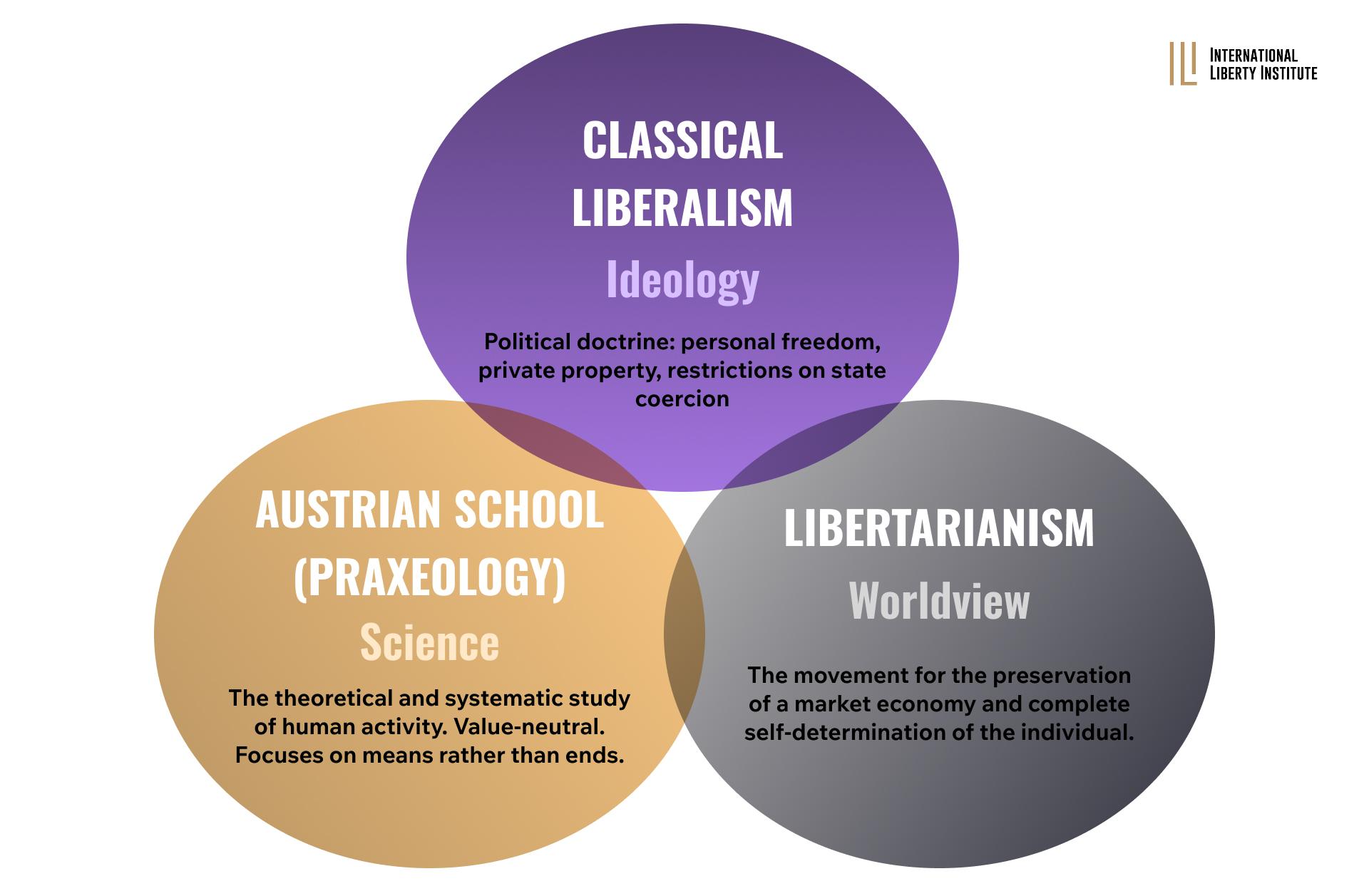
In general, it can be said that classical liberalism is the basis, the philosophy, the Austrian School of Economics is the applied science, the toolkit, and libertarianism is the active defense, the ideological movement against modern forms of statism and interventionism.
Concept
Essence and role (according to sources)
Connection with other elements
Classical liberalism
A political doctrine based on personal freedom, private property, and limited government coercion.
It is a practical application of theories developed by praxeology. Historically, it contributed to the Industrial Revolution through the introduction of economic freedom.
Austrian School (Praxeology)
The theoretical and systematic science of human activity. It is value-free (wertfrei) and studies only the means, not the ends.
Serves as the scientific foundation and instrument of knowledge for liberalism. Proves the impossibility of socialism and the effectiveness of the market.
Libertarianism
A movement for the preservation of a market economy and complete self-determination of the individual. Mises is often identified with true liberalism.
Uses the conclusions of the Austrian School to refute interventionism and socialism. Defends the «first principles» of freedom against state omnipotence.
It is important to understand that classical liberalism, the Austrian School, and libertarianism are not three separate islands and are not interchangeable, identical concepts, but rather three stages of intellectual evolution, where each subsequent stage deepens and radicalizes the previous one.
Classical liberalism as an ideology emerged as a response to political absolutism and class despotism. Its main achievement was the introduction of constitutional restrictions on state power and the creation of a legal framework for individual freedom. However, classical liberals did not yet have a complete theoretical framework for explaining economic processes — they relied mainly on empirical observations and intuition about the advantages of the free market.
The Austrian School of Economics, as a science, filled this gap by providing a systematic theoretical justification for the institutions that classical liberalism defended intuitively. At the same time, it is important to emphasize that the Austrian School of Economics is a scientific movement, not an ideology. It does not indicate how things should be, but only explains what will happen if certain political decisions or economic and financial instruments are applied. This is why Austrian economists can arrive at different policy conclusions based on the use of the same theory.
Libertarianism as a worldview synthesizes both approaches: it takes its ethical foundation from classical liberalism (natural rights theory) and its economic argumentation from the Austrian school, and draws a radical conclusion from them. If the state is a potential violator of rights, and economic efficiency is achieved through voluntary exchange, then why is a state monopoly on coercion necessary at all?
However, there are fundamental differences between these three concepts:
Regarding the state:
Classical liberalism recognizes the need for the state as a «night watchman» that protects rights and performs certain basic functions;
The Austrian school does not formulate its own theory of the state — it merely shows the consequences of various forms of state intervention;
Libertarianism questions the very legitimacy of the state monopoly on violence, proposing alternative mechanisms for protecting rights.
Regarding methodology:
Classical liberalism is based on historical experience, moral philosophy, and legal principles;
The Austrian school uses deductive logic, praxeology, and analysis of human activity;
Libertarianism combines both methods.
Regarding social issues:
Classical liberalism allows for a certain degree of pragmatism and compromise with the welfare state;
The Austrian school does not take a normative position on redistribution, but only analyzes its consequences;
Libertarianism categorically rejects forced redistribution as a violation of property rights.
On the importance of terms. «Liberalism» comes from the French word «libéralisme», which has a clear correlation with the word «freedom.» It is important to understand that when modern politicians call themselves «liberals,» they often mean something completely different: support for active state intervention, income redistribution, and economic regulation. This is not an evolution of classical liberalism, but its negation. In the United States, for example, «liberals» are used to refer to members of the Democratic Party who essentially hold socialist views. Some politicians describe themselves as liberals without taking an interest in the classical scientific canons.
Today, when someone says, «I am a liberal», it is worth clarifying: classical or modern? Because the difference between them is as great as that between Adam Smith and John Maynard Keynes.
And if someone believes that individual freedom is an absolute priority, that the state should be strictly limited, and the market should be as free as possible, then perhaps they are not just a liberal, but a libertarian, even if they have never heard this word before and do not understand its meaning.
Conclusions
Classical liberalism, the Austrian School of Economics, and libertarianism are three distinct but closely related intellectual traditions that form a unified field of defense of individual freedom and limitation of state coercion.
The main difference between them lies not in contradiction but in the depth of radicalism. Because classical liberalism says, «Limit the power of the state.» The Austrian school explains why this is necessary from an economic point of view, while libertarianism asks, «Why do we need the state at all?»
Understanding these differences is critically important for Ukraine. When we talk about reforms, building a free society, and limiting corruption and bureaucracy, we must be clear about the principles we are working from. Because modern social liberalism, which dominates in the West, offers a completely different path — more state, more regulation, more redistribution. And if we do not understand the difference, we will follow not Adam Smith and Ludwig von Mises, but those who led the West to state interventionism.
Therefore, knowledge of the history and essence of these ideas is not an abstract intellectual exercise. It is a tool for making informed choices about Ukraine's future. And this choice is between freedom and coercion, between the market and planning, between individual responsibility and state paternalism.
Freedom is not a gift from the state. It is our natural right, which we have the right to defend. Classical liberalism, the Austrian School of Economics, and libertarianism are three different instruments of this defense, three different ways of justifying one simple truth: a person belongs to themselves, not to the state.
Tetiana Stroiko, science editor of ILI. Doctor of Economic Sciences, Professor of the Department of Intelligent Digital Economy at the National University of Shipbuilding named after Makarov (Mikolayiv).
Harmful economic myths underpin entire country strategies implemented by governments and ultimately lead to financial crises, rampant inflation, and the long-term impoverishment of entire nations. Ukraine is an example. But is there an antidote?
The idea of a “minimal state” is key to a liberal economy: more market, less taxes and regulation. But what kind of state should it be, and how should it operate?
Ludwig von Mises and the rethinking of the significance of the Austrian School of Economics for a prosperous world. Why did Mises’ teachings — praxeology, business cycles, and the laws of the market economy — not become mainstream? The implementation of Mises’ ideas as a chance for Ukraine’s economic recovery.