Аlternative approaches to addressing nature conservation and sustainable natural resource management. A fresh look at old problems and an attempt to determine whether only the state is capable of preserving natural resources or whether the institution of private property can prove its environmental effectiveness.
In the context of the existential war in which Ukraine finds itself, the Ukrainian state is being tested on its ability to fulfill the primary function of any state — ensuring the external protection of its population. Since the aggressor outmatches Ukraine in virtually every respect, this requires the maximum concentration of resources, forces, and capabilities on defense needs. However, it turns out that even in wartime, the government is increasing non-military spending and stepping up its interference in economic activities, particularly in matters related to the use of natural resources.
A prime example of utter absurdity is the adoption, in the midst of the war, of the Law of Ukraine "On the Basic Principles of State Climate Policy" No. 3991-IX of October 8, 2024, aimed at fulfilling the commitments undertaken under the Paris Agreement (2015). It should be noted that on his very first day in office, President-elect Donald Trump issued an executive order withdrawing the United States from the Paris Agreement. As stated by the White House, complying with the Paris Agreement is not in the U.S. interest, runs counter to the goals of "economic efficiency," and does not promote the "prosperity" and "consumer choice" of Americans themselves!
It is clear that for Ukraine, which faces a matter of survival—where not only its flora and fauna are suffering, but hundreds of thousands of Ukrainians are losing their lives or becoming disabled, and the national wealth built up through the labor of many generations is being destroyed—the question of whether it is appropriate to fulfill international climate commitments is entirely rhetorical.
Given the inefficiency of government institutions—which, in wartime conditions, can at times take on an openly destructive character—solutions to pressing issues, including those in the environmental sphere, should not be sought by strengthening these institutions and/or expanding their functions, but rather in the creation of an institutional environment that would allow environmental and other problems to be addressed in a decentralized manner and by relying on market mechanisms. Let’s consider some specific areas.
Nature conservation in the hands of the private property system
In a free market, the negative impact on the environment can be reduced through the institution of private property, the mechanism of price formation, and the exercise of private initiative.
It goes without saying that anyone who owns property is, by definition, interested in generating income from it and/or increasing its value. This is evident in the fact that an owner of agricultural land is not only interested in maximizing profits from the sale of their crops but also considers the potential decline in land value due to environmental pollution caused by excessive use of mineral fertilizers or pesticides.
Private control over natural resources can, in some cases, lead to natural monopolies, which may result in monopoly prices. At the same time, however, this encourages consumers of such resources to use them even more sparingly and efficiently, thereby helping to preserve natural resources for future generations.
In a market economy, every seller strives to sell their goods at the highest possible price.
Since markets characterized by perfect competition—where neither the seller nor the buyer can set the price—are rare in practice, every entrepreneur strives to make their product stand out from similar ones on the market. This can be achieved by drawing the buyer’s attention to specific features—such as quality, design, functionality, and customer service. A price that takes into account these unique characteristics of a product compared to similar ones on the market is called a premium price or a price based on product differentiation.
At the same time, companies that have adopted a strategy focused on meeting the demand for products with specific characteristics are beginning to align their entire marketing mix with their objectives, with price being just one component of that mix. Under market competition, the only sellers of premium products that remain are those who truly provide accurate information about the product’s unique features. Their brands and trademarks become recognizable and increase in value, and their efforts are rewarded with higher sales revenue.
All of the above fully apply to environmentally friendly products or products manufactured using methods that protect the natural environment. After all, in today’s world, thanks to the collective efforts of scientists, civic groups, political parties, and the media, the importance of environmental quality indicators for products is growing, as is support for manufacturers who strive to minimize their negative impact on the environment.
Alongside the institution of private property and the mechanism of price formation, private initiative plays an important role in environmental protection in a free-market economy.
History provides numerous examples of how private individuals have voluntarily taken on—and continue to take on—commitments to protect the environment. Here are just a few of them.
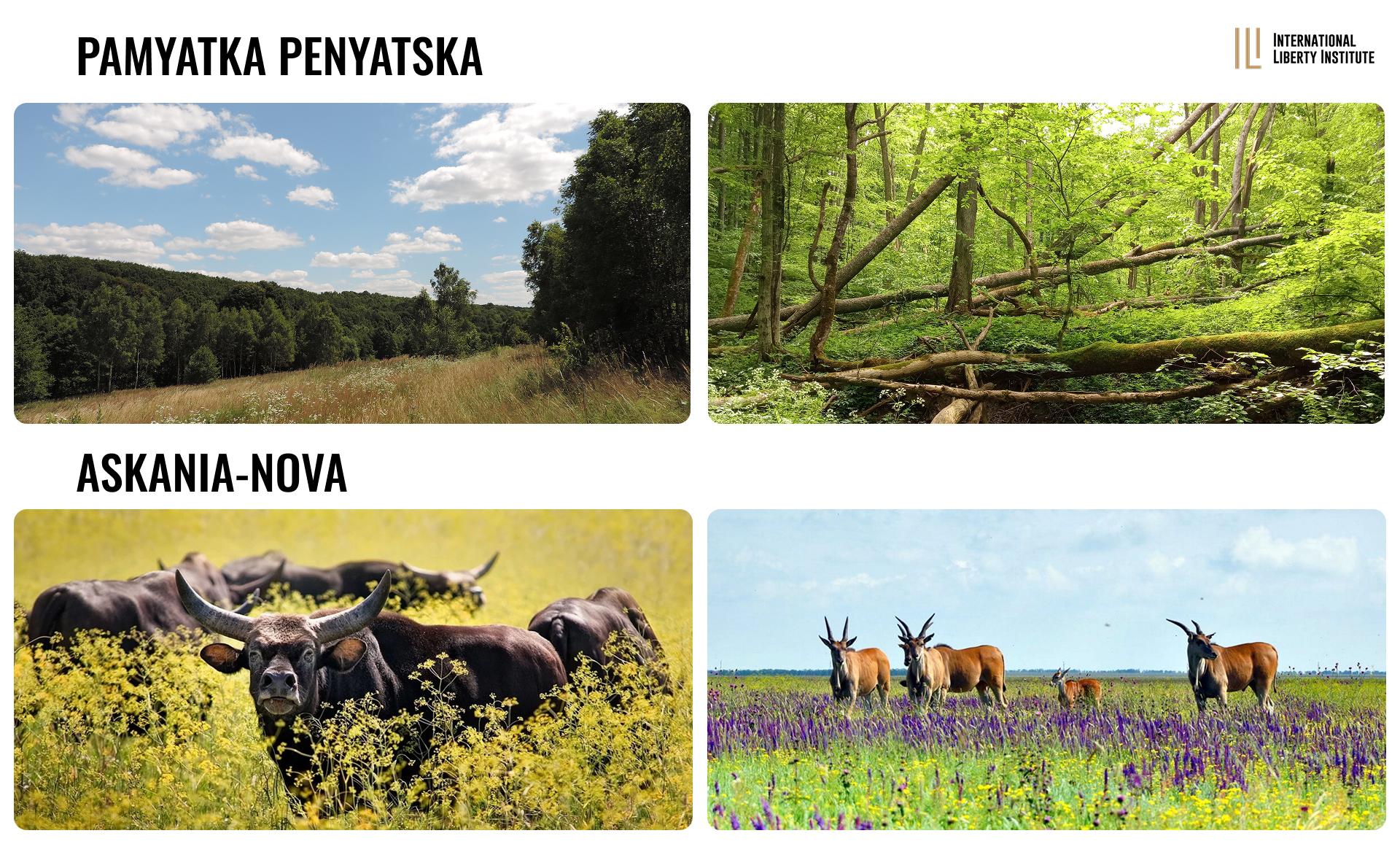
In 1886, a well-known Galician patron of the arts, a wealthy landowner and great nature lover, Count Volodymyr Didushytskyi, became the first person in Ukraine to establish a nature reserve in the modern sense of the word, naming the newly created nature reserve "Pamyatka Penyatska" nature reserve.
The famous "Askania-Nova", the oldest steppe reserve in the world and the largest steppe reserve in Europe, was founded by the German colonist Friedrich Falz-Fein in 1898.
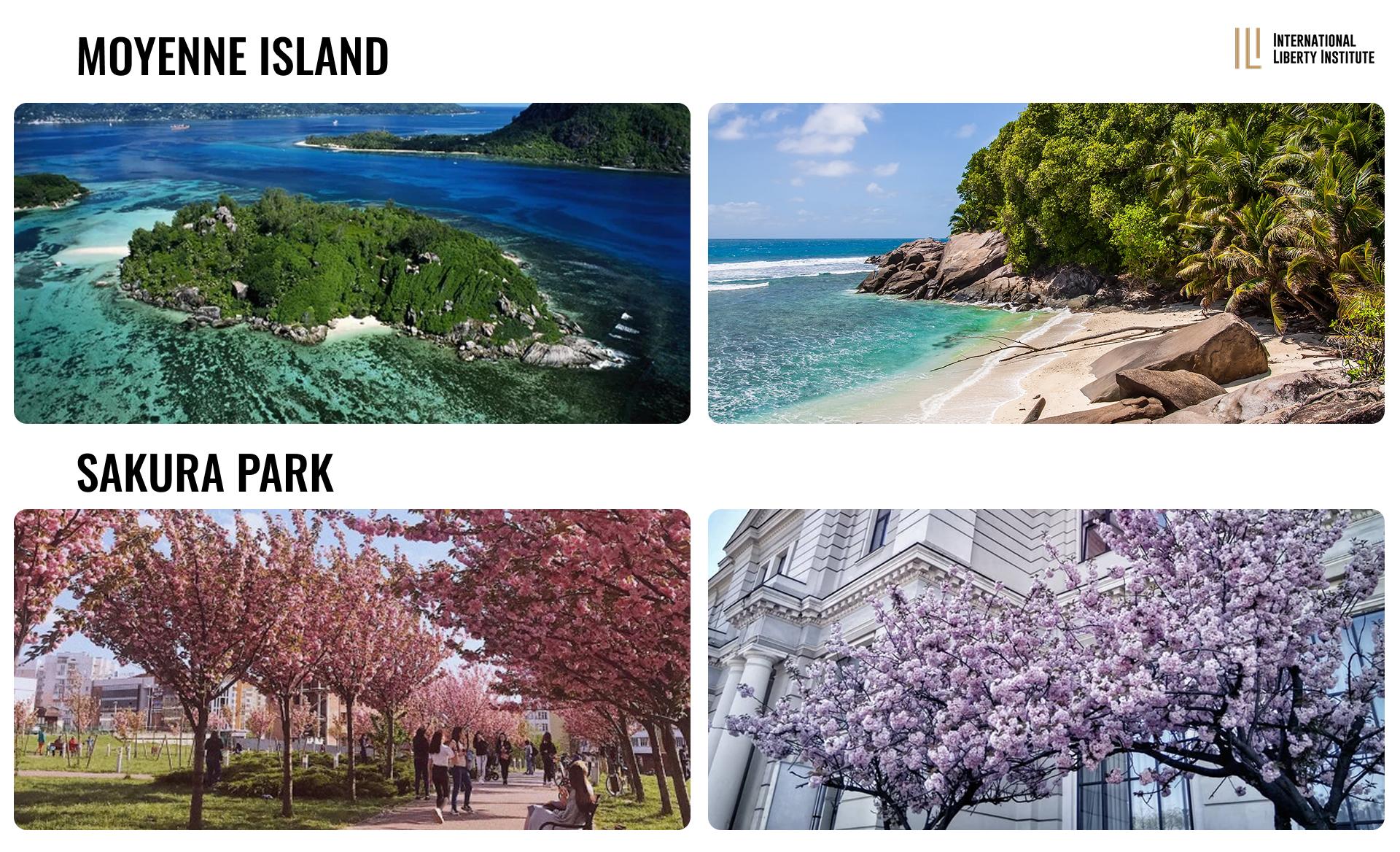
A more recent example is that of the Englishman Brendon Grimshaw, who in 1973 purchased Moyenne island in the Seychelles for $13,000 and devoted the rest of his life to restoring its ecosystem. Another well-known example is that of Brazilian photographer Sebastião Salgado, who, together with his wife Lélia Wanick Salgado, has not only worked since 1998 to restore the ecosystem on their 600-hectare family farm, but has also grown more than 4 million seedlings of various species in their nurseries, characteristic of Brazil’s Atlantic Forest.
Our fellow Lviv native Anatoliy Kunovsky is working on bringing to life the idea of the world’s largest Sakura Park, located near Lviv.
It should be noted that, unlike environmental initiatives launched by government officials — who are paid a salary for their work and are willing to carry out these initiatives at the taxpayers’ expense — private initiatives are undertaken at one’s own risk, at one’s own expense, and/or using financial and other resources raised voluntarily.
Source: Magas, V. On the Methodology of Environmental Policy Formulation in Ukraine. Balanced Use of Natural Resources. No. 4. 2025. pp. 48–57. DOI: 10.33730/2310-4678.4.2025.346191
Where could the implementation of climate policy lead Ukraine amid the war?
Climate policy is increasingly becoming a tool for geo-economic influence. EU countries are introducing carbon regulation mechanisms (such as the CBAM) that effectively act as a tariff barrier against products from countries with lower environmental standards. Under the banner of the “green deal” a new form of protectionism is taking shape, strengthening the position of developed economies and undermining the competitiveness of others.
When seeking solutions to problems related to climate change, the so-called concept of global responsibility is applied. However, this responsibility is distributed extremely unevenly.
Highly developed countries that have gone through the industrialization phase can now afford to pursue a “green transition” policy because:
have the capital for technological modernization;
possess the intellectual resources needed for innovation;
can offset losses in energy efficiency through high-value-added in other sectors.
For countries like Ukraine, such a policy creates an additional barrier to development.
Requirements to reduce emissions, adopt "clean" technologies, and implement carbon quotas effectively curtail economic sovereignty and force countries to either scale back industrial activity or import expensive technologies, which often creates a new form of economic dependence. In other words, the climate policies of wealthy countries are often implemented at the expense of poorer ones.
Share
At the same time, there is the question of the scientific and practical validity of climate policy. Despite the broad consensus that global warming is occurring, the question remains: Is human activity truly the decisive factor behind these changes, or only a contributing factor?
Ukraine, which today is fighting for its existence as a state and a nation, does not belong to those economies that truly determine climate trends. The country’s share in global greenhouse gas emissions does not exceed 0.5%, while 100 of the world’s largest companies account for 70%!
The existential war Ukraine is currently facing demands the right priorities. Therefore, Ukraine’s participation in global climate initiatives cannot and should not be viewed in isolation from the priority of survival—defense, reconstruction, economic modernization, and the preservation of the population. Conceptually, it is more accurate to speak not of an ephemeral struggle against "global warming," but of environmental security as a component of the national security system on par with military, energy, food security, and so on.
The concepts of "threat", "danger" and "security" are fundamental categories of any national security policy, particularly environmental policy. A threat is the potential for an event to occur that could harm the vital interests of an individual, society, or the state. A danger is an actual condition or process in which a threat materializes. Security is a state of a system in which risks have been eliminated or minimized to an acceptable level.
In this sense, environmental safety refers to the ability of the state, society, and the economy to withstand environmental risks, prevent their accumulation, and mitigate their negative consequences.
Environmental risks become a threat when they become concentrated in space, time, or a technological system. In other words, the greatest danger lies where risks are concentrated rather than dispersed. Essentially, environmental safety is a system for managing risk concentrations. Therefore, a prerequisite for environmental safety is the establishment of a competitive order within Ukraine’s economic system.
Decentralized competition among communities as an incentive to address environmental issues
One of the key prerequisites for an effective environmental policy is the existence of effective decision-making mechanisms at the level where issues related to nature conservation and the use of natural resources directly arise.
In this context, decentralization serves not only as an administrative reform but also as an institutional mechanism for environmental safety, capable of ensuring a balance between resource use and environmental conservation.
Delegating decision-making on most environmental issues to the local or regional level helps increase communities’ accountability for the state of the environment and ensures meaningful public participation in decisions that have environmental implications. After all, it is local communities that are most familiar with the environmental issues in their area, understand the specifics of natural resource use, and are aware of the environmental risks associated with economic activities.
DECENTRALIZED COMPETITION AMONG REGIONS FOR POPULATION CREATES AN INCENTIVE TO IMPLEMENT LOCAL ENVIRONMENTAL REGULATIONS AND MONITOR COMPLIANCE WITH THEM.
Recognizing the risks of centralizing authority in the regulation of land and natural resource relations, it is advisable to transfer to city and village communities (rather than so-called amalgamated territorial communities) the ownership or lifelong use of all lands, forests, water, and other natural resources located in areas adjacent to settlements that are not in state or private ownership. This approach will not only strengthen local self-government but also create real incentives for the rational use of natural resources, as communities have a direct stake in the long-term preservation of their territory’s resource potential.
At the same time, the central government should retain control only over natural resources of national importance—strategic forest areas, water systems, mineral resources, and national-level nature reserves. The center performs a coordinating, analytical, and regulatory role, while day-to-day management and oversight are carried out at the local level.
Ultimately, we must realize that land is not something the government can simply dispose of—it is the environment in which citizens live.
It is they, at the lowest level of social organization, who should have the right and the ability to decide on its use, protection, and restoration. Only such a management system can ensure the effective conservation of natural resources, particularly the protection of forests from indiscriminate logging, as well as the preservation of aquatic ecosystems and biodiversity.
Thus, the decentralization of environmental management is not merely a political or economic measure, but a strategic prerequisite for preserving the country’s natural resources. It lays the groundwork for the establishment of a new ecological order based on accountability, community participation, and sustainable regional development.
Clear establishment of property rights as the foundation for the protection of natural resources
The issue of sustainable natural resource management and environmental protection is largely linked not only to technical or environmental factors but primarily to institutional shortcomings—such as the vagueness, ambiguity, or absence of clearly defined property rights over natural resources. It is precisely this problem, highlighted by Ronald Coase (1960), that lies at the core of many environmental conflicts and the inefficient use of resources.
Source: Coase R. H. The Problem of Social Cost. Journal of Law and Economics. 1960. Vol. 3. P. 1–44
Coase argued that externalities—such as air pollution or land degradation—are not the result of a "market failure," but rather the result of the absence or ambiguity of property rights. If such rights are clearly defined and the parties are able to negotiate without incurring significant transaction costs, they can reach an effective resolution of the conflict on their own without the need for government intervention.
It is of the utmost importance for Ukraine to establish a system in which natural resources are not subject to "collective irresponsibility". The absence of an owner or the dispersion of authority among numerous government agencies leads to a "tragedy of the commons"—that is, the overuse and depletion of resources.
Clarifying and establishing property rights (whether state, municipal, private, or collective) makes it possible to:
assign responsibility for the state of the environment;
create economic incentives for resource conservation (by offering benefits for their sustainable use);
introduce market-based mechanisms for resolving environmental problems, in particular compensation agreements for environmental damage, trading of emission or water-use rights, and the introduction of a system of “environmental easements".
One of the effective mechanisms for implementing the Coasean approach is to expand the use of case (judicial precedent) law. In situations where the boundaries of property rights or liability are unclear, a court can establish a precedent that determines the balance of interests between the polluter and the affected parties.
For example, if a company causes harm to residents of the surrounding area, a court ruling may either recognize the citizens’ right to compensation (by holding the polluter liable) or, conversely, establish the limits within which its activities are permissible.
Thus, each decision serves to clarify property rights in a practical sense. This will gradually lead to a system in which the behavior of market participants is determined not by bureaucratic regulations but by legally established legal positions.
Environmental Risk Insurance
An important non-governmental mechanism for addressing environmental protection issues is the development of the environmental risk insurance market. This is a separate, broad topic, so we'll just touch on it briefly.
The purpose of this type of insurance is to minimize the potential costs incurred by a business entity in connection with the enforcement of court rulings regarding environmental damage caused to other private or collective entities. In other words, insurance against the potential negative impacts of an insurer’s business activities on the environment that harm the private or collective interests of third parties.
Environmental risk insurance can be taken out both by a party that may cause environmental damage, to cover potential liability for such damage, and by a party that may be a potential victim. For example, an agricultural holding could insure against the risk of damage caused to beekeepers by the use of chemicals, while beekeepers could insure themselves against potential damage resulting from the agricultural holding’s actions.
To minimize the costs associated with fulfilling the terms of the insurance contract, the insurance company will require the insured to agree to an environmental audit. An environmental audit may be conducted either by the insurance company itself or by other market entities with which it enters into relevant agreements.
If damage is caused to an insurer that has taken out insurance against environmental risks, the insurance company, after paying the appropriate amount, will seek compensation through the courts from the party that caused the adverse environmental consequences for the insured party.
As is likely the case with any other form of harm, structures similar to those described by Murray Rothbard will emerge to protect life, property, and so on. At the same time, questions arise regarding insurance for global risks. Is the formation of a global government really inevitable? Will this be carried out by large organizations or by cooperatives of local insurance companies?
Rothbard, M. (2022) Toward a New Liberty: A Libertarian Manifesto. Translated from the English by O. Grosman; edited by V. Zolotoryov / Institute for a Free Economy, 420 pp.
Restrictions, or "sustainable" consumption, as a way to reduce the impact of human activity on nature
In his famous work The Protestant Ethic and the Spirit of Capitalism (1905), Max Weber demonstrated that moderation and self-discipline were not so much external constraints as a spiritual attitude of individuals who sought not pleasure, but meaning and service.
Weber, M. The Protestant Ethic and the Spirit of Capitalism / Max Weber; translated from German by O. Pogorily. — Kyiv: Osnovy, 1994. 261 pp.
This was the paradox of modern capitalism: the spiritual ethic of work gave rise to material comfort, and the latter eventually undermined its own moral foundation. Modern civilization, focused on maximizing comfort, has turned it into an end in itself, devoid of any spiritual dimension. Comfort has become not a means of sustaining highly productive labor, as in Weber’s view, but a new form of dependency that creates an endless demand for resources.
Richard Thaler, a representative of behavioral economics, showed that people rarely make rational decisions, and therefore their behavior can be “gently nudged” in a desired direction. This idea, which forms the basis of modern environmental policy, gives rise to a new form of control—not direct coercion, but behavioral programming. Under the banner of "environmental responsibility," people are encouraged to adopt certain consumption patterns — buying "green" products, avoiding travel, and reducing energy use. However, this is often not the result of free choice, but rather of a norm imposed by the state, corporations, or popular culture.
Richard Thaler, Behavioral Economics: How Emotions Influence Economic Decisions / Translated from the English by Svitlana Krykunenko. – Kyiv: Nash Format, 2018. – 464 pp..
THE FREEDOM OF CHOICE, WHICH ONCE WAS THE SOURCE OF HUMAN DIGNITY, IS NOW SEEN AS A THREAT TO "ECOLOGICAL BALANCE". THAT IS WHY THE STATE OR GLOBAL INSTITUTIONS ARE TRYING TO REPLACE FREEDOM WITH CONTROLLED EDUCATION, BEHAVIORAL MODELS, "GREEN" RATINGS, AND SO ON.
When "sustainable consumption" becomes an ideology, it gives rise to a dangerous trend: the erosion of freedom under the guise of caring for the planet. Environmental rankings of countries, companies, and even individuals are emerging; consumption quotas, restrictions on movement, and property limits are being introduced.
Under this logic, a "non-ecological" individual is gradually regarded as morally inferior, someone who should be controlled or even excluded. This is a new form of paganism—the worship of the "green" idea as the highest value, in which humans are no longer creators but culprits, not subjects but objects of indoctrination.
The erosion of the spiritual dimension of humanity is giving rise to a new form of idolatry—the deification of nature and the deification of the State, which proclaims itself the sole arbiter of "ecological truth". We place our trust in the State when faith in God and in humanity—as His supreme creation—is lost.
We must recognize that "sustainable consumption" can be a path to harmony between humans and nature only when it stems not from an externally imposed behavioral framework, but from inner freedom and conscious choice.
Associate Professor of Ivan Franko Lviv National University, PhD in economic sciences, specializes in the theory of market reforms, problems of the competitive order formation in the economic system of Ukraine, spiritual foundations of the market economy.
A sober analysis of events, probable positive and negative developments in the new year for the world, the US, the EU, and Ukraine, and the conditions for their realization, without all-encompassing scientific “futurology” and illusions.
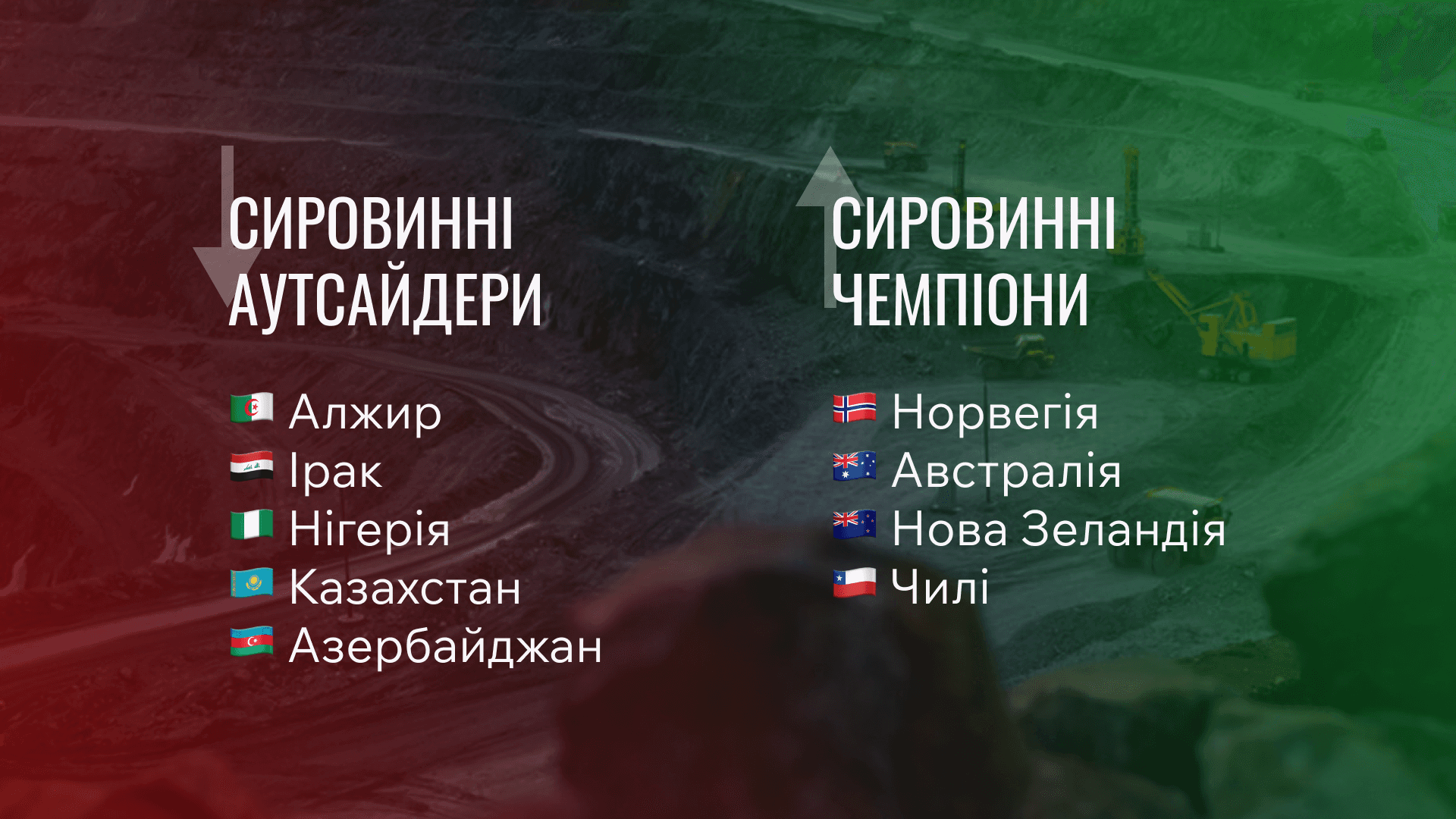
Ukraine's raw materials economy accounts for less than 1% of the world's. Under what conditions will the production and export of oil, gas, and rare earth metals become the engine for an economic miracle and the basis for the competitiveness of postwar Ukraine?