The Ukrainian government made a serious theoretical mistake by requiring the country’s central bank to perform not just two but even more functions from the very beginning of the National Bank’s operations.
This mistake was exacerbated by the conditions surrounding the introduction of the hryvnia — very high inflation, an acute shortage of specialists in monetary and macroeconomic policy, underdeveloped capital and foreign exchange markets, weak public administration institutions, and an underdeveloped financial market. Over the next 30 years, this mistake was never corrected. The lack of a distinct national school of thought on the theory of money, finance, and credit relations, together with a multiple-mandate approach, significantly complicated efforts to ensure monetary and macroeconomic stability throughout the Ukrainian economy.
The architects of Ukraine’s financial system in the 1990s ignored the experience of both developed and developing countries in monetary policy and in achieving price stability during the systemic and structural transition from a centrally planned economy to a market economy.
The Ukrainian hryvnia was established on August 25, 1996, by Presidential Decree No. 762/96 issued by President Leonid Kuchma, “On Monetary Reform in Ukraine”.
This document was adopted in accordance with Articles 99 and 102 of the Constitution of Ukraine: “The currency unit of Ukraine shall be the hryvnia. Ensuring the stability of the currency unit shall be the major function of the central bank of the State – the National Bank of Ukraine.”
The Law “On the National Bank of Ukraine” was adopted in 1999, but as of the end of 2025, it had been amended 92 times — an average of three times a year. This fact speaks volumes about the quality and stability of the legislative framework administered by the main institution responsible for conducting monetary policy.
The Legal Framework for the National Bank and Monetary Policy in the West
To begin with, let’s analyze the legal framework for Ukraine’s monetary policy in light of international practices and standards.
A time bomb beneath the Ukrainian hryvnia, the quality of monetary policy, and the country's financial market as a whole was embedded in the very Law “On the National Bank of Ukraine.”
Share
In particular, Article 4 states, “The National Bank of Ukraine shall be an economically independent body that carries out expenditures at the expense of its own revenues and, in cases determined by this Law, also at the expense of the State Budget of Ukraine.”
This raises a legitimate question: why should a public authority be economically independent, and what exactly is this so-called “self-financing”? By itself, this provision does not pose a serious risk to the National Bank’s ability to perform its functions.
Article 6 of the Law defines the National Bank’s primary function: “In accordance with the Constitution of Ukraine, the primary function of the National Bank shall be to ensure the stability of the monetary unit of Ukraine.” Accordingly, the National Bank’s top priority is to achieve and maintain price stability in the country. At first glance, everything seems perfectly clear: in carrying out its activities, the National Bank is required to focus on a key performance indicator (KPI) for inflation, namely the Consumer Price Index (CPI). However, the law contains an important qualification: the National Bank shall promote financial stability, including the stability of the banking system, provided that this does not interfere with the achievement of its primary objective and priority — price stability. However, Article 6 of the Law “On the National Bank of Ukraine” further expands the Bank’s mandate:
“The National Bank shall also promote the maintenance of sustainable rates of economic growth and support the economic policy of the Cabinet of Ministers of Ukraine, provided that this does not interfere with the achievement of the objectives set out in parts two and three of this Article.” Overall, Article 7, “Other Functions,” lists 41 additional functions of the National Bank, revealing how the institution's role and functions in the country's economic policy are understood.
Here are some examples of the objectives and functions of central banks in several leading countries around the world.
Switzerland
The SNB has the mandate to conduct monetary policy in such a way that money preserves its value and the Swiss economy develops in an appropriate manner.
Data on inflation, financial market development, the Swiss National Bank’s purchasing power, and quantitative and qualitative indicators of the Swiss economy provide grounds for concluding that the Swiss National Bank (SNB) is one of the best, if not the best, in the world. Therefore, it is particularly important for Ukraine to study and apply its experience and operating model.
Here is what the legal requirement for the Swiss National Bank looks like:
L"Article 99 of the Federal Constitution entrusts the SNB, as an independent central bank, with the conduct of monetary policy in the interests of the country as a whole. The mandate is explained in detail in the National Bank Act (art. 5 para. 1), which requires the SNB to ensure price stability and, in so doing, to take due account of economic developments."L
Article 5, “Tasks” of the Federal Act on the Swiss National Bank provides that:
L"1.The National Bank shall pursue a monetary policy serving the interests of the country as a whole. It shall ensure price stability. In so doing, it shall take due account of economic developments."L
Below is the Swiss National Bank’s definition of “price stability,” which has, in essence, been adopted by the central banks of virtually all market economies:
L"The SNB equates price stability with a rise in the Swiss consumer price index (CPI) of less than 2% per annum. Deflation, i.e. a sustained decrease in the price level, also breaches the objective of price stability."L
The importance of price stability and preserving the purchasing power of the national currency is illustrated by the following simple calculation provided by the Swiss National Bank:
L"How long does it take for the purchasing power of one Swiss franc to be reduced by half? With an annual inflation rate of 1%, it takes 70 years. With an annual inflation rate of 2%, it takes 35 years. With an annual inflation rate of 5%, it takes 15 years. With an annual inflation rate of 10%, it takes 7 years. Price stability means that the level of prices remains unchanged. It also means that while the prices of individual goods may certainly fluctuate, the average of all prices changes so little that it hardly matters in everyday life."L
L"The primary objective of the ECB’s monetary policy is to maintain price stability. This means making sure that inflation – the rate at which the prices for goods and services change over time – remains low, stable and predictable. To succeed, we seek to anchor inflation expectations and influence the “temperature” of the economy, making sure the conditions are just right – not too hot, and not too cold. We do this through our monetary policy. The Governing Council considers that price stability is best maintained by aiming for 2% inflation over the medium term."L
Poland
Article 3 of the Act on the National Bank of Poland states:
L"The basic objective of NBP activity shall be to maintain price stability, and it shall, at the same time, act in support of Government economic policies, insofar as this does not constrain the pursuit of the basic objective of the NBP."L
The examples above clearly illustrate the purpose of the National Bank: price stability and, as a result, the preservation of the national currency’s purchasing power.
Thus, the central bank, as a special institution of public administration, was established after the abolition of the gold standard and the nationalization of money with one specific, clearly defined goal — to ensure price stability.
The consumer price index is generally considered to be the key indicator of this goal. This framework is known as a single mandate. Throughout most of the twentieth century, central banks generally operated under this framework. A major departure came in 1977, when the U.S. Congress formally established the dual mandate. The Federal Reserve was tasked with pursuing “maximum employment” and “price stability,” thereby expanding the central bank’s mandate while also increasing the number and scope of legally sanctioned interventions through monetary policy, which increasingly came to accommodate fiscal policy. As a result, the primary objective began to suffer, creating a classic case of conflicting mandates — aptly captured by the saying, “If you chase two hares, you will catch neither.”
Following a series of crises — including the dot-com crash of the early 2000s, the global financial crisis of 2008–2009, and the inflation crisis of the 2020s — the debate over the mandate of central banks intensified in the United States, Europe, and across OECD countries. Proponents of New Keynesianism and accommodative monetary policy, including advocates of the so-called Modern Monetary Theory (MMT), argued for a further expansion of central banks’ mandates. For example, the European Central Bank decided to support the climate agenda and the transition to net-zero emissions:
L"Cutting carbon emissions is the only way to avoid the worst effects of climate change. For this reason, the European Union has committed to a 55% reduction in emissions by 2030 and a net-zero economy by 2050. Although governments and legislators have the primary responsibility for driving and supporting this transition, we at the ECB must also do our part by promoting sustainable finance and greening our monetary policy operations, without prejudice to our primary objective of price stability. Although governments and legislators have the primary responsibility for driving and supporting this transition, we at the ECB must also do our part by promoting sustainable finance and greening our monetary policy operations, without prejudice to our primary objective of price stability."L
On paper, provisions such as “without compromising the achievement of its primary objective” or “provided that this does not interfere with the achievement of its primary objective” do not appear to threaten price stability. In practice, however, assigning conflicting functions to the central bank legitimizes its interventionism in areas of economic activity that extend beyond its mandate to maintain price stability. Such a framework is particularly risky for price and macroeconomic stability in developing countries and economies in transition.
Ukraine fell into the trap of multiple mandates and, as a result, became one of the world's worst-performing countries in terms of price instability and preserving the purchasing power of the hryvnia.
Failure to Achieve the Primary Objective of Monetary Policy in Ukraine
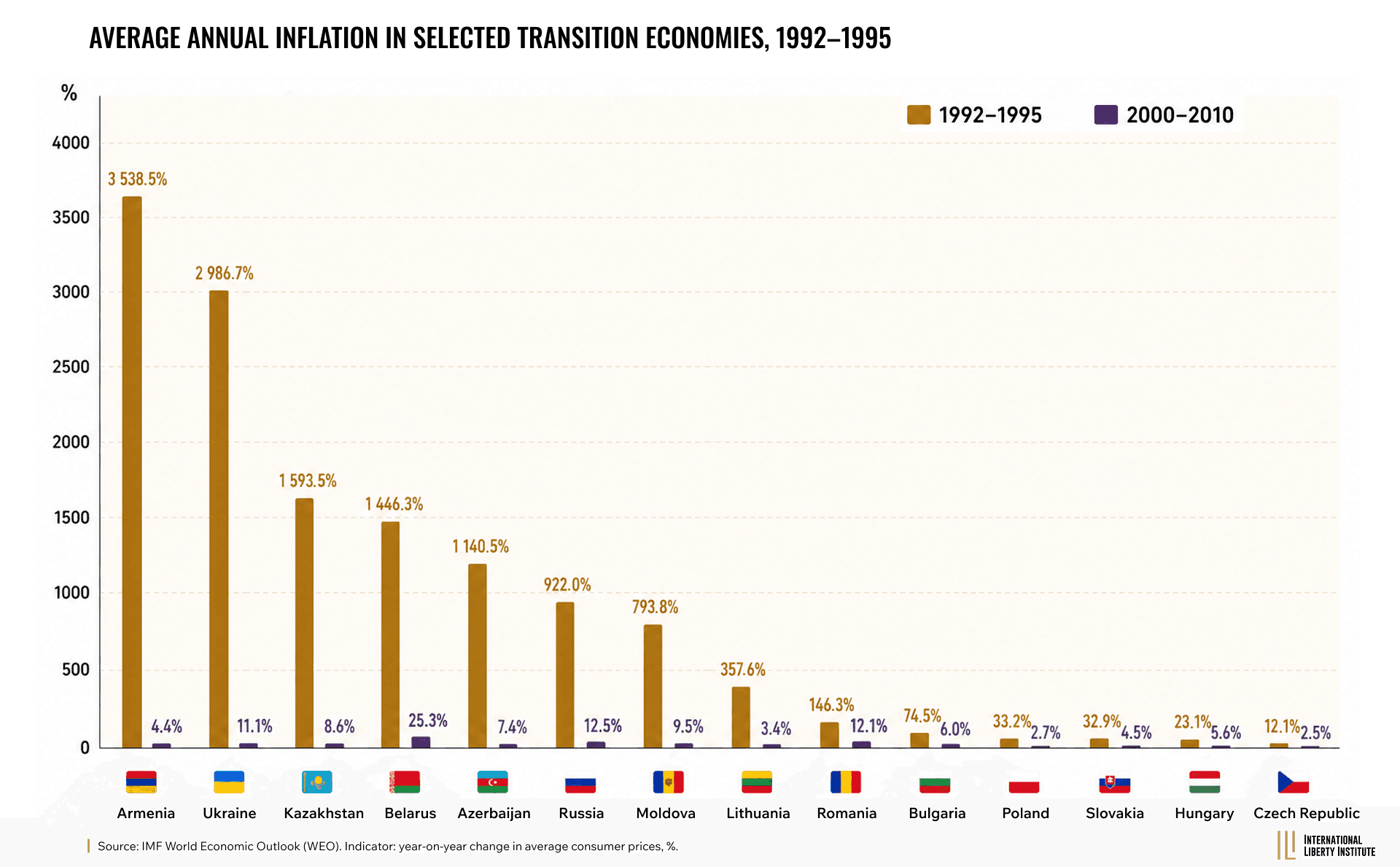
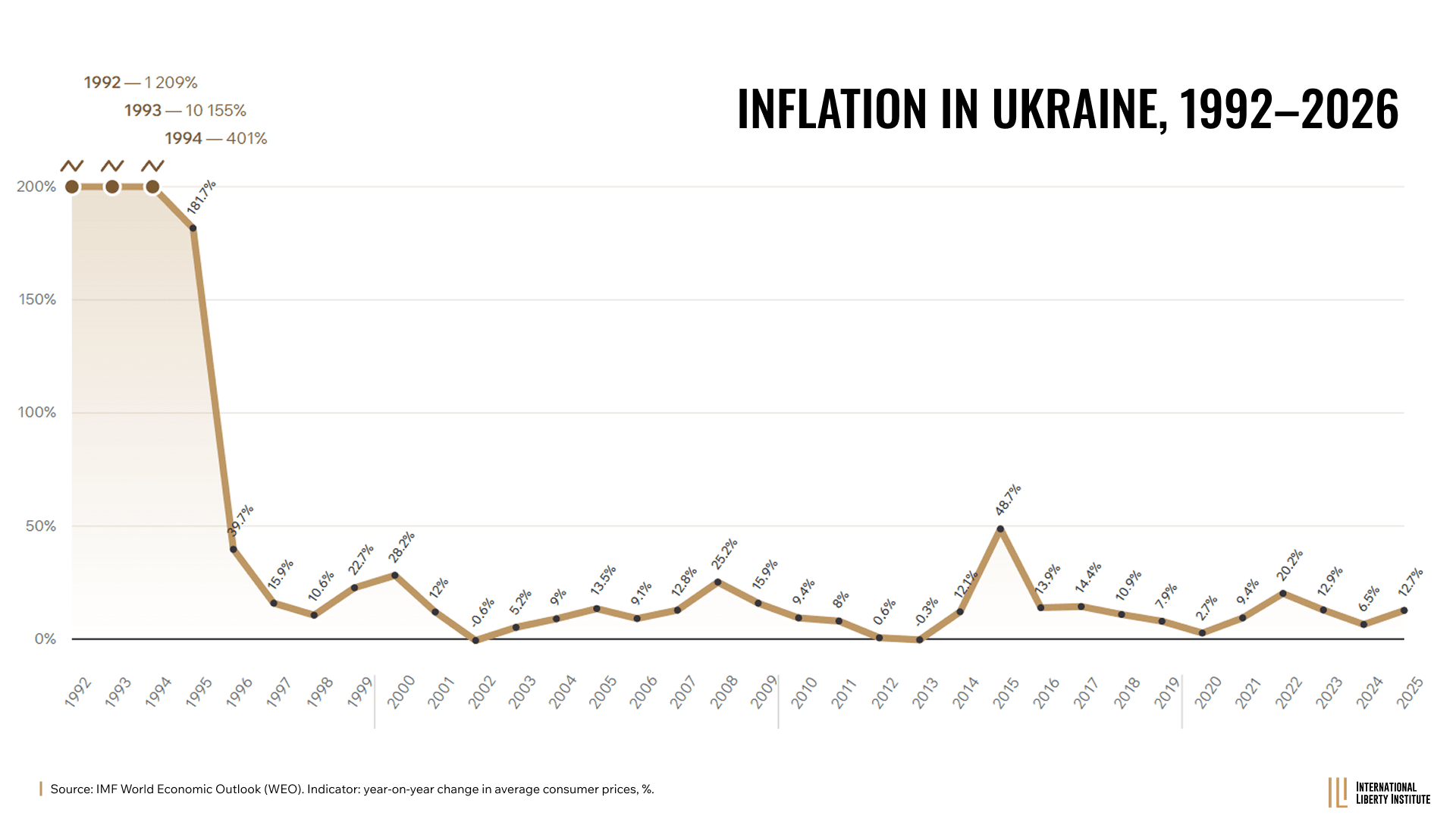
Between 1992 and 1995, Ukraine's average annual inflation rate stood at 3,185%.
From the standpoint of economics in general, and monetary theory in particular, this was a period in which the Ukrainian authorities completely disregarded the fundamental principles, basic truths, and axioms of economic science. Policymakers imposed a devastating inflation tax on the Ukrainian people, wiping out the savings accumulated over many generations.
During the first half of the 1990s, Ukraine witnessed an unprecedented redistribution of wealth and capital accumulated during its time as part of the Soviet totalitarian empire. This redistribution benefited 3% of the population at the expense of the remaining 97%. It amounted to legalized plunder, monetary looting, and a campaign that drove more than 70% of the population into poverty and destitution.
The actions of the Ukrainian authorities during that period had nothing to do with liberalism, the free market, or capitalism. They may have been part of a deliberate provocation—an operation aimed at impoverishing the newly independent state on the part of Russia. Unfortunately, the fifth column within Ukraine and Russian agents of influence became accomplices in this unprecedented act of plunder. It may also have been the result of an acute shortage of professional and academic expertise in monetary theory and economics more broadly. Finally, the poor quality of monetary policy may have resulted from the fact that politicians and decision-makers ignored the advice and recommendations of Ukrainian and foreign scholars and experts in monetary and macroeconomic policy.
For comparison, the average annual inflation rate between 1992 and 1995 was 32.9% in Slovakia, 922% in Russia, 146.3% in Romania, 33.2% in Poland, 793.8% in Moldova, 357.6% in Lithuania, 1,593.5% in Kazakhstan, 23.1% in Hungary, 12.1% in the Czech Republic, 74.5% in Bulgaria, 1,446.3% in Belarus, 3,538.5% in Armenia, and 1,140.5% in Azerbaijan.
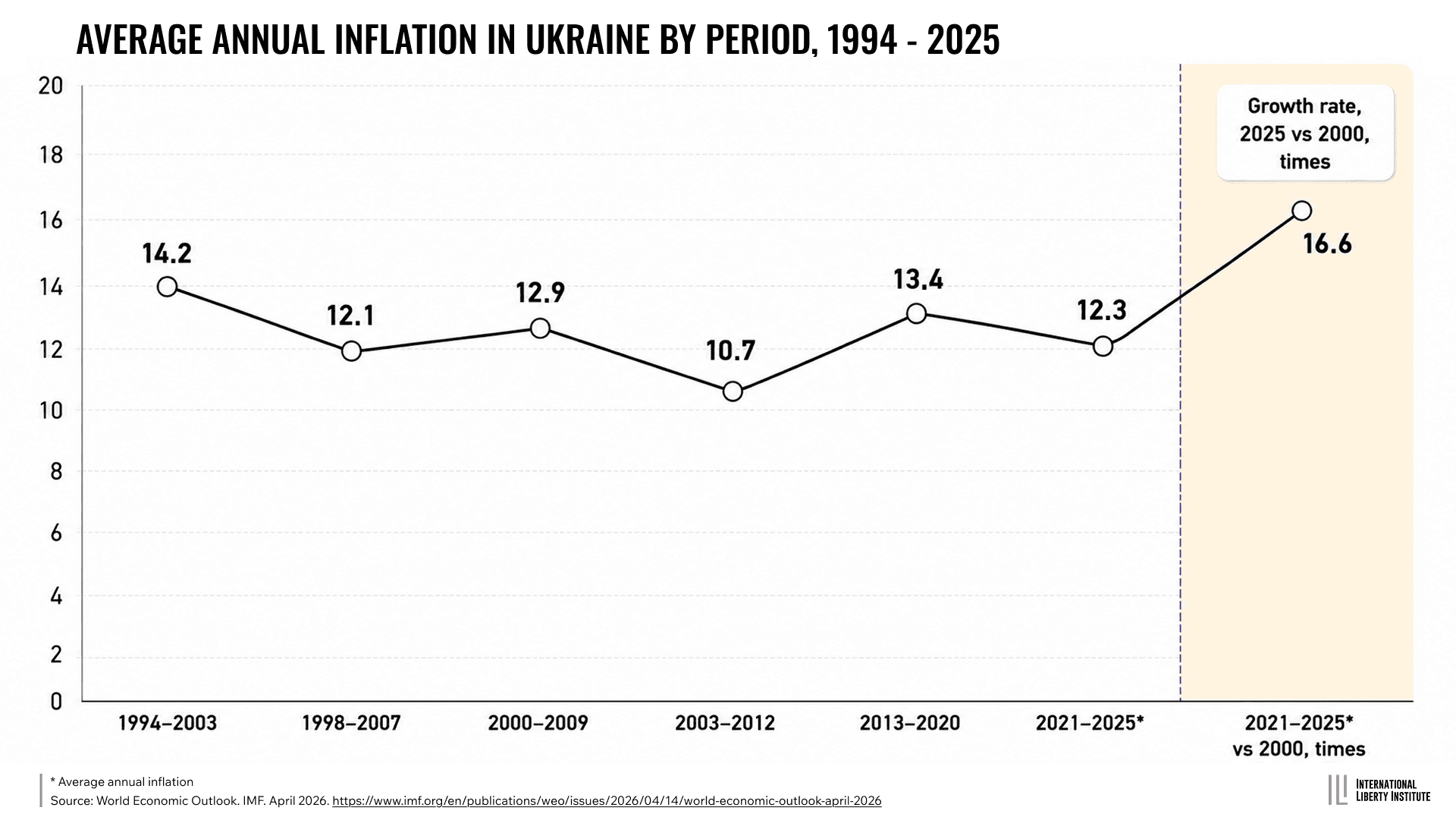
Ukraine recorded the worst performance in terms of price stability not only among the countries of Central and Eastern Europe but, together with Armenia, also emerged as a clear outsider among the post-Soviet states. Armenia, however, learned the lesson of destructive inflation. Between 2000 and 2010, the country's average annual inflation rate was 4.4%, and between 2010 and 2025 it averaged 3.4%. In Ukraine, by contrast, according to the IMF database, the average annual inflation rate since the introduction of the hryvnia, over the period 1996–2025, has been 13.4%.
The failure of Ukraine’s monetary policy resulted from a fundamental disregard for the nature of money and for the recommendations not only of the Austrian School of Economics (whose representatives were virtually absent from Ukraine in the 1990s at a level that would have enabled them to participate in the formulation of economic policy), but also of the Monetarist School.
The Ukrainian authorities adopted a Keynesian, deeply interventionist approach to monetary policy, ignoring the fundamental relationship between the money supply and inflation. Moreover, this cannot be attributed to any single prime minister, president, composition of the Verkhovna Rada, or leadership of the National Bank of Ukraine. Rather, it was a fundamental theoretical and systemic mistake embedded in the very foundations of Ukraine’s monetary policy in the mid-1990s — a mistake that has yet to be corrected.
There is no doubt that poor monetary policy became one of the factors behind Ukraine’s low economic growth rates, as it hindered the development of financial and capital markets, the inflow of money and investment, and the expansion of credit relations.
Share
The dominance of the state and oligarchic interests in the economy prevented the creation of strong drivers of sustained demand for the national currency, which ultimately made it impossible to develop a market-based capital structure. On the other hand, the Verkhovna Rada, which was supposed to oversee the implementation of the National Bank’s mandate, also became a participant in the legally sanctioned plundering of the country’s economy.
A comparison of changes in Ukraine’s monetary parameters with the dynamics of broad money supply in Poland during 1997–2025 and in the euro area during 2000–2025 clearly demonstrates the causes of high inflation in Ukraine and its relationship with money supply growth.
Poland has undoubtedly benefited from its integration into the European Union, but even its half-hearted reforms have unlocked powerful sources of economic growth.
For more than 25 years, the National Bank of Poland has pursued a monetary policy aimed at achieving price stability, defined as keeping inflation at 2% per year. However, it lacked determination, as well as government support, which also had to contribute to macroeconomic stability (the budget deficit, public debt, and the level of government spending).
Compared to Ukraine, Poland appears to be a fairly successful country with relatively responsible authorities that implement macroeconomic policy.
In today's world of fiat money, the monetary policies of the European Central Bank and the U.S. Federal Reserve serve as a benchmark for other countries.
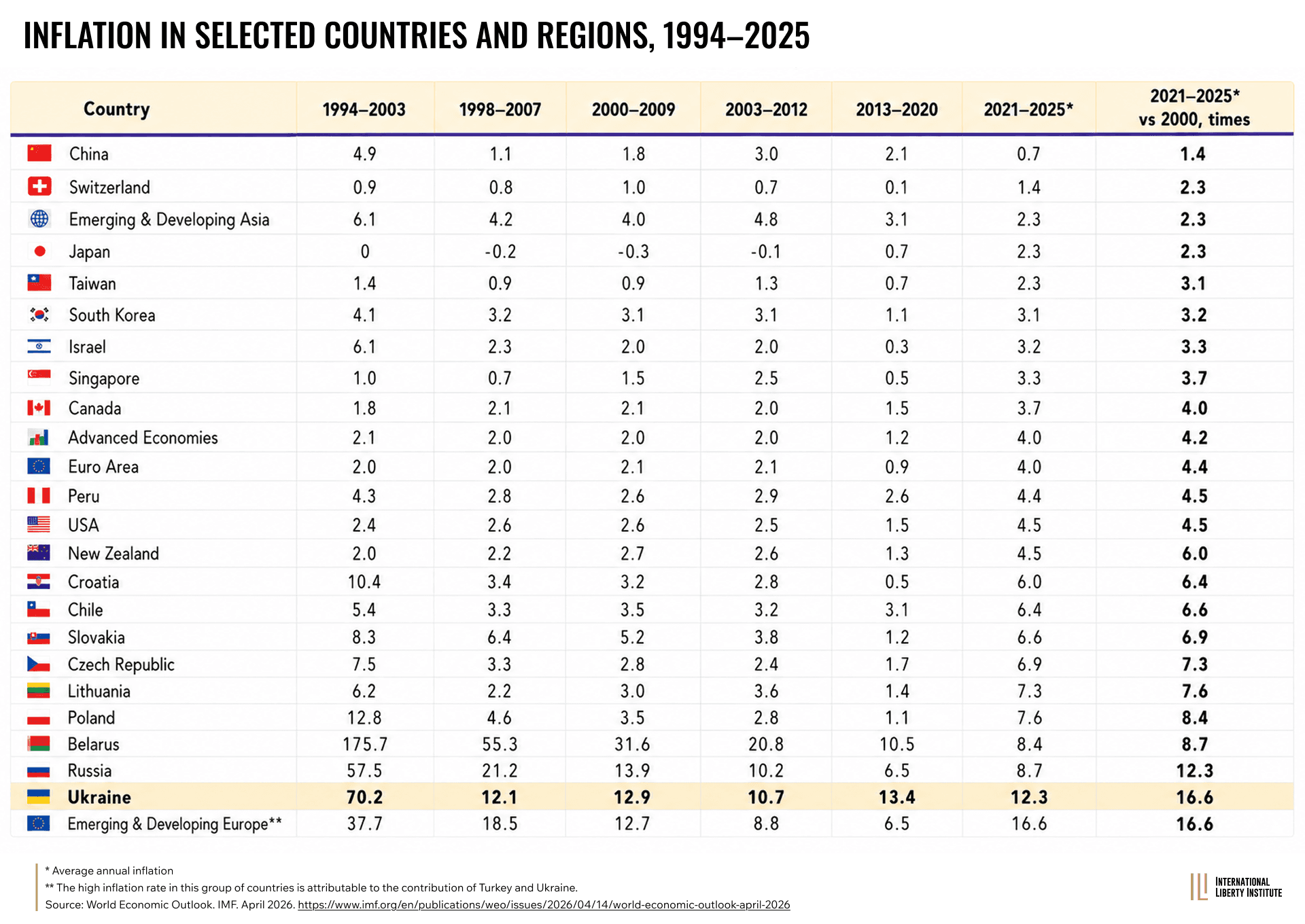
We observe a relatively conservative and restrained approach by the ECB toward increasing the money supply. This is precisely why average annual inflation during the period 2000–2020 was approximately 2%. Following monetary easing in response to COVID, a sharp increase in active money (the M0 indicator grew by 43.7% between 2021 and 2025), movement toward a stagnation zone, and the loss of institutional competitiveness, average annual inflation in the euro area during 2021–2025 amounted to 4.2%, once again demonstrating the relationship between the quantity of money in circulation and the level of inflation.
The ECB, like the Fed, has been attempting for more than five years to return inflation to its target level of 2% per year, but due to the requirements imposed on central banks arising from their other mandates (full employment and support for economic growth), they have so far been unable to achieve this goal. Nevertheless, compared with Ukraine, both Poland, the euro area, and the Fed — not to mention Switzerland — represent examples of much higher-quality monetary policy.
Ukraine’s Monetary Policy under Different Presidents
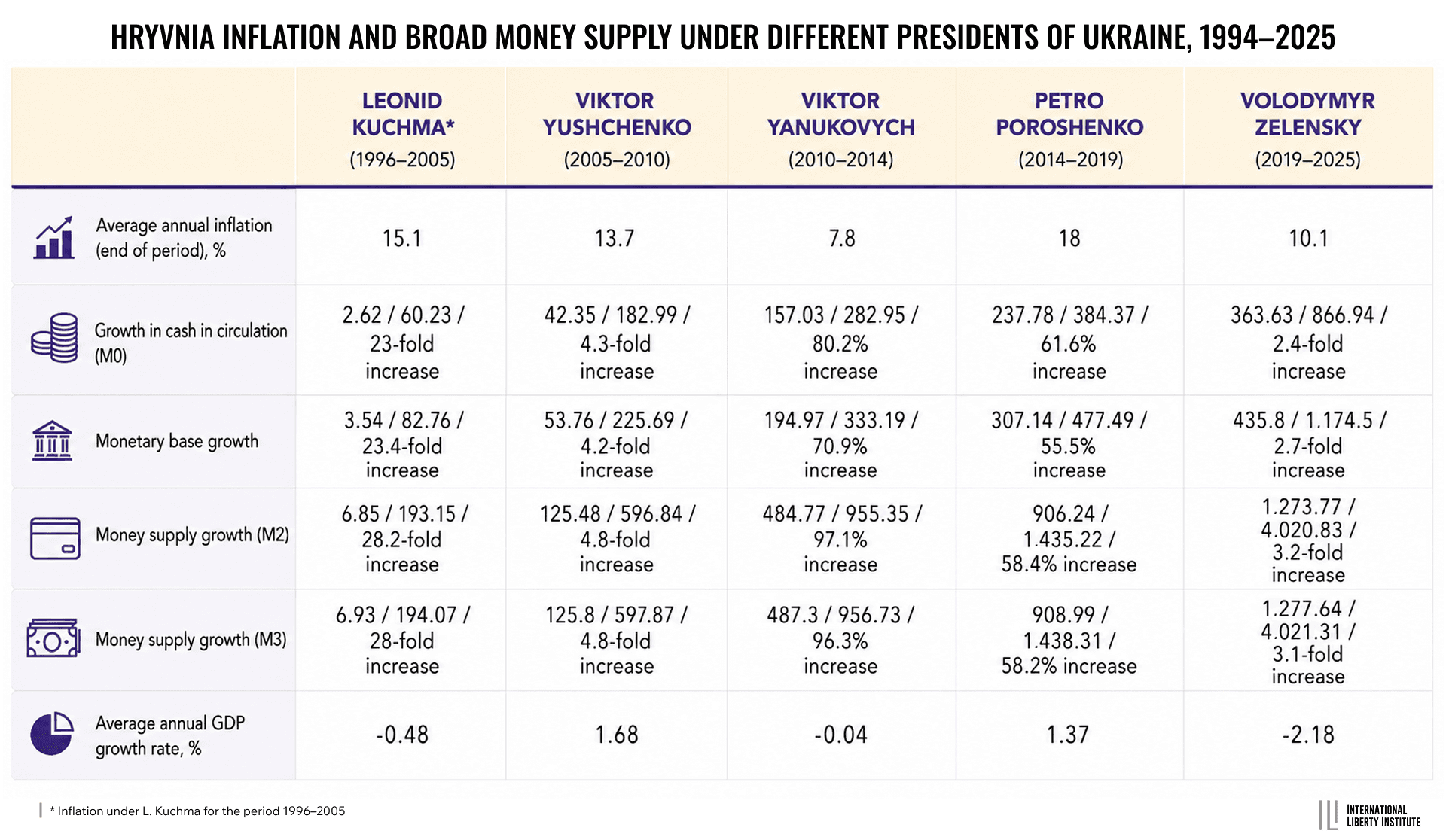
The growth rates of all components of Ukraine’s broad money supply between 1996 and 2025, when considered in the context of real economic activity, were a key factor behind high inflation.
During the period 1996–2001, the volume of cash in circulation (M0) increased 4.9-fold, the hryvnia money supply (M2) increased 4.6-fold, and the monetary base increased 4.7-fold.
During the period 2001–2005, the growth rates of various components of broad money supply did not decline: M0 increased 4.7-fold, the monetary base grew 4.9-fold, and M2 increased 6.1-fold.
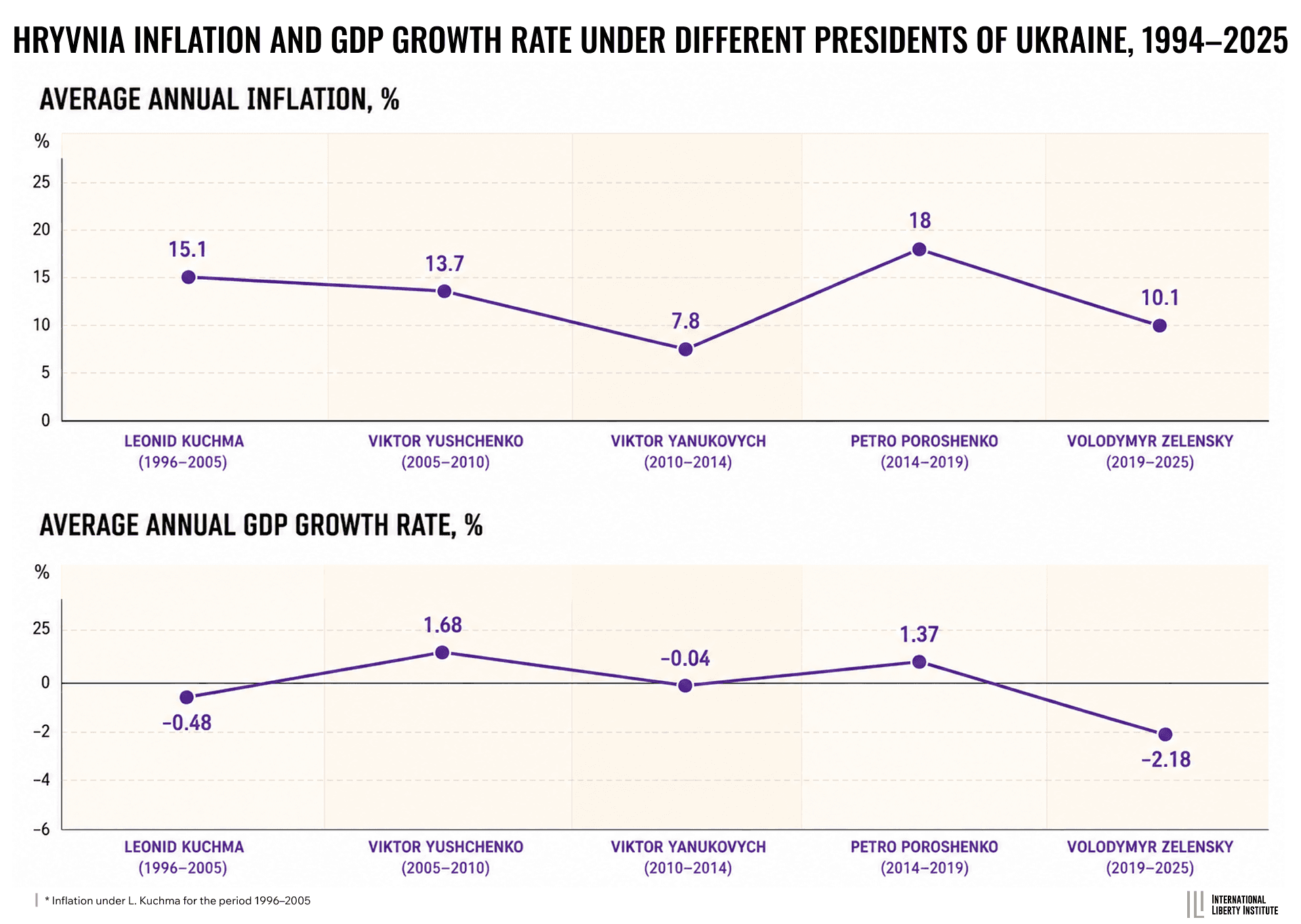
It is not surprising that during the presidency of Leonid Kuchma (1996–2005), average annual inflation amounted to 15.1%. During this period, the volume of cash in circulation (M0) increased 23-fold, the monetary base grew 23.4-fold, M2 increased 28.2-fold, while the average annual rate of economic growth was negative 0.48% of GDP.
During Viktor Yushchenko’s presidency (2005–2010), the growth rates of broad money supply declined but nevertheless remained excessively high if the objective was price stabilization. During this period, the volume of cash in circulation increased 4.3-fold, the monetary base grew 4.2-fold, and M2 increased 4.8-fold. This resulted in the persistence of high inflation, which averaged 13.7% per year during this period. It is particularly important to note that the average annual rate of economic growth during this period was only 1.7% of GDP.
The vulgar, pseudo-scientific claim that inflation is a source of economic growth is disproved not only by the example of Ukraine but also by virtually all countries of the world when long-term trends are taken into account.
During Viktor Yanukovych’s presidency (2010–2014), Ukraine recorded the historically lowest growth rates in the various components of broad money supply, while average annual inflation declined to 7.8%, with zero economic growth during this period.
During P. Poroshenko’s presidency (2014–2019), monetary policy remained as irresponsible as under his predecessors. During this period, M0 increased by 61.6%, the monetary base by 55%, and M2 by 58.4%, while average annual inflation amounted to 18.0%, with average annual GDP growth of 1.37%.
During V. Zelenskyy’s presidency (2019–2025), no fundamental changes in the National Bank’s monetary policy were recorded. Once again, a rapid increase was observed in the volume of cash in circulation (a 2.4-fold increase), the monetary base (a 2.7-fold increase), and the hryvnia money supply (M2), which grew 3.2-fold, alongside average annual GDP growth of negative 2.2% and average annual inflation of 10.1%.
How Ukraine, Turkey, and Argentina Became Monetary Failures
The fundamental principles of monetary theory can be easily understood through an analysis of long-term trends in inflation, broad money supply, and GDP.
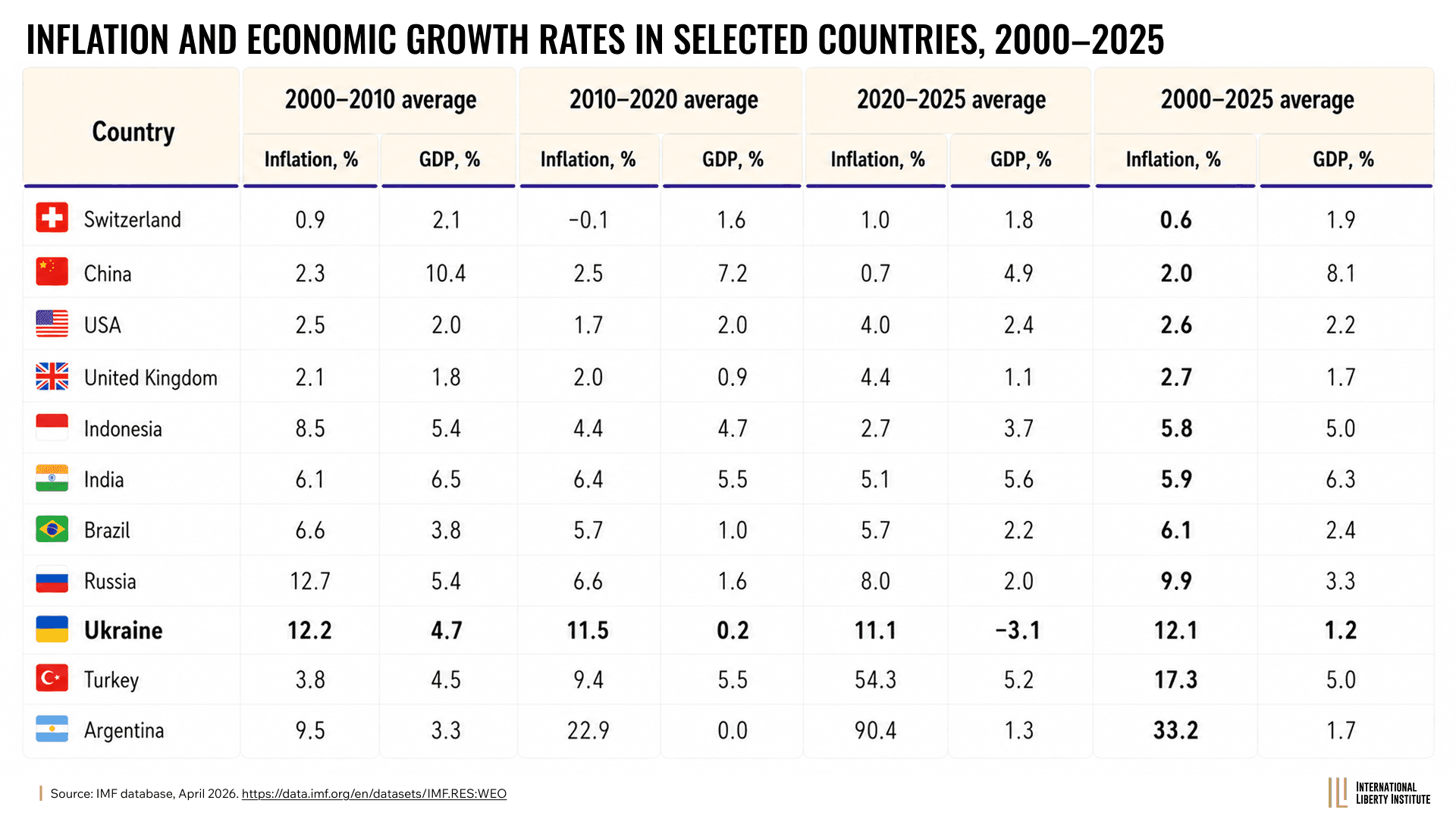
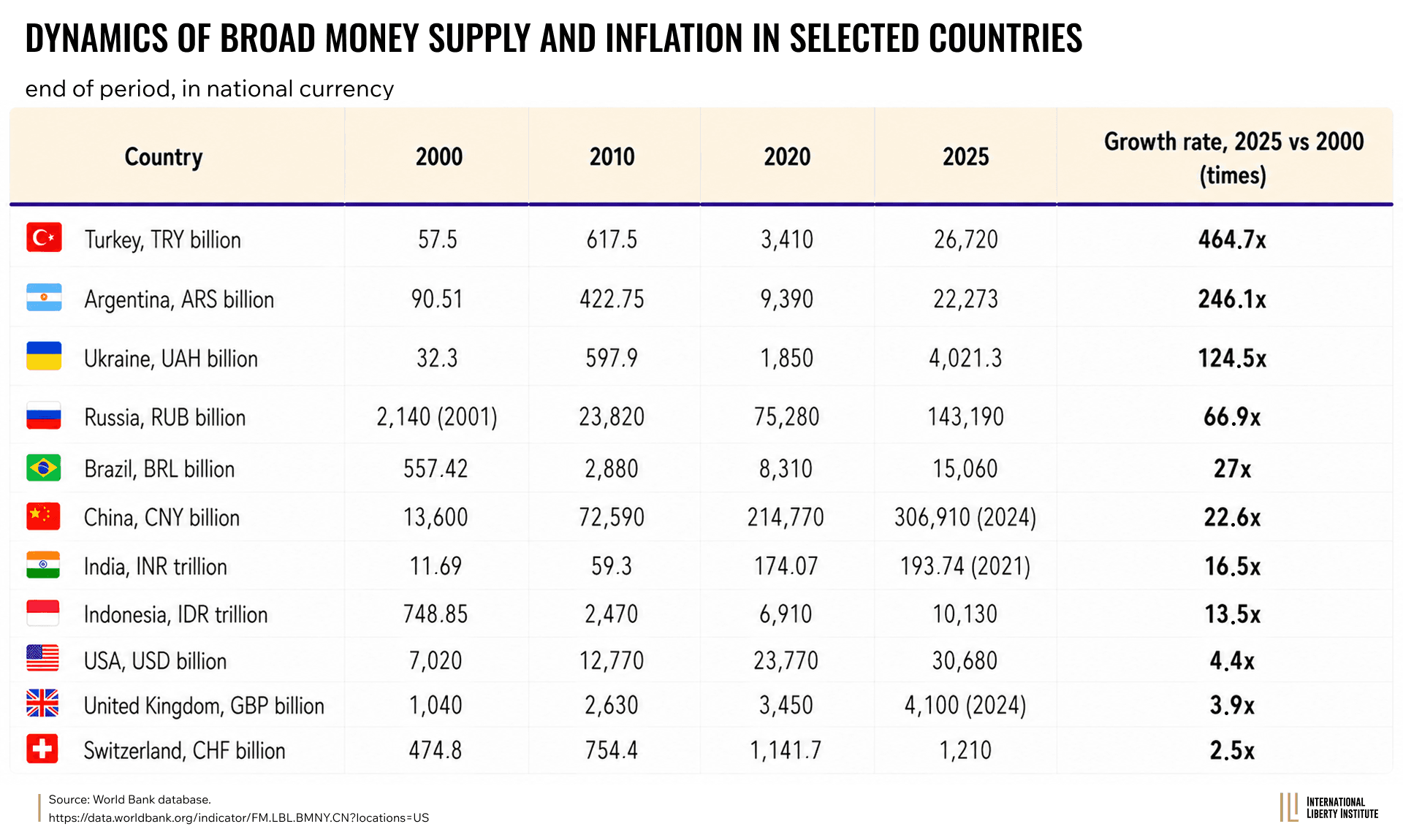
During the period 2000–2025, average annual inflation in Ukraine amounted to 12.1%, while average annual economic growth was only 1.2% of GDP. Over this period, Ukraine’s broad money supply (M3) increased 124.5-fold.
Among the world’s major economies, higher growth rates of broad money supply were recorded in Argentina (246.1-fold) and Turkey (464.7-fold).
At the same time, average annual inflation in Argentina during this period amounted to 33.2%, with average annual economic growth of 1.7% of GDP, while in Turkey these figures were 17.3% and 5% of GDP, respectively. Under such inflationary conditions and an extremely loose monetary policy, calculations of price dynamics are prone to serious distortions. Therefore, data provided by Turkish statistical authorities, especially under conditions of strong politicization and authoritarianism, should not be taken at face value.
Turkey is an example of how the state, through monetary, fiscal, and regulatory policy instruments, can create groups of favored businesses that benefit not only from budget transfers and restrictions on competition but also from the inflation tax.
Switzerland has been an exemplary country in terms of monetary policy in the 21st century.
During the period 2000–2025, the Swiss National Bank increased the broad money supply by only 2.5-fold. At the same time, average annual inflation was 0.6%, while average annual GDP growth during this period was 1.9%.
The indicators for the United States and the United Kingdom are quite similar.
Between 2000 and 2025, the U.S. Federal Reserve increased the broad money supply 4.4-fold, while the Bank of England increased the broad money supply 3.9-fold.
Average annual inflation was 2.6% in the United States and 2.7% in the United Kingdom.
Average annual GDP growth was 2.2% in the United States and 1.7% in the United Kingdom.
The performance of developing countries and countries with transition economies, as measured by inflation, broad money supply, and economic growth, demonstrates that using monetary policy instruments to accelerate economic growth, attract investment, and improve living standards is both dangerous and risky. Such an approach is accompanied by a wide range of adverse effects that ultimately hinder economic development and contribute to the non-market redistribution of capital within the country in favor of the beneficiaries of inflation and the government’s fiscal policy.
Reassessing the Dual Mandate
For more than forty years, the American and European academic and research communities have been engaged in an ongoing debate over the central bank’s mandate. Leading research institutions, central banks, and universities from around the world take part in this debate. The conclusions and recommendations put forward by many scholars are highly valuable and could make a significant contribution to improving the work of the National Bank of Ukraine, which, like Ukraine’s academic and research community, has not participated in this debate.
Source: The Fed's dual mandate policy is briefly and clearly described in the study: A Dual Mandate for the Federal Reserve. The Pursuit of Price Stability and Full Employment. Jerome Levy Economics Institute of Bard College. No. 60, 2000. Willem Thorbecke, associate professor of economics at George Mason University. https://www.levyinstitute.org/pubs/ppb/ppb60.pdf
John Taylor, one of the foremost authorities on monetary policy, argued in the aftermath of the Federal Reserve’s failure during the 2008–2009 financial crisis that the Federal Reserve’s dual mandate — and, more broadly, the multiple mandates of central banks — should be abolished, with their focus directed exclusively toward maintaining price stability and preserving the purchasing power of the national currency.
L"Several times in the 1970s the Fed increased money growth, trying to reduce unemployment. But the unintended consequence was actually to increase joblessness: higher and higher inflation rates eventually required a painful disinflation, with unemployment rising above 10 percent. From 2003 to 2005, the Fed kept interest rates extra low, partly out of concern about employment. But those extra-low rates exacerbated the housing boom, leading to a bust — a big factor in the financial crisis that eventually caused a devastating increase in unemployment."L
According to members of the influential Shadow Open Market Committee (SOMC), the U.S. Federal Reserve has made three severe monetary policy mistakes since the mid-1970s.
The high inflation of the 1970s, which resulted from accommodative monetary policy.
The policy of exceptionally low-interest rates, which fueled the housing market bubble in the 2000s.
The high inflation of the 2020s, which Federal Reserve Chair J. Powell promised would be a brief and temporary phenomenon, instead persisted for more than five years, and by the end of 2026 the Federal Reserve will still not have achieved its 2% annual inflation target.
It is worth noting that American scholars and policymakers consider the average annual inflation rate of 4.5% recorded during the period 2021–2025 to represent a crisis. By comparison, average annual inflation in Ukraine during the period 1996–2025, following the introduction of the hryvnia, was 13%.
The Federal Reserve has considerable scope for discretionary decision-making because the concept of “maximum employment” is not defined in numerical terms. By contrast, “price stability” is defined by an explicit inflation target of 2%.
We therefore conclude that there is a broad academic and policy consensus recognizing price stability as the central pillar of sound monetary policy. Despite the strong academic and intellectual foundations underpinning the formulation of monetary policy, the Federal Reserve committed serious policy errors by misinterpreting the macroeconomic environment and the conditions prevailing in various markets in the context of its dual mandate.
If the United States was unable to strike the right balance between the Federal Reserve's two statutory objectives, accomplishing the same task in a developing transition economy with weak legal, property rights, and governance institutions is virtually impossible. When establishing the National Bank of Ukraine and defining its mandate, Ukraine's economic and academic elites essentially adopted the mainstream G7 central banking model without having either a well-developed academic and analytical community capable of supporting monetary policymaking or a clear understanding of the cyclical nature of the economy.
The primary reason why the National Bank of Ukraine adopted the wrong mandate (a dual mandate) was that, at the time this decision was made, the Ukrainian economy remained fundamentally post-Soviet, with its capital structure and employment patterns largely shaped by the Soviet system of central planning. The establishment of a fully functioning market economy required the coordinated implementation of macroeconomic stabilization, comprehensive market liberalization, and privatization.
Share
To this end, the National Bank of Ukraine should have focused all its efforts on achieving price stability under a single mandate. Unfortunately, throughout the more than 30 years of the hryvnia's existence as Ukraine's national currency, this objective has not been achieved.
Like many other public institutions, the National Bank of Ukraine became subject to the influence of powerful lobbying groups and vested interests, which used it to pursue their objectives through inflation, currency devaluation, regulation of the foreign exchange and financial markets, as well as the design of credit policies and the coordination of monetary and fiscal policy. Having failed to achieve its primary objective — price stability — the National Bank acted as though a fully developed market structure of capital and employment had already emerged around it.
Why is Inflation so Harmful?
A large body of empirical research provides compelling evidence that inflation has adverse effects on economic growth, lending, and entrepreneurial activity. Unfortunately, both the National Bank of Ukraine and the Ukrainian government have largely ignored these findings. It should be noted that these studies assess the performance of central banks and governments within the framework of the neoclassical model of the interventionist state. To support our hypothesis that Ukraine's monetary policy was of poor quality during the period 1996–2025, we present several examples of such studies together with their main findings.
Economists Isha Agarwal and Matthew Baron, in their paper “Inflation and Disintermediation", and subsequently in their article “Exploring the Link Between Rising Inflation and Economic Growth: The Role of the Banking Sector” exploring the link between rising inflation and economic growth:
L"Оur research demonstrates that unexpected increases in inflation tend to have a contractionary effect on the banking sector . Inflation-exposed banks respond by reducing lending, which, in turn, impacts house prices and construction employment. More generally, these results suggest why rising inflation can lead to financial instability, especially following significant and unexpected increases in inflation. Additionally, our analysis of historical and international inflation episodes reinforces the significance of banking channels in understanding the consequences of inflation worldwide. By shedding light on the relationship between inflation and economic growth, our research contributes to a better understanding of the macroeconomic implications of inflation and its effects on the banking sector."L
In their paper “The Impact of Inflation on Economic Growth" economists Runshuo Zhang and Ziheng Zhou draw the following conclusion based on their analysis of inflation:
L"Inflation not only affects the behavior of consumers and producers, but also has a profound negative impact on economic growth through distorting price signals, improper resource allocation, affecting investment and savings behavior, threatening financial market stability, and weakening international trade competitiveness. Especially in the context of global economic instability, inflation management has become one of the major challenges faced by governments and policymakers around the world. To effectively control inflation, governments of various countries should take comprehensive measures, including implementing tight monetary policies, coordinating prudent fiscal policies, promoting structural economic reforms, and strengthening international cooperation. These measures not only help control inflation, but also lay the foundation for long-term stability and sustainable economic growth."L
The following conclusion is drawn from a study of the impact of inflation on economic growth based on evidence from 45 countries over the period 2010–2021:
L"This study examines the context of inflation and its impact on the economic growth of 45 different countries around the world in the period 2010-2021 by applying Ordinary least squares (OLS), fixed effects and random effects models to analyze the theoretical content and the influence of variables: inflation rate, unemployment rate, FDI, trade openness, lending rate, and population growth. Empirical results show that inflation has a negative impact on economic growth, in which developed countries tend to be more severely affected."L
Jönköping University (Sweden) has compiled a fairly comprehensive review of the academic and analytical literature on the relationship between inflation and economic growth.
L"The purpose of this study was to investigate the relationship between inflation and GDP growth. For this, we used a panel data fixed effects model with 108 countries between the years 1970 and 2023, to assess how GDP growth is affected by inflation while controlling for variables like money supply, government expenditure, real interest rate, trade openness, and investment. Furthermore, we conducted a quadratic function to analyze the threshold where inflation starts to impact economic growth negatively. Our results show that while inflation influences GDP growth negatively in both developing and developed countries, our point estimate of this effect is higher in developing economies, but the difference is not significant. The results are aligned with theoretical frameworks like the Solow Growth Model and the Quantity Theory of Money. A 1 percent increase in inflation results in a 0.12 percent decrease in GDP growth for developing countries, compared to a 0.07 percent decrease for developed countries."L
Below we present the conclusions from the study “Does Inflation Harm Economic Growth? Evidence for the OECD” by economists Javier Andrés and Ignacio Hernando, published by the National Bureau of Economic Research (NBER). They are based on empirical evidence from OECD countries covering the period 1960–1992:
L"In this paper we have tried to assess the long-term costs of inflation, within an explicit theoretical framework stemming from the growth literature: the convergence equation. Despite its shortcomings, this approach is well-suited to test the robustness of the correlation between growth and inflation in low-inflation economies with reasonably well-working markets, such as the OECDs ones during the 1960–1992 period… The main finding is that current inflation has never been found to be positively correlated with income per capita over the long run. Inflation not only reduces the level of investment but also the efficiency with which productive factors are used. It has a negative temporary impact upon long-term growth rates, which, in turn, generates a permanent fall of income per capita. Our results suggest that the marginal cost of inflation diminishes with the inflation rate."L
Below are the findings of a study examining the relationship between inflation and economic growth across a sample of 31 developing and transition economies, including Ukraine, over the period 2000–2019:
L"This paper empirically studies the relationship between economic growth and inflation for a panel of 31 selected emerging market economies for the period 2000 to 2019… We find a statistically significant negative relationship between inflation and economic growth in our linear specifications (static and dynamic), and the results appear robust across all specifications… The nonlinear specification indicates a threshold value of about 2% (and slightly higher with 2.7% for the simple model specification) which segregates the two inflation regimes. Our results support the argument that it is reasonable to distinguish between different inflation regimes: once inflation is below the threshold, we find a positive impact on economic growth; once above the threshold, we find a negative effect on growth… Based on our findings for this group of countries, tolerating inflation above 2% could have negative consequences for economic growth."L
Source: The economic growth and inflation nexus: New empirical assessment for emerging market economies. Benjamin Owusu, Bettina Bökemeier. Department of Business Administration and Economics, Bielefeld University. International Review of Economics and Finance 107 (2026) 105078 https://www.sciencedirect.com/science/article/pii/S1059056026001917
Study Conclusions
Throughout more than 30 years of the hryvnia's existence as Ukraine's national currency, the Ukrainian authorities under every president, prime minister, parliament, and leadership of the National Bank of Ukraine have failed to achieve the constitutional objective — ensuring the stability of the hryvnia, which implies an annual inflation rate of no more than 2%. This failure is the result of fundamental errors in selecting the theoretical foundation for the National Bank of Ukraine's operations, an acute lack of coordination between monetary and fiscal policy, the neglect of the theory of government failure, and the state's dominance in the economy in general and in the financial market in particular.
Ukraine remains only marginally engaged in the pluralistic global discourse on monetary policy, where decision-makers at central banks and governments formulate policy based on academic research, recommendations, and findings from a wide range of schools of economic thought, taking into account actual market conditions and the primary objective of monetary policy. Our authorities formulate monetary policy based on opportunistic motives and approaches that serve the interests of a syndicate of VIP bureaucrats. The mechanism for policy correction in response to observed outcomes such as inflation, economic growth, credit availability, and financial market development does not operate.
Ukraine's monetary policy during the period 1996–2025 became one of the three principal impediments to economic growth and development. The second impediment was fiscal (budgetary and tax) policy, while the third was regulatory policy. The mistaken choice of a theory of economic transformation and transition, the disregard for the nature of money, state capture by powerful vested interests, and the acute lack of a genuine partnership between the economics profession and the Government in the broadest sense of the term — all these factors explain why, by the mid-2020s, Ukraine had become one of Europe's laggards in terms of economic growth, per capita income, private sector lending, and labor productivity.
The underdevelopment of the financial market and private sector lending, the high cost of credit and its inaccessibility to small businesses and most households, favoritism in providing preferential access to credit for the Government and selected commercial organizations, and the oligopolistic structure of the banking and financial services market — all these are consequences of the mistaken choice of the theoretical foundation of monetary policy, as well as the National Bank of Ukraine's inability to fulfill its constitutional mandate. The preservation of this state of affairs was further reinforced by the policies of the Cabinet of Ministers as a whole, which failed to ensure proper coordination between monetary and fiscal policy to achieve macroeconomic stability and rapid, sustained economic growth.
Throughout the entire period of the hryvnia's existence, the Ukrainian authorities ignored a vast body of academic research and empirical evidence demonstrating the monetary nature of inflation and its impact on economic growth, investment attractiveness, and household incomes. The persistently high inflation tax inflicted significant damage on Ukrainians' savings culture, contributed to the dollarization of the economy, the persistence of a large shadow economy (estimated at between 30% and 50% of GDP), capital flight, and the crowding out of private investment in commercial projects and programs directly supported by the state.
A significant share of the responsibility for the persistently low quality of Ukraine's monetary policy in particular, and macroeconomic policy in general, lies with the international organizations that, for more than 30 years, have provided not only loans but also technical assistance and policy advice in the establishment of sound legal and economic institutions. Above all, this refers to the International Monetary Fund (IMF), the World Bank, and the European Bank for Reconstruction and Development (EBRD), all of which have been operating in Ukraine since the 1990s. Their approaches, narratives, findings, and recommendations have been promoted and disseminated in Ukraine by research organizations such as the Centre for Economic Strategy, Dragon Capital, Vox Ukraine, German Economic Team, Oxford Economics, Kyiv School of Economics (KSE), ICU, Concorde Capital, and the Institute for Economic Research and Policy Consulting. Their assessments of macroeconomic policy in general, and monetary policy in particular, have been largely supportive of the authorities' current policy course. Their views on money, monetary policy, and the role and functions of the state in the economy have influenced the Ukrainian authorities' choice of monetary, fiscal, and regulatory policy frameworks. Particular attention should be paid to the role of large Ukrainian and foreign businesses, which, through their lobbying organizations and mechanisms, including the European Business Association (EBA), have consistently supported the economic policies of the Ukrainian authorities. Acting as a lobbyist for the oligarchic syndicate, the EBA has thereby helped entrench flawed practices in monetary policy. The reason is obvious — large businesses, together with the Government's favored firms, are the principal beneficiaries of accommodative monetary and fiscal policies. Their influence over economic policy becomes decisive because they have also captured control of Ukraine's regulatory authorities — a classic case of state capture. Such practices have taken place with the consent and approval of international organizations providing policy advice, most notably the OECD.
Recommendations of the International Liberty Institute
To achieve a comprehensive modernization of Ukraine's economy and establish institutions capable of ensuring rapid, long-term economic growth, Ukraine should adopt the Mises–Hayek–Schumpeter model of entrepreneurial growth.
The National Bank of Ukraine should be assigned a single mandate (its sole objective should be to ensure price stability, defined as annual inflation of no more than 2%). All other functions currently performed by the National Bank, including financial market regulation, should be transferred to other public authorities.
To reduce transaction costs during the war and after Ukraine's victory, when the country is expected to receive hundreds of billions of dollars for reconstruction, and to avoid Dutch disease, a sharp appreciation of the hryvnia, high inflation, and adverse effects on Ukrainian exports, Ukraine should adopt a multicurrency regime, under which the U.S. dollar, the euro, the British pound, the Swiss franc, the Polish zloty, and the Ukrainian hryvnia would all have equal legal tender status.
The Ukrainian Government should urgently undertake a comprehensive review of the legislative and theoretical foundations underpinning monetary and macroeconomic policy to improve their overall quality.
A well-known Ukrainian and Belarusian economist, popularizer of the Austrian economic school in the post-Soviet space. He specializes in reforms in transitional economies in the post-socialist space.
This phenomenon is not unique to Ukraine. In most European Union countries, citizens recognize the existence of corruption in government. Is there a recipe that can pull countries out of the clutches of corruption?
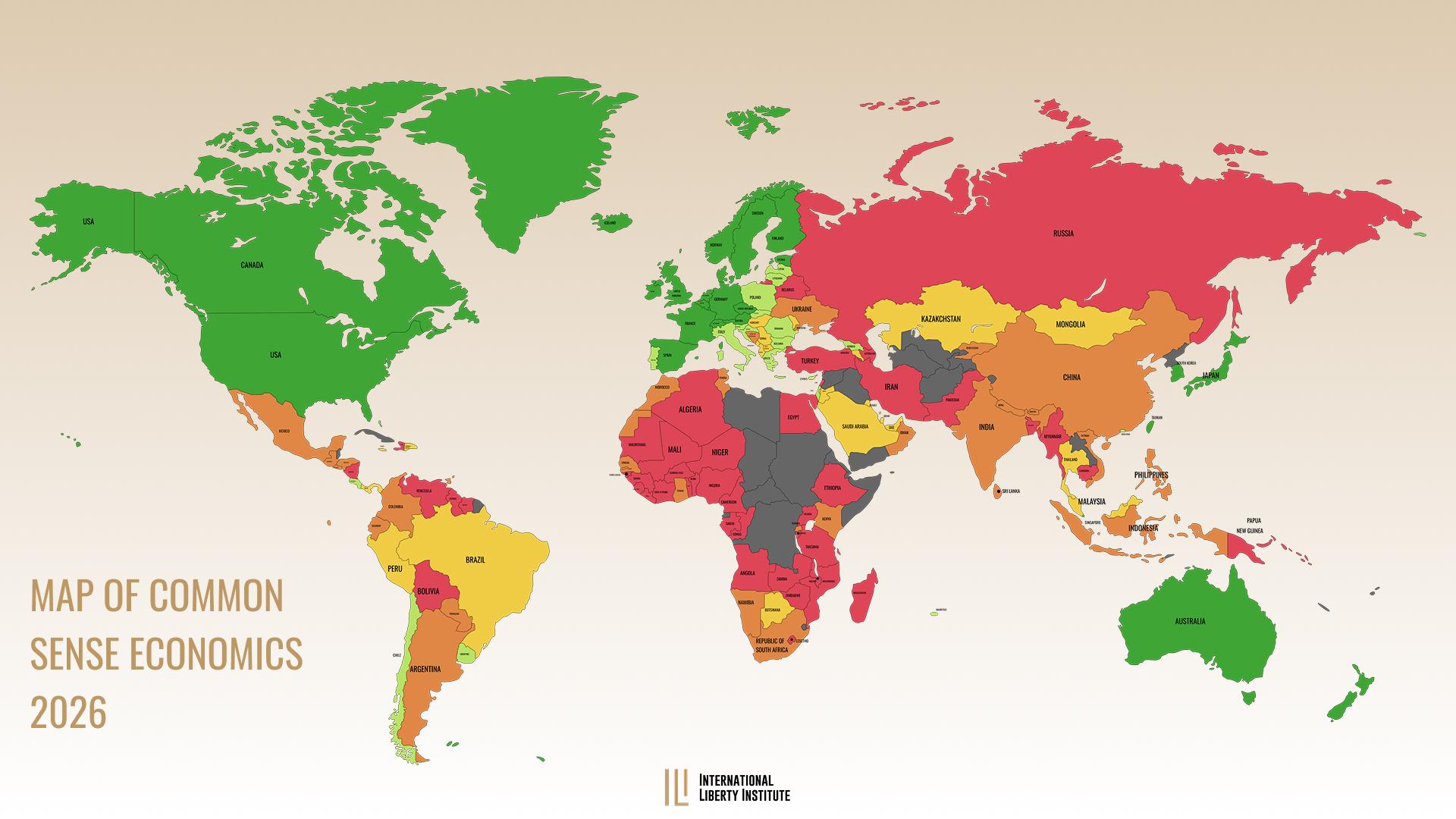
The deficit of common sense in the global economy as a consequence of a worldview crisis, and the real impacts of this phenomenon on the national economies of 144 countries in the new Common Sense Economics Index