To the Library Beginner
In Defense of Capitalism: Debunking the Myths
Rainer Zitelmann
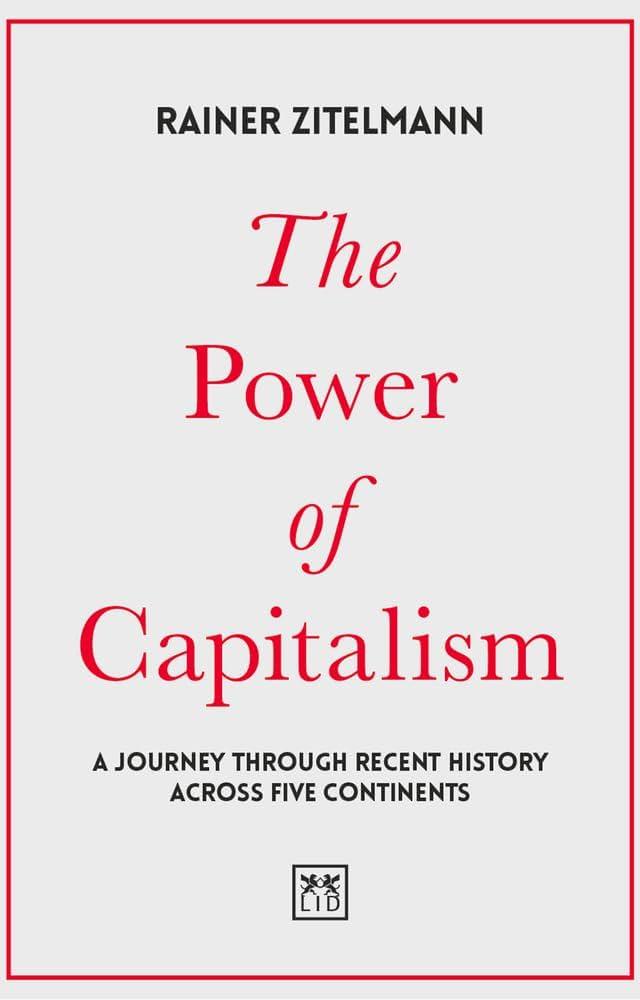
In an age when capitalism is routinely cast as the villain behind nearly every social ill—from poverty and inequality to climate change and war—this book arrives as a clear, evidence-driven corrective. This is not a dry economic treatise or a partisan manifesto. It is a carefully reasoned, historically grounded examination of the ten most persistent criticisms leveled against free markets, followed by a sober look at the real-world alternatives and the public attitudes that sustain the anti-capitalist narrative. Zitelmann does not claim capitalism is perfect; he simply insists that it be judged against actual alternatives rather than utopian fantasies.
One of the book’s greatest strengths is its willingness to confront commonly held beliefs about capitalism directly. Zitelmann questions the assumption that capitalism inevitably leads to greater inequality, exploitation, and environmental destruction. Instead, he draws attention to the historical experience of countries that have embraced market-oriented reforms, highlighting the relationship between economic freedom, entrepreneurship, innovation, and rising living standards. His arguments encourage readers to distinguish between the actual outcomes of economic systems and the narratives frequently used to describe them.
The book is particularly relevant for students, educators, entrepreneurs, policymakers, and anyone interested in understanding how economic institutions influence human prosperity. By examining the connection between private property, competition, individual initiative, and economic growth, Zitelmann demonstrates why capitalism should be evaluated not merely through moral judgments or political slogans, but also through evidence and historical experience. His discussion encourages readers to ask fundamental questions: What creates wealth? Why do some societies prosper while others remain trapped in poverty? What role do economic freedom and entrepreneurship play in improving people’s lives?
Another important contribution of the book is its emphasis on the need for critical thinking. Zitelmann does not simply present capitalism as an economic system that requires unquestioning support. Rather, his approach challenges readers to reconsider familiar assumptions, scrutinize popular claims, and examine the consequences of alternative economic arrangements. Although some of his arguments and interpretations may invite disagreement, this is precisely what makes the book useful for serious intellectual discussion. Readers should engage with his evidence critically,
Whether readers agree with Zitelmann’s conclusions or challenge them, the book offers an opportunity to engage more deeply with fundamental questions about freedom, prosperity, and the organization of economic life. In a world where economic debates are often dominated by ideological divisions, such an invitation to think critically is both timely and valuable.
Publisher: Republic Book Publishers ISBN: 978-164-572-074-4 Number of pages: 508Year of publication: 2023